United Nations

Bolivian coca leaf chewer (image courtesy of the author)

US Says No to Lifting UN Coca Leaf Ban

Bolivia wants to undo a treaty clause that has outlawed the traditional practice of coca chewing for the last 50 years, but the US and others stand ready to block that effort.

UN Drug Czar: "Drug Use Is a Health Problem, Not a Crime"

On his first visit to Afghanistan since assuming duties as UNODC Executive Director in September, Mr. Yury Fedotov visited Jangalak Treatment Center, in Kabul, Afghanistan, last week. The center offers treatment and follow up care for recovering drug users. "Drug use is a health problem, not a crime", said Mr. Fedotov. "Drug users are affected by a disease - addiction - and instead of punishment, what they need is treatment, care and social integration. They should not be stigmatized, repressed or further marginalized. Like all people, they deserve to be treated humanely. I believe in placing a strong emphasis on safeguarding health, human rights and justice", he added.
Yuri Fedotov (courtesy Voice of Russia, ruvr.ru)

Russian Diplomat Takes Over at UN Drug Agency

It's the changing of the guard at the UNODC. As of Monday, a veteran Russian diplomat now runs one of the backbones of the global drug prohibition regime.

New UN Drug Czar From Russia Takes Office

Yury Fedotov, a veteran diplomat who until recently was the Kremlin's top envoy to Britain, replaced Italy's Antonio Maria Costa as the head of the U.N. Office on Drugs and Crime.
bill-clinton-vienna.jpg

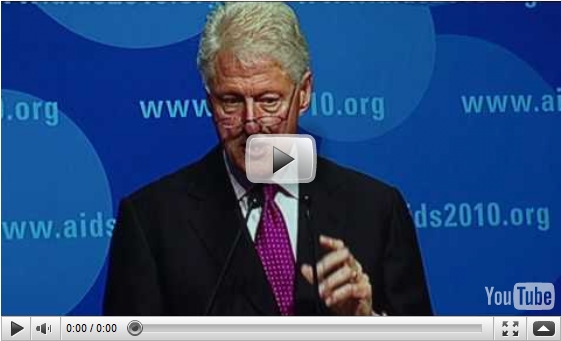
Bill Clinton Calls for Harm Reduction

Three new videos from the Hungarian Civil Liberties Union, filmed at the Vienna AIDS 2010 conference this month. In one of them, former US President Bill Clinton calls for harm reduction, an approach to substance misuse and other social issues of which the most well-known example is needle exchange programs.

Sign the Vienna Declaration

The Vienna Declaration is a statement seeking to improve community health and safety by calling for the incorporation of scientific evidence into illicit drug policies. We are inviting scientists, health practitioners and the public to endorse this document in order to bring these issues to the attention of governments and international agencies, and to illustrate that drug policy reform is a matter of urgent international significance. We also welcome organizational endorsements. To sign, see http://www.viennadeclaration.com/.
New Picture (5).png
New Picture (5).png

Huff Post: UN Drug Policy in the Dark Ages

I'm on Huffington Post again tonight, with a post chastising the UN (and western governments generally) for: 1) continuing the ludicrous coca runaround in South America's Andean region for another year; and 2) turning a blind eye year after year to the indirect support that western funds and cooperation gives to the death penalty for nonviolent drug offenses, mostly in Asia and the Middle East. Check it out here -- comments welcome in either location. If you haven't already, check out our Chronicle articles on these two topics here and here.

Press Release: The Vienna Declaration: A Global Call to Action for Science-based Drug Policy

EMBARGOED FOR RELEASE: JUNE 28, 2010 The Vienna Declaration: A Global Call to Action for Science-based Drug Policy In Lead Up to XVIII International AIDS Conference, Scientists and Other Leaders Call for Reform of International Drug Policy and Urge Others to Sign-on June 28, 2010 [Vienna, Austria] – Three leading scientific and health policy organizations today launched a global drive for signatories to the Vienna Declaration (www.viennadeclaration.com), a statement seeking to improve community health and safety by calling for the incorporation of scientific evidence into illicit drug policies. Among those supporting the declaration and urging others to sign is 2008 Nobel Laureate and International AIDS Society (IAS) Governing Council member Prof. Françoise Barré-Sinoussi, co-discoverer of HIV. The Vienna Declaration is the official declaration of the XVIII International AIDS Conference (AIDS 2010), the biennial meeting of more than 20,000 HIV professionals, taking place in Vienna, Austria from 18 to 23 July 2010 (www.aids2010.org). “Many of us in AIDS research and care confront the devastating impacts of misguided drug policies every day,” said AIDS 2010 Chair Dr. Julio Montaner, President of the IAS and Director of the BC Centre for Excellence in HIV/AIDS. “These policies fuel the AIDS epidemic and result in violence, increased crime rates and destabilization of entire states – yet there is no evidence they have reduced rates of drug use or drug supply. As scientists, we are committed to raising our collective voice to promote evidence-based approaches to illicit drug policy that start by recognizing that addiction is a medical condition, not a crime.” The Vienna Declaration describes the known harms of conventional “war on drugs” approaches and states: “The criminalisation of illicit drug users is fuelling the HIV epidemic and has resulted in overwhelmingly negative health and social consequences. A full policy reorientation is needed…Reorienting drug policies towards evidence-based approaches that respect, protect and fulfill human rights has the potential to reduce harms deriving from current policies and would allow for the redirection of the vast financial resources towards where they are needed most: implementing and evaluating evidence-based prevention, regulatory, treatment and harm reduction interventions.” Outside of sub-Saharan Africa, injecting drug use accounts for approximately one in three new cases of HIV. In some areas of rapid HIV spread, such as Eastern Europe and Central Asia, injecting drug use is the primary cause of new HIV infections. Legal barriers to scientifically proven prevention services such as needle programmes and opioid substitution therapy (OST) mean hundreds of thousands of people become infected with HIV and Hepatitis C (HCV) every year. The criminalization of people who inject drugs has also resulted in record incarceration rates placing a massive burden on the taxpayer. HIV outbreaks have also been reported in prisons in various settings internationally. This emphasis on criminalization produces a cycle of disease transmission, along with broken homes and livelihoods destroyed. Yet these costs, along with the more direct costs of the ‘war on drugs’, produce no measurable benefits. “The current approach to drug policy is ineffective because it neglects proven and evidence-based interventions, while pouring a massive amount of public funds and human resources into expensive and futile enforcement measures,” said Dr. Evan Wood, founder of the International Centre for Science in Drug Policy (ICSDP) and Clinical Associate Professor at the University of British Columbia. “It’s time to accept the war on drugs has failed and create drug policies that can meaningfully protect community health and safety using evidence, not ideology.” The Vienna Declaration calls on governments and international organizations, including the United Nations, to take a number of steps, including: • undertake a transparent review the effectiveness of current drug policies; • implement and evaluate a science-based public health approach to address the harms stemming from illicit drug use; • scale up evidence-based drug dependence treatment options; • abolish ineffective compulsory drug treatment centres that violate the Universal Declaration of Human Rights; and • unequivocally endorse and scale up funding for the drug treatment and harm reduction measures endorsed by the World Health Organization (WHO) and the United Nations. The declaration also calls for the meaningful involvement of people who use drugs in developing, monitoring and implementing services and policies that affect their lives. “As a scientist, I strongly support drug policies that are based on evidence of what actually works,” said Prof. Françoise Barré-Sinoussi, Director of the Regulation of Retroviral Infections Unit at the Institute Pasteur, IAS Governing Council member and recipient of the 2008 Nobel Prize for Medicine. “I join with my colleagues around the world today to sign the Vienna Declaration in support of science-driven policies and human rights.” The effectiveness of opioid substitution therapy (OST) and needles and syringe programmes is well-documented, though access to such interventions is often limited where HIV is spreading most rapidly. According to various scientific reviews conducted by WHO, the US Institutes of Medicine and others, these programmes reduce HIV rates without increasing rates of drug use. These cost-effective interventions also produce significant savings in future health care costs, and help people who use drugs access health care and drug treatment. No evidence exists demonstrating negative consequences of use of these programmes. “Reflecting the AIDS 2010 theme of Rights Here, Right Now, the Vienna Declaration is rooted in the belief that global drug policy must respect the human rights of people who use drugs if it is to be at all effective,” said AIDS 2010 Local Co-Chair Dr. Brigitte Schmied, President of the Austrian AIDS Society. “No one who is familiar with addiction would deny the negative impacts it has on individuals, families and entire communities, but those harms do not justify human rights violations. People addicted to illicit drugs have the right to evidence-based drug treatment, to interventions to prevent infection, and, if they are living with HIV, to antiretroviral treatment.” The Vienna Declaration was drafted by an international team of scientists and other experts, many of whom will participate in AIDS 2010 next month. It was initiated by the IAS, the International Centre for Science in Drug Policy (ICSDP), and the BC Centre for Excellence in HIV/AIDS based in Vancouver, British Columbia. Those wishing to sign on may visit www.viennadeclaration.com, where the full text of the declaration, along with a list of authors, is available. The two-page declaration references 28 reports, describing the scientific evidence documenting the effectiveness of public health approaches to drug policy and the negative consequences of approaches that criminalize drug users. About AIDS 2010 The XVIII International AIDS Conference (AIDS 2010) is the biennial meeting of researchers, implementers and diverse leaders involved in the global response to HIV. It is convened by the IAS in partnership with international, regional and local partners. Visit www.aids2010.org for more information and to register for the conference, which is taking place from 18 to 23 July 2010 in Vienna, Austria. International AIDS Society The International AIDS Society is the world's leading independent association of HIV professionals, with 14,000 members from 190 countries working at all levels of the global response to AIDS. Our members include researchers from all disciplines, clinicians, public health and community practitioners on the frontlines of the epidemic, as well as policy and programme planners. International Centre for Science in Drug Policy ICSDP aims to be a primary source for rigorous scientific evidence on illicit drug policy in order to benefit policymakers, law enforcement, and affected communities. To this end, the ICSDP conducts original scientific research in the form of systematic reviews, evidence-based drug policy guidelines, and research collaborations with leading scientists and institutions across diverse continents and disciplines. BC Centre for Excellence in HIV/AIDS The BC Centre for Excellence in HIV/AIDS (BC-CfE) is Canada’s largest HIV/AIDS research, treatment and education facility. The BC-CfE is based at St Paul’s Hospital, Providence Health Care, a teaching hospital of the University of British Columbia. The BC-CfE is dedicated to improving the health of British Columbians with HIV through developing, monitoring and disseminating comprehensive research and treatment programs for HIV and related diseases. MEDIA CONTACTS: Mahafrine Petigara Michael Kessler Edelman Media Consultant, AIDS 2010 Email: [email protected] Email: [email protected] Tel: +1 604 623 3007, ext. 297 Tel: +34 655 792 699