Incarceration

The War on Drugs Is Reducing Marriage Rates

New research published in The Review of Economics and Statistics shows that growing incarceration has contributed to declining marriage rates. In fact, the paper finds that about 13% of the decline in marriage since 1990 can be explained by male incarceration. About 18% percent of the decline in marriage rates among black women can be explained by incarceration. Hispanic women are also relatively disadvantaged, with about 10% of the reduction in marriage rates in that group explained by incarceration.

You Did It (Action Alert)

We Are the Drug Policy Alliance.

Senate leadership is sitting on a bill that would pave the way for criminal justice and drug policy reforms. Urge your Senators to support this bill!

Take Action!

Email Your Senators

Dear friends,

Thanks so much for your emails and phone calls to the U.S. Senate! We're very close to creating an independent commission to urge Congress and President Obama to reduce incarceration and improve public safety. This commission is a great opportunity to put the failed war on drugs on trial. I'm optimistic we can finally make this happen, but we need your help again.

Please contact your Senators today before Congress adjourns for the year. Tell them to pressure Senate leadership to pass the National Criminal Justice Commission Act.

If we can get this commission established, we hope to force Congress and the President to consider important ideas like making marijuana legal, treating drug use as a health issue instead of a criminal justice issue, and eliminating failed drug war programs that waste taxpayer money.

Senator Jim Webb (D-Va) and others have a plan to pass the bill, but in order for the plan to work we need to show enormous support. The best thing you can do is email your Senators. And then forward this email to friends and family.Please contact your Senators now and help pass this critical legislation. Together we can march this bill over the finish line. We're very close.

Sincerely,

Bill Piper
Director, Office of National Affairs
Drug Policy Alliance

Barriers to Ex-Offender Employment Could Cost the Nation at Least $57 Billion

According to a study from the Center for Economic and Policy Research's senior economist John Schmitt, ex-offenders' barriers to employment lowers the nation's employment on average by 1.5 million to 1.7 million workers. Multiply that number by the average output that these workers would be putting into the economy, if they were employed, and the loss totals at least $57 billion, he said. This figure is growing as more of the hundreds of thousands of people put into jail during the prohibitionist war on drugs in the 1980s and 1990s are released.

US Supreme Court Hears California Prison Crowding Case, Advocates Urge California to Focus on Resolving Crisis, Including Ending Prison as Response to Drug Use (Press Release)

FOR IMMEDIATE RELEASE: November 30, 2010
CONTACT: Margaret Dooley-Sammuli at 213-291-4190 or Tommy McDonald 510-229-5215

US Supreme Court Hears California Prison Crowding Case

Advocates Urge California to Focus on Resolving Crisis, Including Ending Prison as Response to Drug Use

10,000 in Prison for Drug Possession at Cost of $500 Million a Year

WASHINGTON - November 30 - The United States Supreme Court heard oral arguments today in Schwarzenegger v. Plata, a landmark prison rights case in which a federal court found the unconstitutional conditions of California's prisons were caused primarily by overcrowding and ordered California to reduce prison overcrowding from over 200% of design capacity down (by about 40,000 people) to 137.5% of capacity within two years. California has conceded that the state's prison conditions are unconstitutional but has nonetheless asked the Supreme Court to put the states' right to administer its prisons before the constitutional rights of individuals who are wards of the state.

"One of the primary reasons that the state's prisons are dangerously overcrowded is that California continues to lock up thousands of people each year for low-level drug possession. There is no basis in evidence or principle to expose people to this dangerous environment simply for the possession of a small amount of illicit substances," says Margaret Dooley-Sammuli, deputy state director for the Drug Policy Alliance in Southern California. "California must follow the lead of other states like Texas and New York and stop sending people to state prison for drug possession, which can be handled as a health issue safely, effectively and affordably in the community."

"The state currently spends $500 million a year to incarcerate 10,000 people for nothing more than personal drug possession," Dooley-Sammuli continued. "That does not include the unknown number of parolees who have been returned to prison for a few months based on the results of a drug test. This is a terrible waste of scarce resources. Treatment in the community is effective and affordable. Unfortunately, California this year eliminated funding for community-based treatment for drug possession arrestees."

"People who use drugs do not belong in the state's cruel and costly prisons simply for that personal use. We urge California to take the logical step of ending incarceration as a response to drug possession, while expanding opportunities for drug treatment in the community," continued Dooley-Sammuli.

Indonesian Police Say Jail Cells No Help in Drug War

The Jakarta Police are considering handing drug traffickers hefty fines rather than locking them up, arguing that imprisonment did not appear to be an effective deterrent and was getting too costly for the state. According to Jakarta Police Chief Inspector General Sutarman, it would be much wiser if drug users were not put in jail but in a rehabilitation center, which is currently not an option. "If jails are already full and people who violate the law are also set to become a burden for the state, why don’t we change this? I think we need a strategic decision, to be taken by the government and the legislature," he said.

New Compendium of Recidivism Studies Unveiled

Special Message

June 28, 2010


Dear Friends,

The Sentencing Project is pleased to announce the publication of a first-of-its-kind comprehensive database, "State Recidivism Studies." The database provides references for 99 recidivism studies conducted between 1995-2009 in all 50 states and the District of Columbia.

These studies have been produced by a variety of agencies, including departments of corrections, sentencing commissions, statistical analysis centers, and universities. The studies address issues including juvenile/adult status, race, gender, offense type, program intervention, and many others, and thus offer insights into the variety of factors that affect recidivism outcomes.

Because of the diversity among the studies in methodology and definitions of recidivism, the measurements of recidivism rates are not necessarily comparable across jurisdictions. Overall, though, the studies provide insight into the factors that affect program success for people sentenced to incarceration or community supervision.

We hope you find this database useful in your work, and please keep us posted regarding new research in this area.


Marc Mauer
Executive Director


Send an email to The Sentencing Project. » CONTACT

The Sentencing Project
1705 DeSales Street, NW, 8th Floor, Washington, DC 20036, 202.628.0871


Back to top ^

The Sentencing Project is a national organization working for a fair and effective criminal justice system by promoting reforms in sentencing law and practice, and alternatives to incarceration.

The Safe Streets Arts Foundation: Volunteer Opportunity for Book Cover Designer


Dye painting 

 We are about to publish another book under our Foundation House Publishing imprint. We seek a volunteer book cover designer to create the cover for it using selected images of art made by imprisoned artists. All text and image files will be sent to you as email attachments.


The 250-page book is entitled "Art on the Inside: Understanding and Helping Imprisoned Artists." The table of contents reads as follow:

1. Creating Art in Prison

2. Men and Women Who Make Art in Prison

3. How Prisons Operate

4. Role of the Arts in Prisons

5. Helping Artists in Prisons

6. Getting Started as a Mentor to Artists in Prison

7. Duties of a Mentor to Artists in Prison

8. Dangers to Avoid When Mentoring to Artists in Prison

9. Mentoring Over the Long Haul

10. Marketing Art Made in Prison

11. Helping Artists After Their Release From Prison

12. Career Opportunities for Mentors


If you have the time and interest to help us design the cover for this exciting new book, please email [email protected]   Thank you.


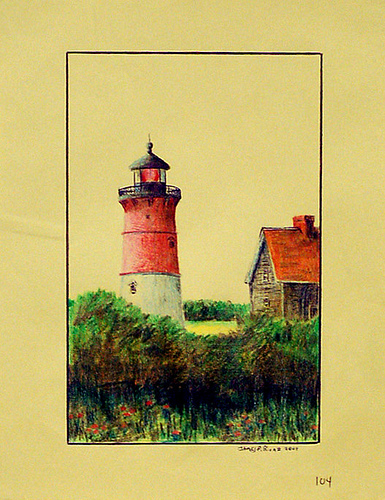
  All art on this page created by imprisoned artists and available  at our Prison Art Gallery or online at http://prisonsfoundation.org/art.html


"The Safe Streets Arts Foundation, incorporating both the Prisons Foundation and the Victims Foundation, is proud to sponsor the annual From-Prison-to-The-Stage Show at the Kennedy Center and the Prison Art Gallery at 1600 K Street. NW, Suite 501, Washington, DC, three blocks from the White House."

Gallery logo 


Safe Streets Arts Foundation: Our Director to perform at ACLU awards dinner

Can't wait for our director Dennis Sobin to perform his classical-jazz guitar music again at the Kennedy Center? Got $150 to spend on a very worthwhile cause (ACLU awards dinner) at Washington's prestigious Omni Shoreham Hotel on March 18?


As many fans of our director's classical and jazz guitar playing know, when he is not engaged in his regular performances at the Kennedy Center, he appears at colleges, festivals and (his favorite) nonprofit fundraisers. Coming up on his busy early spring performance schedule is the annual Nation's Capital ACLU Bill of Rights Awards Dinner on March 18, 2010, 6:30 pm at the Omni Shoreham in Washington, DC. Presenting the awards this year is Gregory B. Craig, President Obama's first White Counsel Counsel. Mr. Craig led the Administration's effort to close the Guantanamo Bay Detention Camp and fought for President Obama's "civil liberties campaign" to correct many of President Bush's harsh policies.

For more information about the ACLU awards dinner, please click here. For free listening/downloads of Dennis Sobin's ten guitar music CDs, please click here. Thank you.


All art on this page created by imprisoned artists and available at our Prison Art Gallery or online at
http://prisonsfoundation.org/art.htmt


"The Safe Streets Arts Foundation, incorporating both the Prisons Foundation and the Victims Foundation, is proud to sponsor the annual From-Prison-to-The-Stage Show at the Kennedy Center and the Prison Art Gallery at 1600 K Street. NW, Suite 501, Washington, DC, three blocks from the White House."

Gallery logoÂ