addicted_to_courts-cover-full;size$250,324.jpg
Drug Courts Poor Public Policy, Reports Charge [FEATURE]
New new reports take a hard look at drug courts and suggest more effective alternatives.
The New Directions New Jersey conference will examine the decades-old ramifications of President Nixon’s declaration of the “war on drugs” in urban communities like Newark.
Drug policy experts from across the country and around the globe will discuss topics including: reducing crime and incarceration, effectively addressing addiction, treating drug use as a health issue, communities of color and the war on drugs, and drug policy lessons and models from abroad.
When asked about the war on drugs on the campaign trail, President Barack Obama said, “I believe in shifting the paradigm, shifting the model, so that we focus more on a public health approach [to drugs].” Polls show the American people agree. President Obama’s drug czar, Gil Kerlikowske, told the Wall Street Journal last year that he doesn’t like the term “war on drugs” because “[w]e’re not at war with people in this country.” Yet for the tens of millions of Americans who have been arrested and incarcerated for a drug offense, U.S. drug policy is a war on them—and their families. What exactly is a public health approach to drugs? What might truly ending the war on drugs look like? This conference will serve as a model for those looking for new directions and strategies for ending the war on drugs.
“We see the impact of the ‘drug war’ first hand, where so many people are incarcerated for being economically disadvantaged by the disappearance of work,” says Bethany Baptist Church pastor, Reverend William Howard. “Afterwards, they are virtually permanently barred from the legal workforce for the rest of their lives. We must take our stand against the destructive scourge of drug abuse and trafficking by developing new, sensible strategies that solve more problems than they create.”
The conference will be guided by four principles:
Panel members and conference speakers include:
· Rev. Dr. M. William Howard, Jr., pastor, Bethany Baptist Church
· Ethan Nadelmann,executive director, Drug Policy Alliance
· Paula T. Dow, New Jersey Attorney General
· Garry F. McCarthy, police director, City of Newark
· Michelle Alexander, Esq., associate professor, Ohio State University’s Moritz College of Law and the Kirwan Institute for the Study of Race and Ethnicity; Author, The New Jim Crow: Mass Incarceration in the Age of Colorblindness
· Beny Primm, MD, executive director, Addiction, Research and Treatment Corporation, Brooklyn, New York
· Todd Clear, dean, School of Criminal Justice, Rutgers University
· Donald MacPherson, former drug policy coordinator, City of Vancouver
· Alex Stevens, professor of Criminal Justice, School of Social Policy, Sociology and Social Research, University of Kent, Chatham, UK
· Stephanie Bush-Baskette, Esq., Author and Director of the Joseph C. Cornwall Center for Metropolitan Studies at Rutgers University
· Deborah Peterson Small, Founder and Executive Director, Break the Chains: Communities of Color & the War on Drugs
For a full list of panel members, go to: http://www.drugpolicy.org/docUploads/DPA_New_Directions_NJ_final_prog_REFERENCE.pdf
Please RSVP to: [email protected]
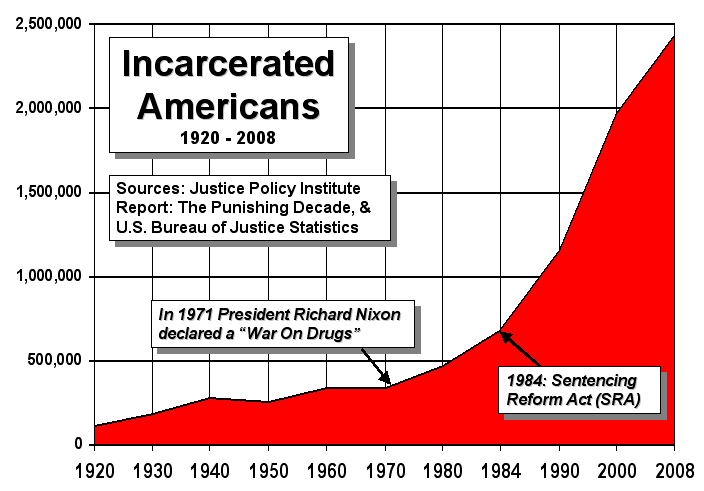
[inline:incarceration.jpg align=right]Reducing incarceration rates is a hot topic this month as state governments desperately seek to decrease spending. It's an important and encouraging trend, but one that gets predictably sidelined when certain interests exert malicious influence over the process. This example from Indiana pretty much sums it up:

FOR IMMEDIATE RELEASE February 15, 2011
Hearing on Indiana Marijuana Study Bill Today
CONTACT: Morgan Fox, communications manager………………………(202) 905-2031 or [email protected]
INDIANAPOLIS — The first hearing on S.B. 192 took place today to discuss the need to study the marijuana laws in Indiana and find alternatives to arrest and incarceration. S.B. 192 would create a mandate requiring lawmakers to investigate other options to the marijuana laws that put non-violent Hoosiers behind bars and tie up scarce resources that the public would rather see spent on infrastructure. The bill is sponsored by Sen. Karen Tallian (D-Dist. 4).
“It has become painfully obvious that our current marijuana laws are not effective,” Sen. Tallian said. “We spend a sizable amount of money every year going after marijuana users and locking them up for a non-violent crime, while more important programs that desperately need funds go wanting. I think we need to take a very close look at the laws we have, determine what is working and what isn’t, and explore every possible alternative. This bill will make sure that we, as lawmakers, commit to this course.”
Over a dozen people testified at the hearings, including policy experts, former law enforcement officers, and medical marijuana patients that suffer from the threat of arrest under the present system. One speaker, C.J. Parker, said, “I am a Gulf War Era Veteran and former police officer who suffers from over 20 diagnosed illnesses, including PTSD, and have been 100% unemployable since 2004 due to the combined effects of my illnesses. I have had no success with the over 30 pharmaceutical medications that have been prescribed to me over the last 9 years, but have found great relief from treating my illnesses with marijuana. It is time my elected leaders take a look at how to allow people like me to live without the fear of arrest.”
A local leader in the marijuana reform community, Joh Padgett, said, “I have been a cannabis [marijuana] therapy patient for many years treating diabetic neuropathy, and pain associated with chronic venous stasis, edema, and a blood clotting disorder that has reduced circulation in my legs by 80%. I co-founded ReLegalize Indiana with our Chairman, Bill Levin, in January 2010 to give a voice to patients in Indiana like me who can benefit greatly from medical cannabis. Proper medical research is something we do well in Indiana and it is time we allowed our world-class researchers and our most vulnerable citizens to study and access a therapy allowed in 15 states and the District of Columbia.”
With more than 124,000 members and supporters nationwide, the Marijuana Policy Project is the largest marijuana policy reform organization in the United States. For more information, please visit www.mpp.org.
####
FOR IMMEDIATE RELEASE: February 8, 2011
CONTACT: ACLU [1] Will Matthews, ACLU National at (212) 549-2582 or 2666; [email protected] [2] Sandra Hernandez, ACLU of Southern California at (213) 977-5252; [email protected]
ACLU Witnesses Brutal Beating Of Los Angeles County Jail Inmate By Sheriff’s Deputies
Attack Underscores Need For Systemic Reform And Decrease In Jail’s Population
LOS ANGELES - February 8 - The American Civil Liberties Union and the ACLU of Southern California (ACLU/SC) today condemned a recent brutal beating by two Los Angeles County sheriff’s deputies of a detainee at the Twin Towers Correctional Facility, part of the county jail system.
The violent attack January 24 on James Parker, detained on a non-violent marijuana charge, was witnessed by ACLU/SC’s Esther Lim, who is assigned to monitor all county jails.
“We believe Mr. Parker’s beating is not an isolated incident,” said Hector Villagra, incoming Executive Director of the ACLU/SC. “Rather, it highlights the rampant violence that continues to plague the county’s jails, and demands court intervention to protect detainees from brutal attacks and retaliation. That the ACLU/SC monitor witnessed a brutal attack in plain sight is alarming and can only lead us to conclude detainees are subject to even greater cruelty when no one is looking.”
The beating was made public Monday in a sworn statement submitted in federal court by Lim, who watched through a glass window as deputies repeatedly punched, kneed and tasered Parker while he was lying motionless on the floor.
“Mr. Parker looked like he was a mannequin that was being used as a punching bag,” Lim says in her statement. “I thought he was knocked out, or perhaps even dead.”
Lim hit the glass divider hoping to get the deputies’ attention and stop the attack, but the officers continued to punch and taser Parker.
“Mr. Parker was not fighting with the deputies,” Lim says in her statement, adding he “was not trying to kick, hit or otherwise fight with the deputies.”
Yet deputies continued to order him to “stop resisting” and “stop fighting,” while simultaneously punching and kneeing his limp body repeatedly and tasering him multiple times.
The deputies then wrote in a jail log that Parker had been fighting and resisting, in complete contradiction to what the ACLU witnessed.
“This kind of brutal beating is unacceptable,” said Peter Eliasberg, ACLU/SC managing attorney. “We are also very concerned that shortly after the beating the sheriff’s department issued a log report contradicting what witnesses, including our monitor, saw. The report claims Parker was resisting and fighting with deputies. That is blatantly false.”
Parker now faces charges for allegedly assaulting the very deputies who beat him.
Lim’s statement, along with that of another witness to the beating, was filed Monday in U.S. District Court for the Central District of California, to bolster a motion the ACLU filed in November seeking a federal court order prohibiting jail deputies from retaliating against prisoners through violence or threats.
The ACLU first sued Los Angeles County and its sheriff on behalf of all detainees in the county’s jail system in 1975, charging the conditions of their confinement violated the Eighth Amendment’s prohibition against cruel and unusual punishment. Many remedial orders have been issued over the years in the case, Rutherford v. Block. But the systemic problems plaguing the system have recently become so acute the ACLU in December asked U.S. District Court Judge Dean D. Pregerson to order a new trial in the case based on “an escalating crisis of deputy violence, abuse and inmate suicides” at Men’s Central Jail, another of the system’s facilities. The ACLU contends the problems plaguing the jail system can only be fixed by finding alternatives to incarceration like drug treatment and community-based programs for the low-level, non-violent offenders and detainees with serious mental illnesses that comprise the vast majority of the system’s population, and seeks to prove the jail’s population can be safely, rapidly and radically reduced with existing resources and at great savings to county taxpayers.
A report released by the ACLU in September painted a stark picture of unacceptable levels of violence in the jails, including reports of deputies beating handcuffed detainees, injuring some so badly that they ended up in intensive care. The report also showed retaliation against inmates to be an acute problem. Several prisoners have been severely punished for meeting with representatives of the ACLU, which is the court-appointed monitor of conditions inside L.A.'s county jails.
“The reign of terror we’re uncovering in the Los Angeles County jails is unmatched by any of the hyper-violent prisons and jails across the country we have investigated,” said Margaret Winter, Associate Director of the ACLU National Prison Project. “The brutality there is so blatant and routine that the deputies carried out a vicious beating in full view of a court-appointed monitor. The court needs to take immediate action to ensure the protection of prisoners.”
A copy of the ACLU’s sworn statement, as well as that of the beating’s other witness, is available online at: