new-jersey-map.jpg
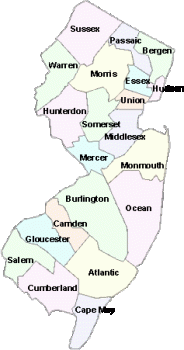
New Jersey Marijuana Decriminalization Bill Advances
A New Jersey marijuana decriminalization bill has passed its first hurdle, advancing out of the Assembly Judiciary Committee.


| |||||||
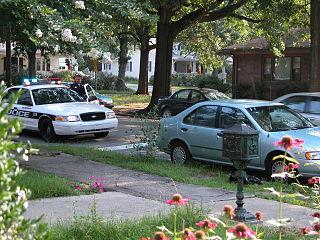
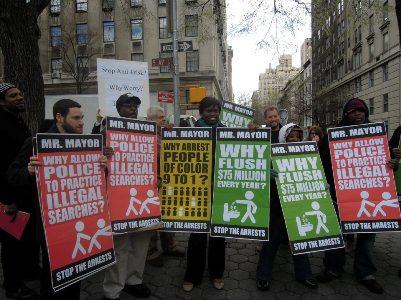
October 7, 2011 Race & Justice News"THE COLLAPSE OF AMERICAN JUSTICE"The late law professor William J. Stuntz investigates what he calls "the collapse of American justice" in Salon. The article examines America's high incarceration rate, and assesses the role of official discretion, discrimination against minority suspects and victims, and the swing toward harsh punishment as the main factors leading to the justice system's failure. Stuntz argues that laws that turn large segments of the population into offenders, such as speeding and drug laws, provide police officers with excessive official discretion that contributes to racial profiling. Stuntz states that, "too much law amounts to no law at all: when legal doctrine makes everyone an offender, the relevant offenses have no meaning independent of law enforcers' will," and points to the fact that blacks are nine times more likely to be arrested for drug use than whites, despite both groups having similar rates of drug use. Direct election of many judges and prosecutors, coupled with the increased electoral power of suburbs and their relative distance from inner city problems, is also identified as an explanation for increased racial disparities. ALABAMA PRISON REFUSES TO ALLOW BOOK ON TREATMENT OF SOUTHERN BLACKSThe New York Times reports that an inmate is suing the Alabama Department of Corrections for denying him access to a book that details the plight of Southern African Americans during the time between the end of the Civil War and World War II. The Kilby Correctional Facility reportedly would not allow Mark Melvin to read Slavery by Another Name because it was deemed to be "incendiary" and a "security threat." Officials claimed that the book, which explores the convict leasing system, which became nearly indistinguishable from slavery, could incite “violence based on race, religion, sex, creed, or nationality, or disobedience toward law enforcement officials or correctional staff.” The book's author, Wall Street Journal reporter Douglas A. Blackmon, calls that claim "absurd," and Melvin's lawyer argues that the withholding of the book is essentially a reflection of the country's refusal to own up to its racial history. BLACKS THREE TIMES AS LIKELY AS WHITES TO BE SEARCHED IN TRAFFIC STOPSA special report by the Bureau of Justice Statistics has found that black drivers in 2008 were three times as likely to have their cars searched during traffic stops as whites. The study, which looked at contact between citizens and law enforcement, also found that traffic stops involving blacks were roughly twice as likely to result in a search as those involving Hispanics. The survey showed that African Americans were slightly more likely to face multiple contacts with police officers, but that blacks were about as likely to be pulled over in traffic stop as whites and Hispanics. However, when pulled over blacks were more likely than whites and Hispanics to be arrested, while both blacks and Hispanics were more likely to receive tickets than whites. Blacks were also more likely to have force used or threatened against them by police officers. REEVALUATING EXPLANATIONS FOR RACIAL DISPARITIESDarnell F. Hawkins attempts to sort through explanations for the racial disparities present in the American criminal justice system in light of declining crime rates, and criticizes academics for failing to make significant progress in producing cogent theories. In Things Fall Apart: Revisiting Race and Ethnic Differences in Criminal Violence amidst a Crime Drop he argues that the presence of constant racial disparities in the criminal justice system despite drops in crime rates and changes in social conditions has undermined many theories meant to explain racial disparities. Much of this, according to Hawkins, is due to the tendency of researchers to rely heavily on quantitative skills and narrow variables and subjects. The use of more encompassing theories, such as Robert Blauner's internal colonialism framework, is offered as a possible path forward in answering longstanding questions about racial disparities in the criminal justice system.
| |||||||