I'm not sitting in Cusco, the old Inca capital, where the Spanish invaders built their churches and houses on the ruins of the Inca city. There is still that fine Inca rock work all over the place; in fact, the place I'm staying in, the Posada de Loreto, has exterior walls that are made of Inca stone, and the whole Callejon de Loreto is one of the streets most noted for its Inca stone work.
In Ayachucho, mine was a rare white face; in the rural countryside of the high Andes and the Amazonian selva, mine was the only white face; one that men and women stared at and little child hid from. That's not the case here in Cusco, the gringo capital of Latin America. This city of about 400,000, with its incredible Inca cachet and closeness to the ruins of Machu Picchu, attracts droves of tourists, from tour groups of old people to the international youth backpacker set to the Andean hippies (you know the type, long haired, wearing indigenous ponchos and caps and playing flutes and beating on drums and getting quite messed up on local substances, could be American or German or Australian or even Peruvian).
And where there are lots of gringo tourists, there are people wanting to sell them things, including drugs. I don't know what it is about meâis there a neon sign above my head?âbut once again it didnât take more than a few minutes from the time I ventured into the main square this afternoon to be offered cocaine, marijuana, and women. My worry-wart boss will be happen to know I passed on all them, although I feel remiss in not having inquired about prices. Maybe tomorrow.
Cusco is high, some 11,000 feet, so I figured this was the time for me to try mate de coca (coca tea) for the first time. I've chewed the leaves before, several times in the last week, as a matter of fact, but I had never had the tea. It was basically a glass of hot water with coca leaves steeping in it. According to my waiter, I was supposed to chew the leaves as I sipped the tea. I did, and I got a nice coca jolt within seconds. Did it help me cope with the altitude? Well, it seems likely; I certainly felt more energetic.
I also discovered that there is a store here in Cusco that sells various coca products, along with other hip, "socially conscious" stuff. It's name is the Buen Pastor (Good Shepherd), but they were closed by the time I tracked them down this evening. Since I'll spend the day at Machu Picchu tomorrow, I'll track them down on Monday and see what the deal is. And since I'll be gone all dayâup at 5am to catch the train up the Sacred Valley, getting to Machu Picchu about 10am, spending the day at the site, and returning to Cusco about 8pmâyou won't be hearing anything more from me for awhile. But there should be some pictures posted. I'm going back to my hotel right now to get the camera, so I can upload them and Borden can download them.
On Tuesday, it's on to Boliviaâ¦
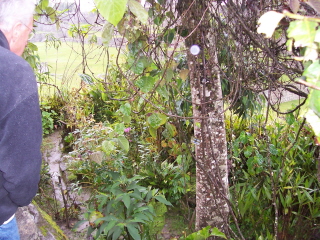 stunted coca plant in garden, Machu Picchu
(click this post's title link or the "read full post" link for more pictures -- not coca or drug policy, but breathtaking)
stunted coca plant in garden, Machu Picchu
(click this post's title link or the "read full post" link for more pictures -- not coca or drug policy, but breathtaking)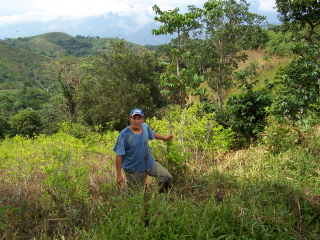 cocalero Percy Ore in his fields, near the town of San Francisco, Ayacucho province
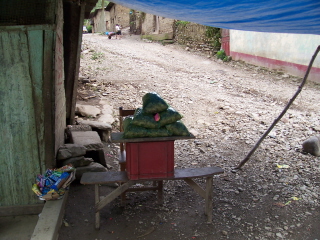 coca waiting by the side of the road to go to market
(Click the "read full post" link if you're not seeing the rest of the pictures.)
coca waiting by the side of the road to go to market
(Click the "read full post" link if you're not seeing the rest of the pictures.)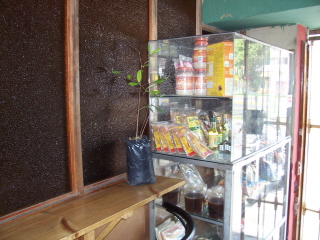 Mana coca foods (and other foods) store