The Drug Debate

Exit Strategies for the War on Drugs, Part I: Framing the Discussion

(Glen Stark has provided the first installment in a multi-part discussion about the challenges we'll have when crafting a post-prohibition system. We thought it was interesting enough to post to our home page. - Dave) I am gradually of the opinion that drug-policy reform is now a sure thing, and the discussion will need to shift to alternative policies. This is the first in a multi-part series, in which I prattle on about what comes next after the war on drugs. This post attempts to formulate a useful basis for the discussion of the subject.

The following is available in full, in correct formatting, here.

The Guardian has an excellent article: Prohibition's failed. Time for a new drugs policy. The first line sums it up perfectly "http://www.guardian.co.uk/commentisfree/2009/sep/06/editorial-drugs-policy-latin-america". It's clear that the debate now needs to be about what comes next. We've created a stupid war against the citizenry our own country. It's completely fucking up our civil liberties, and in fact the entire premise is completely unconstitutional. Argentina's government has realized this, and if we lived in a healthier democracy, we would have figured out the same thing by now. The good news is we seem to be getting there, so the time for figuring out an exit strategy would seem to be now. The issues aren't simple. We have a monstrous police-state machinery in place. We have to pull out the troops and integrate them back into society, and provide them with counselling to reintegrate them into normal society. While this should be an easy sell, as there is a peace-dividend (reduced spending on law-enforcement and prisons, improved civil liberties, reduced crime...) the drug-warriors don't want to give up sucking at the government teat, and form a powerful lobby. The most difficult question of course is "okay, prohibition doesn't work, what now?". Unfortunately, the people who should be working on this are still too afraid to admit prohibition has failed. While they get up to speed, the most productive discussions in this arena are taking place online, in in the periphery of other discussions. I'd like to discuss the issue more directly.

Goals:

So, let's identify some (hopefully) uncontroversial goals, by which we can judge whether a drug policy is working or not.
  • minimize addiction rates.
  • minimize overdose deaths.
  • protect children and uninformed consumers.
  • minimize crime (e.g. junkies stealing to get their 'fix')
There are other effects which are more difficult to quantify, such as health impacts (cancer and such) and effects on productivity. While these are worth considering, I think it's a reasonable approach to consider them second-order effects. Once we have a policy which optimizes the easily measured first-order effects, we can worry about the second order ones. The key thing to keep in mind here is prohibition is a nightmarish failure, regardless of which effects you consider. It doesn't accomplish any of the desired effects. The results of prohibition are so disastrously bad, that complete deregulation might end up working just as well, without the enormous cost (socially and economically) of funding the war. An error the drug warriors make is framing the discussion in terms of "zero-tolerance". They want to completely eliminate all drug use. What the last 100 years has shown is that that won't happen. You can keep spending more money, you can keep use the constitution as toilet paper after shitting on people's civil rights, you can get more and more violent and intolerant, you can impose increasingly draconian laws, and people will still use drugs. The figures are there. It takes enormous cognitive dissonance to deny them, so let's stop doing There remains of course the question of how much we are willing to pay to achieve those goals. I suspect that the people who are so willing to spend billions on the drug war, will be less willing to spend the same billions on counselling, care, rehabilitation, education, and maintenance programs. Fortunately, the drug war has been so damned expensive, anything we come up with likely be much more effective at a greatly reduced financial cost. This will allow us to frame all such harm reduction spending in terms of savings over the prohibitionist approach. Having identified a set of goals which I hope we can all agree on, let us consider what will be needed to implement a sane drug policy. It's my conviction that a good drug policy will involve the following components.
  1. Rational evaluation of drug harm.
  2. Honest drug education.
  3. Honest drug scheduling (a rational classification system).
  4. A sane handling of the respective classes of drugs.
  5. Reality based assessment of policy effects.
  6. More power to states and communities for deciding drug policies.
Each of these points is non-trivial, and will require some discussion. Thus they will be the subject of future posts. Some might disagree with necessity of a drug scheduling system at all, and would advocate regulating all drugs like we do alcohol. While I see some merits to such an extremely libratarian approach, I would argue against pursuing such a goal for the following reasons: It's unrealistic in today's political climate, it's too rapid and extreme a change, and I suspect such a policy might be nearly as harmful as the current policy. If it's not clear to me, it's going to be extremely unpalatable for the average citizen. Keeping the classification system allows to handle the approach in a more reasonable and rationed manner. We can agree to pursue a policy that accomplished the stated goals, and analyse each drug case by case, based on a rational assessment of its relative harm, made by qualified medical researchers. It also allows us to separate the questions "do we need drug policy reform", and "what is a good drug policy for drug X". The answer to the former question is simple, the answer to the latter is, in some cases, rather difficult. For example, I am torn on what constitutes a good policy for Heroin or Crack (I do know that current American policies are the wrong answer, but I'm not sure heroin and crack bars are the right answer).

Conclusion and caveats:

To successfully advocate for drug policy reform, I think keeping the above goals in mind is extremely useful. It provides a concrete, uncontroversial framework for evaluating the failure of current policy, and provides some useful indications for steps in a positive direction. There may be additional goals which are useful to bring into the discussion, but in the terrible situation we currently find ourselves in, we should strive to work toward unifying, uncontroversial goals. Once these are acheived, we can open up more controversial, difficult discussions, such as "what right does the government have telling me what I can put in my body anyway", or the ethical merits of a drug-free lifestyle versus the spiritual benefits of psychotropic drugs.

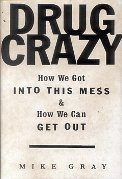
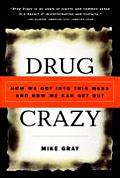
DRUG CRAZY: How We Got Into This Mess and How We Can Get Out

Mike Gray's famous volume, Drug Crazy: How We Got Into This Mess and How We Can Get Out, is now online at Libertary.com. Mike's credits include the Hollywood movie The China Syndrome and the documentary The Murder of Fred Hampton, if you didn't already know, and he has been an important part of our movement for as long as I've been involved in it. This is perhaps the best and most fun to read book about the drug war ever written, so I hope you'll check it out and share the link with friends.

Drug Crazy: How We Got Into this Mess and How We Can Get Out

Read this eye-opening book free at Libertary.com

My Published Criticism of the Drug Czar

I got the following comments published as a Letter to the Editor in both the online and print versions of my local newspaper, the Fresno Bee, http://www.fresnobee.com/ ---

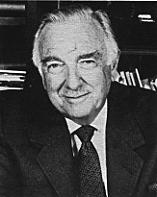
Walter Cronkite on the Drug War

Epilogue by Walter Cronkite at the close of ""The Drug Dilemma: War or Peace," The Cronkite Report, June 20, 1995:
Every American was shocked when Robert McNamara, one of the master architects of the Vietnam war, acknowledged that not only did he believe the war was, "wrong, terribly wrong," but that he thought so at the very time he was helping to wage it. That's a mistake we must not make in this 10th year of America's all-out War on Drugs. It's surely time for this nation to stop flying blind, stop accepting the assurances of politicians and other officials, that if we only keep doing what we are doing, add a little more cash, break down a few more doors, lock up a few more Jan Warrens and Nicole Richardsons, then we will see the light at the end of the tunnel. Victory will be ours. Tonight we have seen a war that in its broad outline is not working. And we've seen some less war-like ideas that appear to hold promise. We've raised more questions than we've answered, because that's where the Drug War stands today. We're a confused people, desperately in need of answers and leadership. Legalization seems to many like too dangerous an experiment; to others, the War on Drugs, as it is now conducted, seems inhumane and too costly. Is there a middle ground? Well, it seems to this reporter that the time has come for President Clinton to do what President Hoover did when prohibition was tearing the nation apart: appoint a bi-partisan commission of distinguished citizens, perhaps including some of the people we heard tonight, a blue-ribbon panel to re-appraise our drug policy right down to its very core, a commission with full investigative authority and the prestige and power to override bureaucratic concerns and political considerations. Such a commission could help us focus our thinking, escape the cliches of the Drug War in favor of scientific fact, and more rationally analyze the real scope of the problem, answer the questions that bedevil us, and present a comprehensive drug policy for the future. We cannot go into tomorrow with the same formulas that are failing today. We must not blindly add to the body count and the terrible cost of the War on Drugs, only to learn from another Robert McNamara 30 years from now that what we've been doing is, "wrong, terribly wrong." Goodnight.

South Dakota Judge Sentences Marijuana Reform Activist to Shut Up

South Dakota's most well-known marijuana legalization advocate, Bob Newland, was sentenced yesterday to a year in the Pennington County Jail with all but 45 days suspended for felony marijuana possession--a little less than four ounces. Once he does his time, he'll be on probation for a year. Newland can, I suppose, consider himself fortunate. According to the South Dakota Department of Corrections, there are currently six people imprisoned for possession of less than half a pound and seven for more than half but less than one pound, as well as 14 doing time for distribution of less than an ounce and another 25 doing time for distribution of less than a pound. But in another respect, Newland is not so lucky. He has basically been stripped of his First Amendment right to advocate for marijuana legalization while he is on probation. As the Associated Press reported:
A longtime South Dakota supporter of legalized marijuana has been sentenced to serve 45 days in jail for possessing the illegal drug. Authorities say Bob Newland of Hermosa was found with four bags of marijuana, a scale and $385 in cash when he was stopped for speeding in March. He pleaded guilty in May to a possession charge under a plea agreement in which prosecutors agreed to drop a more serious charge of possession with intent to distribute. Newland will be on probation for the rest of the year following his jail term. During his probation, he is barred from publicly advocating the legalization of marijuana for medicinal purposes.
Newland, understandably, is not inclined to challenge the probation condition. There's something about staring at the walls of a jail cell that does that to a guy. But that doesn't mean others shouldn't raise a stink about this arguably unconstititional sentence. I'll be looking into this and will have a Chronicle story about it on Friday.

Are Republicans Turning Against the Drug War?

Everyone knows Republicans love the drug war and Democrats are hippies who want to legalize pot. Right? Not necessarily.

Milton Friedman and William F. Buckley are probably the best-known republicans to oppose the war on drugs, and they did so with eloquence that's seldom been matched across the political spectrum. Both men have passed however, and it's often assumed that the party of limited government and state's rights would remain strangely, yet steadfastly invested in the infinitely costly and oppressive war on drugs.

It's not that there aren’t notable exceptions; Ron Paul's rapid rise to national fame in 2008 demonstrated the vigor of libertarian-leaning conservatives who craved an opportunity to cast a vote for drug reform in the republican primaries. In addition to Paul, prominent conservatives Grover Norquist and Tucker Carlson have been strong supporters of reform (watch Carlson TKO drug warrior Mark Souder on MSNBC, for example). But the GOP's reputation as the party of braindead drug war demagoguery nonetheless remains cemented in the public consciousness thanks to the anti-drug posturing of party leaders like Rudy Giuliani, John McCain and Mitt Romney.

Recent weeks have brought some encouraging signs that the drug policy reform argument is gaining ground with conservatives. FOX News' Glenn Beck recently interviewed Marijuana Policy Project's Rob Kampia and then came out in support of marijuana legalization a week later. Beck articulated the role of marijuana prohibition in subsidizing Mexican drug war violence in a segment that came off as remarkably pro-reform for FOX News. Proving it's not a fluke, we also saw LEAP's Norm Stamper on FOX News' Red Eye program delivering a superb indictment of the war on drugs that had host Greg Gutfeld nodding in agreement.

Meanwhile, conservative commentator and former presidential candidate Pat Buchanan penned a column last week quoting Milton Friedman and questioning the very foundations of the war on drugs. Though not thrilled about the idea of legalizing drugs, Buchanan suggests that Mexico's survival may depend on ending the drug war. Like Glenn Beck, Buchanan had not been previously known to support reform and seems to be getting the message now that the failure of prohibition in Mexico is becoming a threat to our own national security.

Obviously, much work remains to be done towards generating mainstream political support for drug policy reform among conservatives (and liberals, for that matter). Still, there can be no question that the tone of the conversation is shifting and new voices are entering the discussion. An economic crisis and an unstable border may provide focal points for an evolving dialogue, but there's more to it than just that. Consider, for instance, that the new administration recently pledged to end medical marijuana raids and it's just about the only thing Obama's done that hasn’t provoked attacks from republicans.

The political landscape with regards to drug policy reform is shifting in a subtle, yet powerful way. In many cases, our greatest obstacle hasn't always been pure political opposition, but rather a partisan political climate in which our issue is viewed as unstable terrain. The moment public opinion tips far enough – as with medical marijuana – the fear of political attacks evaporates because your opponents can’t use popular positions against you. Once it becomes clear that certain reforms carry no political risk, our infinitely feisty political culture focuses its hostility elsewhere and it becomes possible to do things like end medical marijuana raids without anyone saying a damn thing.

More importantly, as our political culture finally begins to embrace the need for an open and mature discussion about reforming drug policy, we'll begin to hear what influential people actual believe, instead of what they've been taught to say.

Mark Kleiman vs. "Drug Policy Reform"

Cato Unbound has posted two more essays in its online series debating the meaning of responsible drug use. True Temperance from Jacob Sullum is typical of his rational approach to the topic and pretty much said what I expected from him, concluding that it isn’t the government’s role to restrict personal choices that don’t infringe on the rights of others.

Mark Kleiman’s piece Drug Policy in Principle, And in Practice was more of a challenge for me. On one hand, Kleiman was effective in clearing up some of the false distinctions put forth by Jonathan Caulkins last week, and I generally appreciated his theme that current drug laws just don’t reflect the relative risk associated with some of the most popular drugs.

Unfortunately, Kleiman also gives us a taste of what we can typically expect from him in terms of defending prohibition as the best policy with regards to the most dangerous drugs and looking at ways to make the drug war work better, rather than aiming to reduce its enormous size. Pete Guither covers that point well, so I’ll focus my response on this specific statement from Kleiman:

Cato Unbound is to be commended for having assembled a symposium free both of the usual drug war rant and of the usual "drug policy reform" rant.

Rather than acting all offended by this, I’ll just assume (generously) that Kleiman is merely enjoying how focused this discussion has been. It’s true that Cato has provided an opportunity to explore some central themes of the drug policy debate that are not always given the attention they deserve. Kleiman’s quip might be slightly less annoying than Caulkins "dull drug legalization debate" remark earlier in this same discussion, but it still requires me to ask at what point the advocacy of reform becomes a problem for Kleiman. Which of our talking points is he so sick of?

I ask because I simply don’t see "drug policy reform" as a single idea that one either agrees or disagrees with. You don’t have to even consider regulation of drugs like cocaine, heroin, and methamphetamine in order to conclude that we’ve made terrible errors in our approach to them. What disappoints me so much about Kleiman is not just that he refuses to consider post-prohibition solutions, but that he also appears to regard that as our sole agenda and sidesteps many of our legitimate concerns about the way the drug war is being fought at this exact moment.

Kleiman’s entire essay manages to avoid acknowledging one single negative consequence of the modern war on drugs. His habitual reluctance to acknowledge the harms of our current policy combined with his stated objection to hearing us "rant" about those things amounts to an apparent effort to pretend they aren’t happening. I have a better impression of Kleiman than to think he’s naïve or callous about incidents like the Rachel Hoffman or Kathryn Johnston tragedies, but I hope he realizes that most self-described drug policy reformers spend more time thinking about things like that than about how "crack should be sold at the 7-11." Even if I knew we couldn’t change one drug law in this country, I would still be asking why so many dogs are killed in drug raids, why so many warrants are issued based on unreliable informant testimony, why new mothers are losing child custody based on false positive drug tests, why the drug czar opposes needle exchange, why students with petty drug convictions are denied financial aid for college, why police are never sanctioned for destroying property and even killing innocent in botched drug raids, why we spray herbicides from airplanes on poor farmers in foreign countries, and on and on.

In fairness to Kleiman, this particular Cato discussion wouldn’t necessarily have been the best context in which to explore all of the different ways that our current drug policy produces incalculable injustices. I realize that. My point is that I’m sick of hearing knowledgeable voices like Kleiman and Caulkins express disinterest in the drug policy reform debate while their own ideas continue to focus so much on the drugs and so rarely on the war. Until they are prepared to meaningfully discuss the "war" part of the drug war, they have no credibility to dismiss our ideas, for they have yet to even address many of our foremost concerns.

Poisoning the Drug Policy Debate in 8 Simple Steps

One of the primary facts worth knowing about the modern drug war debate is that it has been contaminated for decades. Anyone endeavoring to advance this conversation must navigate a dense fog of false dichotomies, red herrings, racist demagoguery, and McCarthian fear-mongering that serves to amplify the absurd while obscuring even the most simple truths.

While discussing this matter yesterday with NORML's Paul Armentano, I learned of a marvelous ancient document which sets forth in basic terms the fundamental strategies that have long been employed to destroy the drug war debate. "Themes in Chemical Prohibition" by William L. White was published in 1979 by the National Institute on Drug Abuse. It is easily the most insightful material ever produced by that agency:
THE PROHIBITIONIST THEMES

A review of chemical prohibitionist literature reveals eight themes which appear to emerge from the tactics of most such movements. The tactics utilized to produce these themes are as follows:

1. The drug is associated with a hated subgroup of the society or a foreign enemy.

2. The drug is identified as solely responsible for many problems in the culture, i.e., crime, violence, and insanity.

3. The survival of the culture is pictured as being dependent on the prohibition of the drug.

4. The concept of "controlled" usage is destroyed and replaced by a "domino theory" of chemical progression.

5. The drug is associated with the corruption of young children, particularly their sexual corruption.

6. Both the user and supplier of the drug are defined as fiends, always in search of new victims; usage of the drug is considered "contagious."

7. Policy options are presented as total prohibition or total access.

8. Anyone questioning any of the above assumptions is bitterly attacked and characterized as part of the problem that needs to be eliminated.

After almost 30 years, this remains a complete inventory of the instruments one can expect to find in any prohibitionist's tool belt. It reads like the Bill of Rights of drug prohibitionist rhetoric, a universal guide that could well be found folded up within the coat pockets of drug war generals from Washington, D.C. to Vienna.

Only through strict adherence to these principles is it possible to effectively defend a drug war that destroys all which it claims to defend. Only under these rules could the continuation of costly and catastrophic public policies be considered politically viable, while even partial reforms bear a burden of presumed political suicide. Only in this climate of perpetual hysteria can our leaders be intimidated and stripped of their will to lead, forced instead by perceived orthodoxy to reluctantly, yet willfully, march us further into the drug war abyss.

This post isn't about how to end the drug war. I don’t quite claim to know that, although I've got a few ideas. Rather, this is an introduction, for anyone who may need it, to the rules of mainstream drug policy debate. We must know each of these rules by heart, because it is our duty to break them at any and every opportunity.