California Gov. Jerry Brown has vetoed a hemp bill, calling the federal ban on hemp production "absurd" as he did so. But that didn't mollify industry groups.
Cultivating coca in the Chapare. (photo by the author)
With "At the Devil's Table," investigative journalist William Rempel takes the reader on a ride to the dark heart of the Cali cartel. And what a ride it is!
lime powder container (used traditionally in coca chewing), 1st-7th-century, Colombia (Quimbaya), Metropolitan Museum of Art, NY
We may be about to see the first defection from the legal backbone of global drug prohibition, the 1961 UN Convention on Single Drugs. Bolivia is ready to dump it, at least temporarily, over its classification of coca as an illicit drug.
The Supreme Court says "cocaine base" means more than just crack. (Image via Wikimedia.org)
Yet another lessen in the futility of drug prohibition: Drug smugglers in Colombia have a low-cost way to transport cocaine -- narco-submarines. Authorities are struggling to keep up, and the technology keeps improving. Jay Bergman, who heads the Drug Enforcement Administration's Andean division, said it's a whole new challenge. "Without question, it has us all going back to the textbooks and the drawing boards and figuring out what are we going to do about this." Bergman pointed out that so far, no drug submarines have been detected under the sea. But seizures of semi-submersibles have dropped dramatically in the past two years. That could mean that traffickers have already made the switch to submarines â and that they're eluding detection.
Walid Makled says he had top Venezuelan generals and government officials on his payroll. He says that five or six plane-loads of cocaine take off everyday from San Fernandeo de Apure, in south-western Venezuela, bound for the US, via Honduras and Mexico. "Itâs an everyday thing. Not every other day, itâs every day. Between FARC and the Venezuelan Army, weâre talking about four or five planes leaving Apure every day."
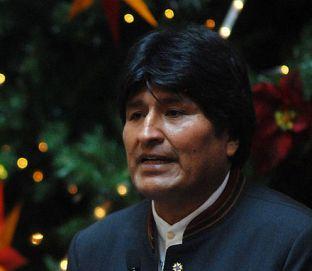
The arrest of Bolivia's top counternarcotics cop, Rene Sanabria, has not changed President Morales' stance on allowing the DEA into the country. Morales insisted he has no intention of inviting the DEA back. He alleged "interests of a geopolitical nature" were behind the Sanabria case. "They are using police to try to implicate the government," he said. Vice minister of social defense, Felipe Caceres, suggested that Sanabria's arrest was the DEA's revenge for being expelled. The president also hinted at U.S. hypocrisy, recalling reports that American agents ran guns to Nicaraguan Contra rebels in the 1980s with the proceeds of cocaine sales in the United States.
Drug prohibition is responsible for a phenomenal amount of government corruption across the globe. Retired-general Rene Sanabria, the former head of Bolivia's main anti-narcotics unit serving as a top intelligence adviser to the country's Interior Minister Sacha Llorenti, pled not guilty in a Miami federal court on charges of conspiring to smuggle cocaine into the U.S., in a scandal that has rocked the government of Evo Morales. Felipe Caceres, Bolivia's top antidrug official said Mr. Sanabria's security unit "was riddled" with corruption, and that 15 other police officials were in the process of being detained for complicity in the drug-smuggling operation.
In yet another example of drug prohibition corrupting top officials, the former head of Bolivia's counter-narcotics police, Rene Sanabria, has been arrested in Panama and sent to the U.S. to face charges he ran a cocaine trafficking ring.