Border

Border Region Lives in Fear Amid Mexico's Drug Prohibition War

Since Mexican President Felipe Calderon militarized his country's battle to continue drug prohibition in December 2006, more than 34,600 have died in prohibition violence. Along with the violence has grown a pervasive culture of corruption and fear. After the discovery of the most recent mass graves, 16 police officers were detained under suspicion of involvement. Despite the government's promises of security and increased aid, many remain unconvinced, and say that governmental control in the region is visible little, if at all.
Drug prohibition funds the bloody mayhem in Mexico (Image via Wikimedia.org)

Mexico Drug War Update

Mexicans marched against drug war mayhem by the tens of thousands over the weekend, but the hit men didn't even break stride.

As US Land Borders Tighten, Drug Smugglers Fly

Another lesson in the futility of drug prohibition: Drug smugglers are using low-flying aircraft that look like motorized hang gliders to circumvent new fences along the U.S. border with Mexico. The planes, which began appearing in Arizona three years ago, are now turning up in remote parts of California and New Mexico. And in a new twist, the planes rarely touch the ground. Pilots simply pull levers that drop aluminum bins filled with about 200 pounds of marijuana for drivers who are waiting on the ground with blinking lights or glow-sticks. Within a few minutes, the pilots are back in Mexico.
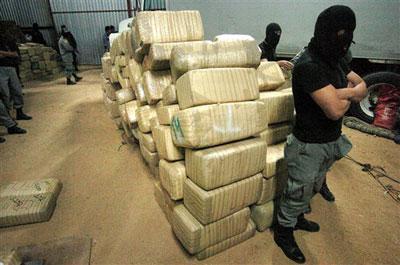
The busts keep on coming, but so do the drugs. (Image via Wikimedia.org)

Mexico Drug War Update

More mass graves have been found, and the gruesome killings continue.
el-diario-juarez.jpg

Mexico Drug War Update

This year's death toll has surpassed 8,000, and a Ciudad Juarez newspaper asks the cartels to tell them what they can safely print.
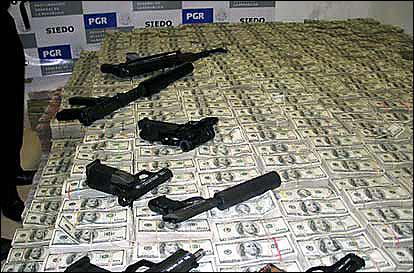
Drug prohibition funds the mayhem in Mexico. (Image via Wikimedia.org)

Mexico Drug War Update

Just when you thought it couldn't possibly get worse... 116 bodies turn up in a series of mass graves just south of the border.

Drug Trafficking Organizations Seek to Exploit Corrupt Federal Agents

As the Homeland Security Department's Customs and Border Protection (CBP) bureau has ratcheted up efforts to cope with the tide of crime sweeping across the Southwest border, Mexican drug trafficking organizations have stepped up efforts to infiltrate CBP and other federal, state and local agencies responsible for policing the border.
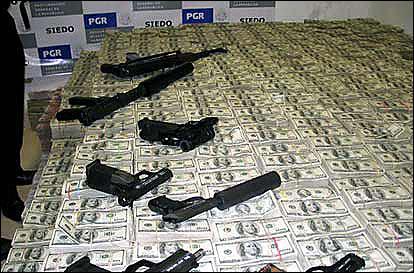
prohibition fuels violence (image via Wikimedia)

Mexico Drug War Update

More bloody days in Ciudad Juarez, and violence flares in Veracruz as well.

Texas Representative Says Drug Trafficking Organizations Threatening US Agents

Mexican drug trafficking organization members threatened to kill U.S. agents working on the American side of the border. Republican Michael McCaul said a law enforcement bulletin was issued warning that Mexican traffickers were overheard plotting to kill Immigration and Customs Enforcement agents and Texas Rangers stationed along the border.

Authorities in Awe of Drug Trafficking Organizations' Jungle-Built, Kevlar-Coated Supersubs

For decades, Colombian drug trafficking organization have pursued their trade with amazingly professional ingenuity, staying a step ahead of authorities by coming up with one innovation after another. When false-paneled pickups and tractor-trailers began drawing suspicion at US checkpoints, the traffickers and their Mexican partners built air-conditioned tunnels under the border. When border agents started rounding up too many human mules, one group of Colombian smugglers surgically implanted heroin into purebred puppies. But the drug runners’ most persistently effective method has also been one of the crudest — semi-submersible vessels that cruise or are towed just below the ocean’s surface and can hold a ton or more of cocaine.