Medical Marijuana

Colorado Hearing on Proposed Medical Marijuana Caregiver Restrictions Going on Now--You Can Listen In

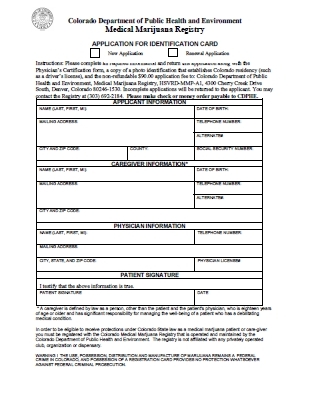
Last Friday, the Chronicle did a feature article on proposed rule changes in Colorado's medical marijuana program. State bureacrats want to tighten the definition of caregiver and they want to reduce the number of patients a caregiver can provide for to five. That would wreak havoc with the state's burgeoning dispensary industry. That hearing is going on right now. I just listened in for a few minutes, and it sounds like a full house. This is a room that seats 500. The largest attendance at any previous Board of Health meeting has been about a dozen, so it seems like Colorado's medical marijuana constituency is out in force. The Board is expected to announce whether it will accept the restrictive rule changes at the end of the day. You can listen in, too, if you so desire. Dial 1-866-899-5399, then punch in the conference room number: *3529725* and you're listening. Don't forget to punch in the * before and after the conference room number.

I Visited Imprisoned Medical Marijuana Patient Will Foster in Jail Last Night

I finally made into the Sonoma County Jail yesterday to visit medical marijuana patient Will Foster, who has been sitting there for the past 16 months first fighting off a bogus marijuana cultivation charge--since dropped by prosecutors--and now fighting off the zealous efforts of Oklahoma parole authorities to return him to the state where he was originally sentenced to a cruel and insane 93 years in prison. I don't want to recount the entire sorry tale--you can read my recent article about his case here--but in a nutshell: Thanks in part to a publicity campaign started by DRCNet, Foster was able to get that horrid original sentence reduced to 20 years, he eventually won release and was paroled to California, which released him from parole after three years of good behavior. That wasn't good enough for Oklahoma, which still wants a few more pounds of flesh. Oklahoma issued a parole violation extradition warrant a few years back, which foster successfully--and unusually--beat with a habeas corpus writ, a California judge throwing out the warrant. So Oklahoma parole officials issued another extradition warrant, this time trying to add new charges after the fact to increase Foster's potential exposure. That warrant is keeping him in jail right now. Foster and his allies are conducting a two-track effort to win his release: First, a political track attempting to get either the California governor or the Oklahoma governor to rescind the extradition warrant. You can help with this. Ed Rosenthal has a Free Will Foster blog post that will show you what actions to take. Second, Foster has prepared another habeas writ. It will have a hearing August 4, and I will attend. He could walk free that day, but he might want to walk fast--Oklahoma is vowing to immediately issue a new extradition warrant. To me, that's a sign of what vengeful, vindictive, authoritarian pricks inhabit the Oklahoma Department of Corrections. But that's just me. There may be a protest at his hearing. Details are sketchy at this point, but if you're in the neighborhood and interested, just email me for now: [email protected] After 16 months in the slammer, Foster isn't looking so good. He's got big dark circles under his eyes and his skin has that jailhouse pallor. He has long suffered from arthritis, which is what he used marijuana for, and he also suffers from injuries in a car accident a couple of months before he was arrested and jailed. The nice folks at the Sonoma jail have plied him with all sorts of pharmaceuticals, but no pot, of course. Still, Foster remains strong in spirit and firm in his resolve. This guy is a determined fighter, not just for his freedom, but for what is right. Will Foster never hurt a soul. Why years of his life have been taken away from him and his loved ones for growing a plant is beyond me. If you believe in justice, take the time to help him out. Will Foster isn't the only drug war POW, but he is fortunate in the sense that at least some one is paying attention to his plight. Today is Bastille Day. In lieu of mob action to free the prisoners, will you pay some attention to a drug war prisoner you know? Send a letter? Make a visit? Send a check to commisary? Agitate with your elected officials? Something? Let's not forget our imprisoned brothers and sisters!

New Hampshire Governor Vetoes Medical Marijuana Bill; A Handful of Additional Votes Needed to Override

The House passed the bill 234-138 and the Senate passed it 14-10. If my calculations are correct, that means a successful override needs 14 more votes in the House and 2 more in the Senate. If an override effort is made, it will happen when the legislature returns in September. Until then, it's time to let those legislators know what they need to do. Here is Gov. Lynch's veto message press release in its entirety:
Gov. Lynch’s Veto Message Regarding HB 648 By the authority vested in me, pursuant to part II, article 44 of the New Hampshire Constitution, on July 10, 2009, I vetoed HB 648-FN, an act relative to the use of marijuana for medicinal purposes. I have tremendous compassion for people who believe medical marijuana will help alleviate the symptoms of serious illnesses and the side effects of medical treatment. Although opinion of the medical community on the efficacy of medical marijuana remains mixed, I have been open, and remain open, to allowing tightly controlled usage of marijuana for appropriate medical purposes. But in making laws it is not enough to have an idea worthy of consideration, the details of the legislation must also be right. I recognize that the sponsors of this legislation, and the members of the conference committee, worked hard to attempt to address the concerns raised about this legislation. However, after consulting with representatives of the appropriate state agencies and law enforcement officials, I believe this legislation still has too many defects to move forward. Law enforcement officials have raised legitimate public safety concerns regarding the cultivation and distribution of marijuana. These concerns have not been adequately addressed in this bill. Marijuana is an addictive drug that has the potential to pose significant health dangers to its users, and it remains the most widely abused illegal drug in this State. I am concerned about the quantities of the drug made available to patients and caregivers under this bill, particularly because there are different types of marijuana and the potency of marijuana can vary greatly depending on how it is cultivated. I am troubled by the potential for unauthorized redistribution of marijuana from compassion centers. In addition to patients and designated caregivers, an unlimited number of “volunteers” can receive registry cards and receive the full protections afforded under this legislation to authorized cardholders. The provisions made for law enforcement to check on the status of an individual who asserts protection under the proposed law are too narrow. There are also many inconsistencies and structural problems in the legislation that would greatly complicate its administration and would pose barriers to controls aimed at preventing the unauthorized use of marijuana. The bill does not clearly restrict the use of marijuana to those persons who are suffering severe pain, seizures or nausea as a result of a qualifying medical condition. The bill requires compassion centers to hold a license to cultivate and distribute marijuana for medicinal purposes, but the bill does not contain clear provisions regarding a licensing process or standards. Compassion centers can be penalized for distributing amounts of marijuana that exceed permissible limitations, without the compassion centers having the means to know how much marijuana the patient already possesses. Caregivers in some instances are required to control the dosage of marijuana without any real means to accomplish this task. The bill leaves unclear the authority of a landlord to control the use of marijuana on rented property and in common areas of property. While the bill contemplates self-funding, there have been inadequate fiscal studies. The Department of Health and Human Services’ administrative responsibilities are of such a magnitude under this legislation that the fees potentially would be so great as to deny access to anyone but the wealthiest of our citizens, resulting in potential inequities. I understand and empathize with the advocates for allowing medical marijuana use in New Hampshire. However, the fact remains that marijuana use for any purpose remains illegal under federal law. Therefore, if we are to allow its use in New Hampshire for medical purposes, we must ensure that we are implementing the right policy. We cannot set a lower bar for medical marijuana than we do for other controlled substances, and we cannot implement a law that still has serious flaws. Therefore, I am regretfully vetoing HB 648-FN.

I Was Turned Away Again Trying to Visit Medical Marijuana POW Will Foster in Jail Last Night

You remember Will Foster: The Oklahoma arthritis sufferer who was sentenced to 93 years in prison for growing a closetful of pot plants, eventually got his sentence reduced to 20 years, got paroled to California, and finished parole there, but whom neanderthal Oklahoma parole officials want to drag back to that benighted state to extract yet another pound of flesh. Will has been sitting in the Sonoma County Jail for 16 months now after a bogus bust of his legitimate medical marijuana garden. The local charges were eventually dropped, but Foster remains behind bars and deprived of his liberty because of Oklahoma's pending parole violation extradition warrant. The extradition warrant has been signed by the governors of both California and Oklahoma, but either could end this tragedy by rescinding his signature. Those are the two obvious political pressure points. Will has fended off extradition by filing a writ of habeas corpus (he won an earlier one), but that means he stays in jail in California for as long as it takes to resolve that--unless one of those governors acts. I wrote about his plight here. Ed Rosenthal has organized a campaign to Free Will Foster. Go there and do what he asks. So, anyway, I went to see Will last night. It was my second attempt to visit him. I was turned away a few nights ago because I was wearing steel-tipped shoes. Who knew? Well, I didn't see him last night, either. After his girlfriend, Susie Mueller, and I arrived at 7:15 to get in line for the 7:30 sign-in for the visits set for 8:15, then waited before getting in line for the actual 8:15 visit, the whole place went into lockdown. We waited awhile to see if the lockdown would be quickly lifted, but it wasn't, so we left. I'll try again next week. Sheesh, it's starting to feel like it's as hard to break into one of these joints as it is to break out.

Snitch Exposed in Charlie Lynch Case


As if the persecution prosecution of medical marijuana provider Charlie Lynch wasn't sufficiently sickening already, The New Times in San Luis Obispo has some stunning revelations about the involvement of a confidential informant who assisted police in the case.

Apparently, police employed a professional informant who obtained a doctor's recommendation and purchased marijuana at Lynch's dispensary. The guy is a world-class scumbag with a history of impersonating police officers and committing various crimes. His work in San Luis Obispo began when he personally approached police and offered to help generate drug arrests. Lynch's case was one of many, including another marijuana case in which one of the defendants ended up committing suicide.

While this guy probably wasn't a critical factor in making the Lynch case possible, his involvement adds another layer of moral depravity to the Lynch saga. Given that Charlie Lynch scrupulously followed state law, the only actual criminal involved in the case was the police informant!

As alarming and frequent as gratuitous drug war injustices are, they still somehow turn out to be even worse than we thought.

I went to visit Will Foster in Jail A Couple of Nights Ago

I wrote about the Will Foster case in the Chronicle last week. Here's a brief summary: Foster had a small medical marijuana garden in Tulsa that was raided in 2005. Two years later, he was sentenced to an insane 93 YEARS in prison. Only after a publicity campaign in which DRCNet played a vital role was he resentenced to merely 20 years, and after being twice denied parole, he was paroled to California. Although Oklahoma thought Foster should be on parole until 2011, California decided he didn't need any more state supervision and released him from parole after three years. That wasn't punitive enough for Oklahoma. Although Foster had left the Bible Belt state behind with no intention of ever returning, Oklahoma parole officials issued a parole violation warrant for his extradition to serve out the remainder of his sentence. When Foster had to show ID in a police encounter, the warrant popped up, and he was jailed. Desperate, Foster filed a writ of habeas corpus and won! A California judge ruled the warrant invalid, and Foster was a free man again. But not for long. It's thirst for vengeance still unslaked, the state of Oklahoma issued yet another parole violation warrant for Foster's extradition because he refused to agree to an extension of his parole to 2015--four years past the original Oklahoma parole date. Then he got raided in California, thanks to bad information from an informant with an axe to grind. Foster had a legal medical marijuana grow, but it took a hard-headed Sonoma County prosecutor more than a year to drop charges, and Foster has been jailed the whole time. Now that the charges have been dropped, Foster still isn't free because Oklahoma still wants him back. Extradition warrants have been signed by the governors of both states, and he was days away from being extradited in shackles when he filed a new habeas writ this week. Filing the writ will stop him from being sent back to Oklahoma, but it also means he's stuck in jail for the foreseeable future. The writ is a legal strategy; his real best hope is to get one of those governors to rescind the extradition order. You can help. Click on this link to find out how to write the governors. I think a campaign of letters to the editor of Oklahoma papers might help, too. Those letters might ask why Oklahoma wants to continue to spend valuable tax dollars to persecute a harmless man whose only crime was to try to get some relief for his ailments--and who has no intention of ever returning there. ...So, anyway, I went to see Will at the Sonoma County Jail Saturday night. But I didn't get in. The steel-toes in my footwear set off the metal detector, and I quickly found out such apparel was a security risk. Who knew? I'll go back later this week. I guess I'll wear sandals. In the meantime, there are letters waiting to be written. Keyboard commandos, saddle up!

Marijuana Debate on CNN


Rob Kampia's closing line is right on target. As the debate heats up, we're seeing our opposition desperately invoke the horrors of alcohol and tobacco in a cynical attempt to frame legalization in a familiar and negative context. The simple response is that those drugs are far more dangerous. The harms they cause are only relevant to the discussion insofar as they illustrate the mindless hypocrisy of our marijuana laws. If the most workable alcohol and tobacco policy is legalization, then the same must absolutely be true of marijuana.

Medical Marijuana Dispensaries Are Coming to Rhode Island

It's official:

PROVIDENCE, R.I. -- The House and Senate on Tuesday each overrode Governor Carcieri's veto of legislation allowing three "compassion centers" to dispense medical marijuana.

The Senate vote was 35 to 3. The House vote was unanimous, 67 to 0.
For the bill to become law, both houses were required to overide the veto of their own and the other house's bill. The measure is now in effect.

It's just inspiring to see an entire state legislature stand up in unison to protect patients. Carcieri's veto was driven by the same petty, false, and widely-refuted propaganda that's been deployed in desperation against medical marijuana legislation for more than a decade now:

In vetoing the bills, Carcieri said he thought "the increased availability, along with a complacent attitude, will no doubt result in increased usage, and will negatively impact the children of Rhode Island" and complicate the jobs of law enforcement officers.

Think about how remarkable it is that virtually the entire House and Senate of Rhode Island have come forth and firmly rejected this garbage. There was a time when reformers were all alone on this issue, yet today it is our opposition that stands isolated and estranged from public opinion.

The folks at the Rhode Island Patient Advocacy Coalition deserve a big round of applause for taking on this battle and winning by knockout.

"Tough on Drugs" Politics Just Aren't as Popular Anymore

The Rolling Stone piece I mentioned earlier also contains an excellent observation from drug policy expert/centrist Mark Kleiman, with regards to the new administration's pledge to respect state medical marijuana laws:

"There are two striking things about that," says Mark Kleiman, who directs the study of drug policy at UCLA. "One was that the administration thought that they could get away with it. And the other is that they did! There was no outcry, or even an attempt at an outcry. The administration clearly thinks that being 'soft on drugs' is no longer a political vulnerability. And it looks like they're right."

This perfectly illustrates the emergence of the new drug war politics. The long-standing consensus within our political culture that the public demands harsh drug laws is just pure fiction. Test that theory any way you want and it will fail to deliver every time. State-level marijuana reforms passed by colossal margins in 2008, support for legalization is polling at record levels, and legalization repeatedly emerged as America's top political issue according to public votes on the president's own website.

We are cascading towards a remarkable moment when the politics of drug policy are revealed to be far removed from what many believed them to be.

Charlie Lynch Sentenced to Jail for Medical Marijuana

Today, Charlie Lynch was sentenced to one year and one day in jail for operating a medical marijuana clinic that was legal under California state law. U.S. District Court Judge George Wu declined to impose the 5-year mandatory minimum that federal prosecutors deemed appropriate and I've been informed that the U.S. attorney was visibly upset with this outcome. In contrast, Reason reports that Lynch's attorneys "seem extremely happy and relieved with the sentence and are convinced they will knock it down much lower and that Lynch will not be in prison anytime soon."

In that respect, today's outcome brings back memories of the government's epic campaign against Ed Rosenthal, in which federal prosecutors exhausted phenomenal resources, drew virulent public criticism, frustrated the trial judge, and ultimately walked away disappointed. Rosenthal's persecution and ultimate vindication galvanized national support for medical marijuana, thus the Lynch trial feels very much like a parting shot from an entrenched clan of desperate drug war demagogues who've all but expended their legal and political resources while alienating the American public at every turn.

The fatal flaw in the federal war on medical marijuana has always been that if you try hard enough to put people in jail for it, you'll lend urgency and credibility to the movement for reform.