After the possible kidnapping attempt of a college student last Friday, the U.S. Consulate is warning Americans who travel to Monterrey that they face a greater risk of being kidnapped.
Feb. '09 drug policy forum held by<br>Mexico's Grupo Parlamentario Alternativa
Faced with a mounting death toll, Mexican President Felipe Calderon has called for a debate on legalizing drugs, but it doesn't look like it's going anywhere just yet.
The discovery of the bodies of 72 people, probably Central American immigrants, on a farm not far from the US border, is the latest gruesome "top that" moment in Mexico's unending prohibition-related violence.
Mexican marines have found 72 corpses at a ranch after a shoot-out with drug traffickers that left one soldier and three gunmen dead near the town of San Fernando in Tamaulipas. It appears to be the largest dumping ground for the victims of drug prohibition violence found in Mexico since President Felipe Calderon began a stunningly unsuccessful offensive against traffickers in late 2006.
At least eight bullets have been fired into El Paso, TX in the last few weeks from the rising violence in Ciudad Juarez, Mexico, one of the world's most dangerous places. And all American police can do is shrug because they cannot legally intervene in a war in another country. The best they can do is warn people to stay inside.
The Mexican military shot and killed a US citizen on a coastal highway Saturday night. They said he attacked them while driving toward them. The consulate wants an investigation.
Drug prohibition violence continues to build in Mexico where a gun fight occurred in front of the American School Foundation, the school of choice for the children of many of Monterrey's top businessmen as well as the children of Americans working in the city. The gun battle is the latest sign that Mexico's prohibition violence is spreading to wealthier areas of the country which had long thought themselves immune, and has deepened the fear that has gripped Monterrey in the last few months.
A growing movement in Mexico to legalize drugs, particularly marijuana, is taking shape. Four proposals that aim for varying degrees of decriminalization or legalization of drugs are on the docket in Mexicoâs House of Deputies, and another is circulating in the Senate. Meanwhile, former Mexican President Vicente Fox, who was a key U.S. ally in the war on drugs, has backed the legalization of drugs, saying prohibition has failed to reduce violence and corruption.
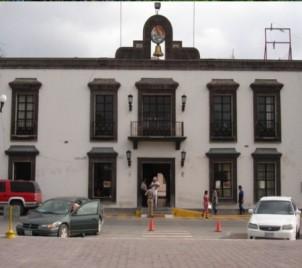
Santiago Papasquiaro, site of Saturday's firefight
The death toll in Ciudad Juarez this year is over 1,800 so far, meaning 2010 is on pace to be another record year for murder there. And that's just Juarez.
Experts say Mexico's President FelipeCalderon needs to get entrenched problems in the penal and judicial system under control if he is to have any chance of winning a war that has claimed more than 28,000 lives since late 2006 and sparked fears that drug trafficking organizations could turn Mexico into a lawless narco state.