Source and Transit Countries
A Cohesive Strategy for the Future of Afghanistan: Reconciling Counter-Insurgency, Counter-Narcotics and Reconstruction Efforts"
The Senlis Council, in collaboration with The International Institute for Strategic Studies (IISS), will be holding a symposium on âA Cohesive Strategy for the Future of Afghanistan: Reconciling Counter-Insurgency, Counter-Narcotics and Reconstruction Efforts.â
DEA's "Project Deliverance" Will Undoubtedly Fail to Deliver
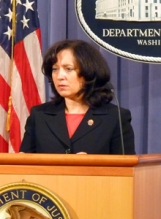
DEA acting chief Michele Leonhart, and her boss, US Attorney General Eric Holder, are bragging about a major, DEA-led operation that has netted 2,200+ arrests, with pounds of drugs and millions of dollars seized. "Project Deliverance" involved more than 300 law enforcement agencies, more than 3,000 DEA agents, and took 22 months. According to DEA's press release, they captured 1,262 pounds of methamphetamine, 2.5 tons of cocaine, 1,410 pounds of heroin, and 69 tons of marijuana, plus $154 million.
Operationally, Deliverance was certainly a big project -- it's easy to see why they're excited. And for the thousands of people throughout the US who were arrested in it, it's a life-changing event, though for the worse. But will Project Deliverance make any real difference in drug use and the drug trade? Is the operation really a big deal, when examined next to the reality of drug use and the drug trade in the United States today?
I hate to be a wet blanket, but if history is a guide, Project Deliverance will have no long-term impact on the drug trade. Though notable in its scale, the operation is only one of many carried out by the US and allied governments over decades. During that time, the measure of drug availability -- price, an increase implies a product is less available, relative to its demand* -- has gone in the opposite of the intended direction, and dramatically. For example, the average US street price of cocaine is less than a fifth in real terms than it was in 1980. Previous drug sweeps have seen their temporary gains erased in just one or two weeks.
The reason is that the big sounding numbers touted by Leonhart, while large for the agency and our government, are small compared with the drug trade. Deliverance's 2.5 tons of cocaine constitutes less than one percent of the 300 metric tons of cocaine the government estimates are consumed annually in the US. So does the 69 tons of marijuana. They did get a few percent of the heroin, if numbers don't deceive, but even that's still small. And the 2,200 alleged dealers and traffickers arrested in Project Deliverance make up a similarly tiny fraction of the hundreds of thousands of people employed in the US by the illegal drug trade. Some drug businesses will doubtless be extinguished by Project Deliverance, but others will have little difficulty replacing the lost supply or filling the open positions. And how much powder or weed did the investigators let go by during the 22 months it took to complete the operation? How much will they have to let slip by during the months or years it takes to mount the next one?
In an uncharacteristically "big picture" review published a few weeks ago, the Associated Press declared the 40-year drug war a failure by every measure. Will media follow that lead and go beyond the surface in their reporting on Project Deliverance? I have a few suggestions for those intrepid reporters who would like to:
 | |
- Ask DEA or DOJ spokespersons if they expect the substances targeted in the sweep to be less available to US consumers of them, and if so for how long.
- Ask them if previous operations, individually or collectively, have had that effect. If they say yes, ask them to be specific as to what their evidence is, and compare it with numbers like the aforementioned cocaine prices.
- Do some follow-up, say two or three weeks from now. Ask government officials, cops who walk the drug beat, and drug users, what if any difference they saw in the supply of the targeted drugs, and if so if they see still any. Follow up again in one or two months. See if DEA will give you early access to the price data.
Heroin Trafficking in Afghanistan is a Really Big Deal, Unless the Presidentâs Brother Does It
Rumors that the brother of Afghan President Hamid Karzai may be involved in drug trafficking have not been investigated. Why?
The whole thing reeks and this "limited resources" excuse sounds dubious at best. Ahmed Wali Karzai is chief of the Kandahar Provincial Council. If heâs a drug trafficker, thatâs kind of a big deal, isnât it? Our inability/unwillingness to even explore such a possibility just shows once again that our supply reduction efforts in Afghanistan are a total joke.
The assertions about the involvement of the presidentâs brother in the incidents were never investigated, according to American and Afghan officials, even though allegations that he has benefited from narcotics trafficking have circulated widely in Afghanistan.
â¦
Several American investigators said senior officials at the D.E.A. and the office of the Director of National Intelligence complained to them that the White House favored a hands-off approach toward Ahmed Wali Karzai because of the political delicacy of the matter. But White House officials dispute that, instead citing limited D.E.A. resources in Kandahar and southern Afghanistan and the absence of political will in the Afghan government to go after major drug suspects as the reasons for the lack of an inquiry. [NYT]
The whole thing reeks and this "limited resources" excuse sounds dubious at best. Ahmed Wali Karzai is chief of the Kandahar Provincial Council. If heâs a drug trafficker, thatâs kind of a big deal, isnât it? Our inability/unwillingness to even explore such a possibility just shows once again that our supply reduction efforts in Afghanistan are a total joke.
Our Drug War Alliances in South America Are Crumbling
Decades of drug war demolition tactics have taken their toll on our diplomacy in South America:
This is just the inevitable consequence of bribing foreign governments to let our soldiers run around on their land slashing and burning the livelihoods of impoverished populations. We've declared war on the coca plant itself, insisting that it not be grown even by indigenous people who've used it for thousands of years for altitude sickness and appetite suppression. As it becomes increasingly clear that none of this is accomplishing anything, everyone's starting to realize that we have no intention of ever leaving.
We literally go around giving report cards to sovereign nations rating their cooperation in our own hopeless effort to stop Americans from using drugs. Both sides in the South American drug war are funded with U.S. dollars, yet we bare only the burden of our own indulgence, not the horrific violence and destabilization wrought by the endless war on drugs.
Thanks to democracy, however, the victims of our disastrous policies in South America may elect leaders who want to kick us the hell out. I canât say I blame them.
QUITO (Reuters) - From Argentina to Nicaragua, Latin Americans have elected leftist leaders over the last decade who are challenging Washington's aggressive war on drugs in the world's top cocaine-producing region.
These governments are shaking off U.S. influence in the region and building defense and trade alliances that exclude the United States. Some now say they can better fight drugs without U.S. help and are rejecting policies they do not like.
The strongest resistance to U.S. drug policies is in Ecuador and Bolivia, two coca-growing countries of the Andes, and in Venezuela.
This is just the inevitable consequence of bribing foreign governments to let our soldiers run around on their land slashing and burning the livelihoods of impoverished populations. We've declared war on the coca plant itself, insisting that it not be grown even by indigenous people who've used it for thousands of years for altitude sickness and appetite suppression. As it becomes increasingly clear that none of this is accomplishing anything, everyone's starting to realize that we have no intention of ever leaving.
We literally go around giving report cards to sovereign nations rating their cooperation in our own hopeless effort to stop Americans from using drugs. Both sides in the South American drug war are funded with U.S. dollars, yet we bare only the burden of our own indulgence, not the horrific violence and destabilization wrought by the endless war on drugs.
Thanks to democracy, however, the victims of our disastrous policies in South America may elect leaders who want to kick us the hell out. I canât say I blame them.
Bloody Culiacan
As we reported on Friday, Culiacan, the capital of the northwestern Mexican state of Sinaloa, was the scene of a two-day forum last week, the International Forum on Illicit Drugs, where there was much criticism of the Mexican drug war and the planned escalation of it envisaged by Plan Merida, the $1.4 anti-drug aid package cooked up by the Bush and Calderon administrations.
The so-called "narco-violence," which might more accurately be called "prohibition-related violence," was, unsurprisingly, a central concern of presenters at the forum. In the year and a half since President Calderon took office and unleashed the Mexican military on the narcos, some 4,000 people have been killed. As if to punctuate that concern, just as the conference was wrapping up Wednesday, a series of armed confrontations broke out in central Culiacan.
Sparked by a joint military-federal police sweep that was attacked by AK-47-wielding narcos in a Chevy Tahoe, gun battles broke out across the city as narcos swooped in to lend aid to their colleagues being harassed and captured by the law and other, rival narcos intervened. In one shoot-out between rival narco factions, two men were killed. In another shoot-out, between narcos and state police, two cops were killed. The military and police arrested 13 presumed cartel gun-men and seized a huge arsenal of heavy weapons, cash, and drugs.
Thursday morning, military pick-ups and Hummers were cruising the streets of Culiacan, soldiers at their posts in back with heavy machine guns. Military helicopters buzzed over the city, although it was unclear whether they were supporting urban ground operations or were on their way to search for marijuana and poppy fields in the nearby mountains.
(I apologize for not having any photos of this stuff. My camera battery went dead Tuesday morning, and having brought with me the wrong bag of electronic stuff, I couldn't recharge it. I went to five different camera stores in Culiacan looking for either a new battery or a charger, to no avail. I finally found a store in Mexico City Friday that charged it for me, so I have lots of photos of Saturday's Global Marijuana March in Mexico City. They will show up in a blog post later today.)
The heavy military and law enforcement presence didnât do much good. Friday night, the narcos struck back, ambushing a federal police patrol in the heart of Culican, killing four officers and leaving three other seriously wounded. But it wasn't just narcos vs. cops and soldiers Friday night. As reported by the Mexican news agency Notimex, a little after 11 Friday night, at least 60 armed men broke into three houses in a city neighborhood and seized five men, then took off in a 15-vehicle convoy, which was in turn attacked, leaving one man dead at that scene. At the same time, two other shoot-outs erupted in different neighborhoods of the city, while simultaneously, on the outskirts of town, presumed narcos shot and killed two Culiacan city police.
It's not always easy to figure out who is killing whom. There are local, state, and federal police, any one of whom could be working for the cartels. There's the army. Then there are the competing cartels themselves. In Culiacan, long controlled by Joaquin "El Chapo" Guzman and his Sinaloa cartel, Guzman and his group are being challenged by the Arrellano Felix Juarez cartel, which wants to take over "la plaza," or the franchise, as the local drug connection is known. Just to complicate things further, the Juarez cartel is allegedly being aided by the Zetas, the former elite anti-drug soldiers turned cartel hit-men, who usually work for the Gulf cartel.
And this is just in Culiacan. There are other prohibition-related killings every day, soldiers and police being assassinated every day. On Saturday, the Mexican secretary of public security held a ceremony to honor the nine federal police killed by the narcos in the last few days. Another was gunned down in the Mexico City suburb of Coyoacan Friday night, too.
All of this pathology, of course, is a direct result of prohibitionist drug polices aggressively pursued by Washington and Mexico City. And what is their response? Let's have more of the same, only more so.
Bush and the Drug Czar Want You to Pay For the Mexican Drug War
President Bush and Drug Czar John Walters want Congress to give Mexico $1.4 billion of our money to waste on the drug war. Mexico can't afford a massive drug war like ours, so we're supposed to just go ahead and buy them one. It's a terrible plan.
Just listen to all the stuff the Drug Czar wants to buy for them. It's like building decades of drug war infrastructure overnight. The very fact that you need all this stuff ought to provide a clue that drug prohibition is a raging disaster of an idea:
The drug cartels are already funded by U.S. drug dollars. If we buy Mexico an entire anti-drug army to fight them, we'll be funding both sides of a brutal war in a foreign nation all because we can't come to terms with our own drug use.
The violence and chaos has to stop and it won't stop if we spend $1.4 billion to continue it. The mess in Mexico is our responsibility, but only because we've been so stupid about drugs for so long. This war can only end one way and that is to bring home the soldiers and send in the tax collectors.
Just listen to all the stuff the Drug Czar wants to buy for them. It's like building decades of drug war infrastructure overnight. The very fact that you need all this stuff ought to provide a clue that drug prohibition is a raging disaster of an idea:
*Non-intrusive inspection equipment, ion scanners, canine units for Mexican customs, for the new federal police and for the military to interdict trafficked drugs, arms, cash and persons.Of course, the fact that we're even talking about this just shows the pathetic state of affairs we've achieved after decades of drug war demolition tactics. With nothing to show for the untold billions we've already poured down the drug war drain, our tough drug generals just want more money and more time.
*Technologies to improve and secure communications systems to support collecting information as well as ensuring that vital information is accessible for criminal law enforcement.
*Technical advice and training to strengthen the institutions of justice â vetting for the new police force, case management software to track investigations through the system to trial, new offices of citizen complaints and professional responsibility, and establishing witness protection programs.
*Helicopters and surveillance aircraft to support interdiction activities and rapid operational response of law enforcement agencies in Mexico.
*Initial funding for security cooperation with Central America that responds directly to Central American leadersâ concerns over gangs, drugs, and arms articulated during July SICA meetings and the SICA Security Strategy.
*Includes equipment and assets to support counterpart security agencies inspecting and interdicting drugs, trafficked goods, people and other contraband as well as equipment, training and community action programs in Central American countries to implement anti-gang measures and expand the reach of these measures in the region.
The drug cartels are already funded by U.S. drug dollars. If we buy Mexico an entire anti-drug army to fight them, we'll be funding both sides of a brutal war in a foreign nation all because we can't come to terms with our own drug use.
The violence and chaos has to stop and it won't stop if we spend $1.4 billion to continue it. The mess in Mexico is our responsibility, but only because we've been so stupid about drugs for so long. This war can only end one way and that is to bring home the soldiers and send in the tax collectors.
On the Border in the Lower Rio Grande Valley
I'm now down in the Lower Rio Grande Valley on the border between the US and Mexico. I've been staying in a hotel on the US side in McAllen, Texas, because, somewhat surprisingly, a hotel with an internet connection in the room is cheaper on this side. But I've been crossing the river every day to scout out Reynosa, the city of about half a million, on the other side, and to talk to informed observers, as well as common folks, there, about the recent wave of drug prohibtion-related violence and what can or should be done to reduce the toll.
One thing I'm finding is that people are very nervous, whether its the man in the street, human rights observers, businessmen, or even the US enforcers on the north side of the river. The human rights advocate I spoke with didn't want his picture taken ("there are several narco families on my block"), the Reynosa businessmen absolutely refuse to say anything on the record (although they complain bitterly of local corruption), people on the street look around nervously when I ask about the drug trade and the violence, and when I tried to take photos of the border crossing here, ICE agents ran up and demanded I stop.
While the violence here has subsided from the violent spasms of a few weeks ago, it continues, with my human rights observer reporting that another narco killing had occurred in the city Sunday night. That makes 14 so far this year in Reynosa, out of 23 total homicides. I'll be getting into some more of the numbers in a feature article on the situation here that will appear on Friday.
The poverty in Reynosa is striking. There are guys trying to sell calendars on the streets, there are guys quite eager to show me the way to "Boys Town," and there are other guys quite eager to peddle whatever drug I desire. I haven't taken them up on that, though.
Meanwhile, my schedule in Mexico City next week appears to be filling nicely. I'm set to meet with Congresswoman Elsa Conde, the author of the marijuana decriminalization bill, early in the week, as well as with a bunch of Mexican reform activists. I'll also be talking to various Mexican academic experts and people working with drug users in the city.
And I take advantage of being in Mexico. Yesterday, I stuck my head in the door of one of the numerous dental clinics just across from the bridge in Reynosa that cater mainly to American visitors. Before I knew it, I was in the chair and getting that crown I had long needed but could never afford. It cost $125, no appointment necessary, in and out quickly, and now I can drink cold drinks again.
I'll be trying to talk to as many people as possible here between now and Friday, so stay tuned.