Book Review

Herer.jpg
Herer.jpg

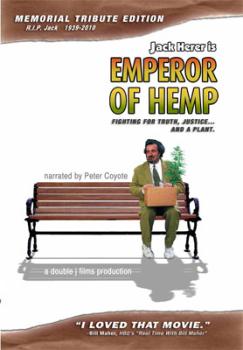
DVD Review: "Jack Herer is the Emperor of Hemp"

We review a memorial tribute edition of "Jack Herer is the Emperor of Hemp" that includes never seen interviews with Herer and the entire 1943 USDA film "Hemp for Victory." It is most worthy.
orangesunshine_0.jpg

Review: "Orange Sunshine: The Brotherhood of Eternal Love"

In the late 1960s, a small group of California surf bums and teenage working-class troublemakers took LSD, found God, and set out to turn on the world. Nicholas Schou's "Orange Sunshine: The Brotherhood of Eternal Love and Its Quest to Spread Peace, Love, and Acid to the World," from St. Martin's Press, is their story.

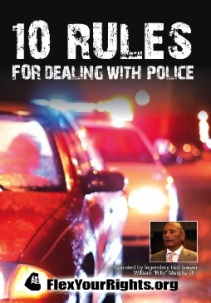
Drug War Chronicle Video Review: "10 Rules for Dealing With Police," from Flex Your Rights

In 2008, the latest year tallied in the FBI's Uniform Crime Report, more than 14,000,000 people were arrested in the United States, and uncounted millions more were subject to "stop and frisk" searches either on the streets or after being stopped for an alleged traffic violations. Of all those arrests in 2008, more than 1.7 million were for drug offenses, and about half of those were for marijuana offenses. For both pot busts in particular and drug arrests in general, nearly 90% of those arrested were for simple possession.
10 Rules is available with a donation to StoptheDrugWar.org now!
"10 Rules" will help the both the entirely innocent and those guilty of nothing more of possessing drugs in violation of our contemptible drug laws reduce the harm of their run-ins with police. Not that it encourages the violation of any laws -- it doesn't -- but it does clearly, concisely, and effectively explain what people can do to exercise their constitutional rights while keeping their cool, in the process protecting themselves from police who may not have their best interests in mind. Those stops and those arrests mentioned above, of course, were not random or evenly distributed among the population. If you're young, or non-white, or an identifiable member of some sub-culture fairly or unfairly associated with drug use, you are much more likely to be stopped, hassled, and perhaps arrested. The writers of "10 Rules," Scott Morgan and Steve Silverman of Flex Your Rights understand that. Building on the foundation of their 2003 video, "Busted: A Citizen's Guide to Surviving Police Encounters," which featured mainly young, white people involved in police encounters, Morgan and Silverman have expanded their target audience. In three of the four scenarios used in the video -- a traffic stop and search, a street stop-and-frisk search, and a knock-and-talk home search -- the protagonists are a young black man, a young Latino man, and a black grandmother, respectively. In only one scene, two young men apparently doing a dope deal on the street, are the citizen protagonists white. That's not to say that "10 Rules" is intended only for the communities most targeted by police, just that the writers understand just who is being targeted by police. The lessons and wisdom of "10 Rules" are universally relevant in the United States, and all of us can benefit from knowing what our rights are and how to exercise them effectively. "10 Rules" does precisely that, and it does so in a street-smart way that understands cops sometimes don't want to play by the rules. "10 Rules" build upon the earlier "Busted" in more than one sense. While "10 Rules" is expanding the terrain covered by "Busted," it has taken the cinematic quality to the next level, too. While "Busted" was made using a beta cam, this flick is shot in High Definition video, and that makes for some great production values, which are evident from the opening scene. "10 Rules" was shot on a bigger budget that "Busted," it has more actors (including some drug reform faces you might recognize), and more professional actors, and it has more of the feel of a movie than most video documentaries. And it has legendary defense attorney William "Billy" Murphy, who plays the role of socratic interlocuter in the video. (You may remember him from appearances on HBO's "The Wire.") Appearing in a courtroom-like setting before a multi-ethnic group of very interested questioners, the pony-tailed lawyer begins with a basic discussion of the rights granted us by the US Constitution, especially the Fourth, Fifth, and Sixth amendments dealing with the right to be free of unwarranted searches, the right to stay silent, and the right to legal counsel. His performance, folksy, yet forceful; scholarly, yet, street-savvy, sparkles throughout; his natural charisma shines through. From there, we alternate between Williams and his audience and the scenarios mentioned above. We see the young black man, Darren, get pulled over in traffic, produce a bit of bad attitude, and suffer mightily for his efforts. He gets handcuffed, manhandled, and consents to a search of his vehicle, after which the cop leaves his belongings strewn in the wet road and gives him a traffic ticket. Then it's back to the courtroom, where Darren, angry and feeling disrespected, tells his tale. Murphy is sympathetic, but explains that Darren broke rule #1. "Rule #1, always be calm and collected," the veteran attorney intones. "A police encounter is absolutely the worst time and place to vent your frustrations about getting stopped by the police. As soon as you opened your mouth, you failed the attitude test. Don't ever talk back, don't raise your voice, don't use profanity. Being hostile to police is stupid and dangerous." Such advice may be frustrating, but it's smart, and it's street-smart. Murphy noted that things could have turned out even worse, as the video showed in an alternate take on the scene with Darren twitching on the ground after getting tasered for his efforts. He also threw in some good advice about pulling over immediately, turning off the car, keeping your hands on the wheel, and turning on an interior light just to reduce police officers' nervousness level. Murphy uses the same scenario with Darren to get through rule #2 ("You always have the right to remain silent"), rule #3 ("You have the right to refuse searches), rule #4 ("Don't get fooled" -- the police can and will lie to you or tell you you'll get off easier if you do what they ask), and rule #5 ("Ask if you are free to go"). This time, the cop still has a bad attitude and Darren still gets a ticket, but he doesn't counterproductively antagonize the cop, he doesn't get rousted and handcuffed, he doesn't allow the cop to search his vehicle, he doesn't get intimated by the officers' threat to bring in a drug dog that will tear up his car, and he does ask if he's free to go. He is. Which brings us to a discussion of probable cause and and rule #6: "Don't expose yourself" and give police probable cause to search you. The video shows a car with bumper stickers saying "Got Weed?" "Bad Cop, No Donut," and "My other gun is a Tech-9" -- probably not a smart idea unless you really enjoy getting pulled over and hassled. More generally, "don't expose yourself" means that if you are carrying items you really don't want the police to see (and arrest you for), don't leave them lying around in plain sight. That's instant probable cause.
I'm not going to tell you the rest of the rules because I want you to see the video for yourself. But I will tell you about the heart-rending scene where the black grandmother lets police search her home in the name of public safety -- there have been some gang gun crimes, they explain pleasantly -- and ends up getting busted for her granddaughter's pot stash, arrested, and is now facing eviction from her public housing. Under Murphy's guidance, we rewind and replay the scene, with grandma politely but firmly exercising her rights, keeping the cops out of her home, and not going to jail or threatened with losing her home. In a time when police are more aggressive than ever, "10 Rules" is an absolutely necessary corrective, full of folksy -- but accurate -- information. "10 Rules" is the kind of basic primer on your rights that every citizen needs to know, it's well-thought out and well-written, and it not only is it full of critically important information, it's entertaining. Go watch it and learn how to flex your rights. Better yet, watch it together with your friends, your family, or your classmates, then practice putting the rules into effect. Sometimes it's as simple as saying a simple phrase -- "Officer, am I free to go?" Do some role-playing, practice saying the magic words, and "10 Rules" can help you survive any police encounter in better shape than otherwise. When you're done, watch it and practice again -- familiarity is the best help when facing an intimidating police officer staring down at you. We all owe a debt of gratitude to people who feel strongly enough about the rule of law in this country to help others learn how the law protects them and how to protect themselves within the law. A big thank you to the guys at Flex Your Rights is in order. And they would be the first to tell you the best way to thank them is to learn and apply the "10 Rules."

Review of Lies, Damned Lies and Drug War Statistics by Matt B. Robinson and Renee G. Scherlen (SUNY Press, 2007).

(Click here to read about DRCNet's book offer for members.) Reviewed by Randall G. Shelden, UNLV Looking back on my career and what I have learned there is a rather consistent theme in my thinking and writing about the subject of crime and justice. It might go something like this: we have a system in place that has a vested interest in keeping crime (including drug use) at a certain level. All sorts of careers and a lot of money (literally tens of billions of dollars each year) are dependent upon a steady supply of offenders - even if they have to pass new laws creating new categories of offenders (this especially applies to drugs). This is why many have used such terms like "crime control industry" or "criminal justice industrial complex." Agencies within this complex can sort of "have their cake and eat it too" in that they can have it both ways: when what they do is clearly failing they can merely claim that the problem still exists and they need to continuing doing the same thing (with more money of course). Obviously when things are going well they can take responsibility. This is the pattern with local police departments and in fact the entire system, namely that when crime is down they take credit because of some program in place; however, when crime goes up, they can shift responsibility to all sorts of variables. Favorites include a growing population in their jurisdiction (which is not usually that relevant), a growing youth or "crime risk" population (again, not that critical), "broken" or "dysfunctional" families and, two of my favorites, "outside influences" (e.g., gangs moving) or "liberal programs." Another way of putting this is that, as Jeff Reiman has observed, nothing succeeds like failure! A friend once told me something he learned when studying for his MBA. It is called "optimal starting and stopping points." What this means is that in order to bolster your argument or to make a case that what you are doing is working you pick out a time period that best represents your success and avoid time periods that do not. So it has been with the Office of National Drug Control Policy (ONDCP) and Matt Robinson and Renee Scherlen do an exceptional job of showing exactly this in Damned Lies and Drug War Statistics. They do this by critically examining six years (2000-2006) of the National Drug Control Strategy. They read through each and every annual report, looking especially for both accurate and inaccurate use of statistics and evidence of honesty and dishonesty in each report. They examined each and every claim made by ONDCP and evaluated ONDCP's stated goals (e.g., reducing drug use and drug availability). What they found for each year, almost without exception, was an almost total misuse of some very simple statistics (e.g., from various annual drug surveys, such as NHSDA, ADAM, MTF). They discovered that in many instances ONDCP employed the "optimal starting and stopping points." For instance, Robinson and Scherlen found that for the 2000 strategy report ONDCP uses a baseline of 1985 that shows a decline in drug use from that year to 1999. Yet the ONDCP was not started until 1988 and the largest drop in drug use was between 1985 and 1988, with the rate remaining steady for the rest of the decade. Other reports use 1979 as a starting point (the peak of drug use). On another occasion the ONDCP claims to prove that George Bush's goal during his 2002 "State of the Union speech of a 10% reduction of drug use by youth within two years was met, but uses a time period that started one year prior to Bush's speech! The authors also found numerous instances where they cite declines in youth drug use during a certain period, but ignore the fact that drug use was increasing among adults. In some cases the ONDCP reproduces a chart that clearly shows drug use increasing, but fail to comment on this rather obvious evidence of failure. On the other hand, on some occasions the ONDCP readily admits "disturbing trends" such as the fact that throughout the decade of the 1990s drug use among 8th, 10th and 12th graders (Monitoring the Future) is "close to record highs." Yet in this case, the ONDCP sort of ignores such an obvious failure and instead uses this as evidence of a need to get tougher in the war on drugs! Nothing succeeds like failure! Robinson and Scherlen note that ONDCP tends to "celebrate declines even when they are short-term or occurred a decade ago, and downplay increases unless they are being used to create alarm" (p. 66). More examples like this are presented throughout this book. Perhaps more importantly, even when there are some decreases in drug use, ONDCP fails to provide any evidence that this is because of what they did. Moreover, like I said above concerning police departments, Robinson and Scherlen note that "ONDCP only takes credit when drug use trends decline, but takes no responsibility when drug use trends increase" (p. 68). One of the most important chapters in this book is chapters 5 and 6 where they examine ONDCP's claims of success in "healing America's drug users and disrupting drug markets" and claims concerning the costs of the drug war. In these two chapters Robinson and Scherlen also critically examine ONDCP claims about the nature of the drug problem itself. First, ONDCP fails to differentiate between drug use and drug abuse and instead claims that "Drug use promises one thing but delivers something else – something sad and debilitating for users, their families, and their communities. The deception can be masked for some time, and it is during this time that the habit is 'carried' by users to other vulnerable young people." This is an outlandish claim totally lacking empirical foundation. As Robinson and Scherlen correctly note, drug use does not lead to such outcomes and in fact the majority of youths who use drugs do so only a few times and quit completely in their early 20s (p. 96). Such a conclusion is a general consensus by drug experts – obviously a group ONDCP fails to consult! ONDCP also claims that drug testing is effective, yet can cite only anecdotal evidence (such as a statement by one woman based upon a one conversation with a grocery bagger – see p. 102) and ignore comprehensive studies that find that it clearly does not work (e.g., as cited on the Monitoring the Future web site). This is called "confirmation bias" – selecting evidence that supports your position while ignoring contrary evidence. The ONDCP clearly has failed to disrupt drug markets and there has been a steady decline in the price of illegal drugs, as Robinson and Scherlen clearly show with charts taken from ONDCP's report. Yes, you read this correctly: ONDCP reproduces charts that show prices falling yet fail to make any statement that suggests that their goal of raising prices by disrupting drug markets is not working! This is one of the best points about the Robinson and Scherlen book in that they use readily available data – some reproduced by ONDCP – which clearly contradict ONDCP's claims! Robinson and Scherlen also examined claims about the costs of drugs and the drug war. Once again, they demonstrate that ONDCP misuses statistics. Here the authors show that the bulk of the costs of drugs stems from the drug war itself and the fact that some drugs have been criminalized. I could go on and on with more examples. Suffice it to say that Robinson and Scherlen have provided a thorough critique of the claims made by those in charge of the drug war. This book will no doubt prove to be a valuable resource for those trying to make sense of a war that has created so much havoc within our society. Incidentally, the first two chapters provide the reader with an excellent overview on the how the drug war came to be, including a brief history of anti-drug legislation. For those not familiar with this history, these chapters will provide much needed information to fill this gap. Read it, learn from it, use it. Randall G. Shelden is Professor of Criminal Justice, University of Nevada-Las Vegas, where he has been a faculty member since 1977. He is the author or co-author of several books, including Girls, Delinquency and Juvenile Justice (3rd edition), with Meda Chesney-Lind (which received the Hindelang Award for outstanding contribution to Criminology in 1992); Youth Gangs in American Society (3rd ed.), with Sharon Tracy and William B. Brown (both with Wadsworth); Controlling the Dangerous Classes: A History of Criminal Justice (2nd forthcoming, Allyn and Bacon); Criminal Justice in America: A Critical View, with William B. Brown (a revised edition of this book is forthcoming with Waveland Press). His most recent book is Delinquency and Juvenile Justice in American Society (Waveland Press). His web site is: www.sheldensays.com. (Click here to read about DRCNet's book offer for members.)