Public Health

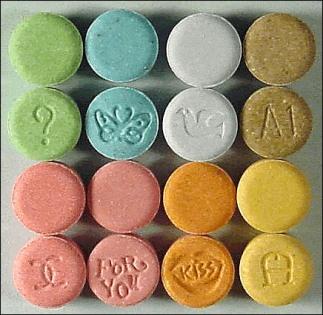
Ecstasy tablets (wikimedia.org)

Colombia Set to Decriminalize Ecstasy, Meth

Under Colombian law, people have the right to possess "personal dose" amounts of some drugs. Now, the government wants to add synthetics, such as meth and ecstasy, by setting "personal dose" amounts for them.
Poor Alabamians who use drugs would be ineligible for Medicaid under a proposed law. (image via Wikimedia)

Alabama Bill Would Drug Test Medicaid Recipients

A proposed Alabama law would require Medicaid beneficiaries to take random suspicionless drug tests -- and pay for them -- and would throw them off the rolls for at least a year if they test positive.

New Directions New Jersey: A Public Safety and Health Approach to Drug Policy

The New Directions New Jersey conference will examine the decades-old ramifications of President Nixon’s declaration of the “war on drugs” in urban communities like Newark.

Drug policy experts from across the country and around the globe will discuss topics including: reducing crime and incarceration, effectively addressing addiction, treating drug use as a health issue, communities of color and the war on drugs, and drug policy lessons and models from abroad.

When asked about the war on drugs on the campaign trail, President Barack Obama said, “I believe in shifting the paradigm, shifting the model, so that we focus more on a public health approach [to drugs].” Polls show the American people agree. President Obama’s drug czar, Gil Kerlikowske, told the Wall Street Journal last year that he doesn’t like the term “war on drugs” because “[w]e’re not at war with people in this country.” Yet for the tens of millions of Americans who have been arrested and incarcerated for a drug offense, U.S. drug policy is a war on them—and their families. What exactly is a public health approach to drugs? What might truly ending the war on drugs look like?  This conference will serve as a model for those looking for new directions and strategies for ending the war on drugs.

“We see the impact of the ‘drug war’ first hand, where so many people are incarcerated for being economically disadvantaged by the disappearance of work,” says Bethany Baptist Church pastor, Reverend William Howard.  “Afterwards, they are virtually permanently barred from the legal workforce for the rest of their lives. We must take our stand against the destructive scourge of drug abuse and trafficking by developing new, sensible strategies that solve more problems than they create.”

The conference will be guided by four principles:

  • The war on drugs has failed and it is time for a new approach to drug policy.
  • Effective drug policy balances prevention, harm reduction, treatment and public safety.
  • Alcohol and other drug use is fundamentally a health issue and must be addressed as such.
  • Drug policies must be based on science, compassion, health and human rights.

Panel members and conference speakers include:

·         Rev. Dr. M. William Howard, Jr., pastor, Bethany Baptist Church

·         Ethan Nadelmann,executive director, Drug Policy Alliance

·         Paula T. Dow, New Jersey Attorney General

·         Garry F. McCarthy, police director, City of Newark

·         Michelle Alexander, Esq., associate professor, Ohio State University’s Moritz College of Law and the Kirwan Institute for the Study of Race and Ethnicity; Author, The New Jim Crow: Mass Incarceration in the Age of Colorblindness

·         Beny Primm, MD, executive director, Addiction, Research and Treatment Corporation, Brooklyn, New York

·         Todd Clear, dean, School of Criminal Justice, Rutgers University

·         Donald MacPherson, former drug policy coordinator, City of Vancouver

·         Alex Stevens, professor of Criminal Justice, School of Social Policy, Sociology and Social Research, University of Kent, Chatham, UK

·         Stephanie Bush-Baskette, Esq., Author and Director of the Joseph C. Cornwall Center for Metropolitan Studies at Rutgers University

·         Deborah Peterson Small, Founder and Executive Director, Break the Chains: Communities of Color & the War on Drugs

For a full list of panel members, go to: http://www.drugpolicy.org/docUploads/DPA_New_Directions_NJ_final_prog_REFERENCE.pdf

Please RSVP to: [email protected]
Drug Lords Celebrate the 50th Anniversary of Global Prohibition (Video)

50 years ago the United Nations adopted the first international treaty to prohibit some drugs. The logic of the system was simple: any use of the drugs listed, unless sanctioned for medical or scientific purposes, would be deemed 'abuse' and thus illegal. As a result of this convention, the unsanctioned production and trafficking of these drugs became a crime in all member states of the UN. There is a small group that benefits phenomenally from the global war on drugs: organized criminals and terrorists. View this video from the Hungarian Civil Liberties Union and find out more.

Ex-South Carolina Treasurer Thomas Ravenel Says Legalize Drugs; Prohibition Is a Destructive, Costly and Futile Strategy

Former South Carolina Treasurer Thomas Ravenel is breaking his silence and taking on America's drug prohibition war, saying he advocates a repeal of the prohibition on drugs and calling the government's response a failure. "Drug abuse is a medical, health care and spiritual problem, not a problem to be solved within a criminal justice model," he said. Prohibition is "our government's most destructive policy since slavery," he added.

The Promise of Psychedelic Healing: Entheogens, Psychotherapy and Spiritual Development

An evening with Neal Goldsmith and special guests John Perry Barlow, Julie Holland, Daniel Pinchbeck, Rick Doblin, and Ethan Nadelmann. And a dance party.

Join Evolver.net and Mangusta Productions for a mind expanding night of psychedelic exploration. Banned after promising research in the 1940s, '50s, and '60s, the use of psychedelics as therapeutic catalysts is now being rediscovered -- a topic covered by Neal Goldsmith's new book, Psychedelic Healing: The Promise of Entheogens for Psychotherapy and Spiritual Development (Inner Traditions, 2011). Come celebrate its publication with a kaleidoscopic conversation featuring five of the leading figures in this field, speaking on the latest theories, research, and legal developments.

How can psychedelic experiences shape personality and healing? Can psychedelic psychotherapy truly can be transformative, either individually or collectively? Can humanity change course from an impending human dieback and blossom to create a truly integral planet?

Come for a reading and discussion with:

Neal Goldsmith, Ph.D, Psychotherapist specializing in psychospiritual development. A frequent speaker on spiritual on spiritual emergence, drug policy reform, and post-modern society. Author of Psychedelic Healing: The Promise of Entheogens for Psychotherapy and Spiritual Development

Rick Doblin, Ph.D., President and Founder of Multidisciplinary Association of Psychedelic Science (MAPS). His dissertation was on “The Regulation of the Medical Use of Psychedelics and Marijuana and his master’s thesis (Harvard) focused on the attitudes and experiences of oncologists concerning the medical use of marijuana.

John Perry Barlow, Visionary, former Grateful Dead lyricist, and a founding member of the Electronic Frontier Foundation, an organization which promotes freedom of expression in digital media.

Julie Holland, M.D., Psychiatrist specializing in psychopharmacology. Author of Ecstasy: The Complete Guide and bestselling Weekends at Bellevue and editor of The Pot Book: A Complete Guide to Cannabis and Ecstacy: The Complete Guide.

Daniel Pinchbeck, Bestselling author of 2012: The Return of Quetzalcoatl, Notes from the Edge of Time, and Breaking Open the Head: A Psychedelic Journey into the Heart of Contemporary Shaminism; Co-editor of Toward 2012: Perspectives on the Next Age. Daniel is the editorial director of RealitySandwich.com, and co-founder of Evolver.net.

Ethan Nadelmann, Ph.D., founder and executive director of the Drug Policy Alliance, the leading organization in the United States promoting alternatives to the war on drugs. Author of Cops Across Borders, the first scholarly study of the internationalization of U.S. criminal law enforcement, and co-author of Policing the Globe: Criminalization and Crime Control in International Relations.

Dance Celebration follows discussion with live music performance by JahFurry & Kochie Banton with the I & I Drum Link. DJ sets by Krister Linder and Winslow Porter.

Cash bar – organic beer, wine and drinks.
Astoria's own Beyond Kombucha presents a special blend for the event.
Snacks by Xango.

Doors at 7:30, panel at 8:00, dance celebration 11pm – 2am

Price - $25, $20 for Evolver Social Network Members (e-mail [email protected]om for info); $15 after midnight.

To purchase tickets please go to http://psychedelichealing.eventbrite.com/. Tickets will sell out so to guarantee your entrance, get yours ahead of time.

A New Political Approach to Drug Legalization: Debate

There appears to be a new standard that’s developed in political-speak for elected officials who are asked about drug legalization but don’t want to roundly condemn the idea. The answer, the seeming equivalent of dipping a toe into the waters of legalization, is that the idea should be "open for debate." That’s the approach President Barack Obama took in a town hall event broadcast on YouTube.

We Got 'Legalization' into the President's Vocabulary

Dear Friends,

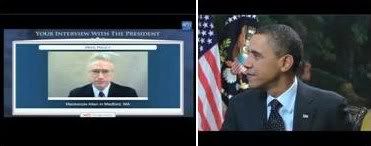
As you may have seen, Law Enforcement Against Prohibition speaker and retired deputy sheriff MacKenzie Allen's question on legalization was addressed by President Obama during YouTube's annual "Your Interview with the President" contest following the State of the Union address. MacKenzie's question pointed out that the war on drugs is an incredibly harmful policy and asked the president whether there should come a time for us to discuss the possibility of legalization, regulation and control of all drugs.

President Obama addressed MacKenzie's question by conceding that legalization is "an entirely legitimate topic for debate" and that while he is not in favor of legalization, he believes in a "public health-oriented approach." Although the president's continuing reliance on prosecution instead of treatment contradicts his verbal support for a public health-focused approach, it is historic that a president of the United States has finally acknowledged the legitimacy of a debate on legalization. Before being confronted directly with LEAP's law enforcement perspective, the Obama administration's standard line had been, "Legalization isn't in the president's vocabulary."

Since the president remains opposed to legalization even as he speaks for the necessity of a public health approach, it is up to us as drug policy reformers to lead the leaders and to educate our policy-makers on the urgent need for a system of legalized regulation. Drug prohibition is not a back-burner issue: it is quite literally a matter of life and death. Police officers and innocent civilians are dying every day, casualties of a failed policy that must be reevaluated via public debate until we set in place a workable system of legalization.

MacKenzie'squestion was voted the top-rated question for President Obama. It received more than twice the number of votes the second-place question received, and that's due in no small part to you, LEAP's loyal supporters. You know how hard our speakers work to bring legalization and regulation to the forefront. You know that as law enforcement professionals, their unassailable credibility takes this issue into the mainstream by presenting the perspective of those who have seen, firsthand, the devastating consequences of drug prohibition. Now we've taken the legalization debate all the way to the top, and we need YOUR support to keep this ball rolling.  Please make a contribution to LEAP today and show your support for everything our speakers have done and continue to do to show the world that legalization is the only sensible approach to drug policy.

Thank you so much,

Major Neill Franklin - Retired
Executive Director


Your donation puts LEAP speakers in front of audiences. To support LEAP's work by making a contribution, please click here.


121 Mystic Ave. Suites 8&9
Medford, MA 02155
(781) 393-6985 [email protected]


We need help growing our all-encompassing movement of citizens who want to end the failed "war on drugs," so please invite your family and friends to learn about LEAP.


Obama: Drugs Should be Treated as a Public Health Problem

Responding to a deluge of questions regarding marijuana and drug policy that came from YouTube, President Obama acknowledged that the war on drugs has not been effective and said he thinks of drugs as "more of a public health problem." More than 140,000 questions were submitted to the president on YouTube for his virtual question-and-answer session and visitors cast more than 1 million votes. 198 of the 200 highest-rated questions related to drug policy. While drug policy is hardly a top priority in Washington, President Obama said it is an "entirely legitimate topic for debate."

Providers to Help Form DEA Policy on Long-Term Care Facilities' Disposal of Unwanted Controlled Substances

The U.S. Drug Enforcement Administration is looking to modify its policies regarding the disposal of powerful medications that long-term care facilities need to discard. Providers, including the American Association of Homes and Services for the Aging, have submitted comments for the DEA's public meeting, which will be held next Wednesday and Thursday in Washington. Among the hottest topics will be the DEA's concern that abusers might devise new and unwanted pathways to re-route controlled substances from intended destruction.