Police/Suspect Altercations
'THE BALLAD' of Esequiel Hernandez on PBS
In 1997, U.S. Marines patrolling the Texas-Mexico border as part of the War on Drugs shot and killed Esequiel Hernández Jr. Mistaken for a drug runner, the 18-year-old was, in fact, a U.S.
Town Hall Meeting on Atlanta Police Department Shooting
Atlanta Police Chief Richard Pennington, District Attorney Paul Howard, and Mayor Shirley Franklin are all expected to attend a town hall meeting called by the Atlanta branch of the NAACP. The meeting
Cops Kill Father-to-Be in Botched Marijuana Raid
Drug Raids: Las Vegas Narc Serving Marijuana Search Warrant Kills Father-to-Be In His Own Bathroom
A 21-year-old father-to-be was killed last Friday night by a Las Vegas Police Department narcotics officer serving a search warrant for marijuana. Trevon Cole was shot once in the bathroom of his apartment after he made what police described as "a furtive movement."
Police have said Cole was not armed. Police said Monday they recovered an unspecified amount of marijuana and a set of digital scales. A person identifying herself as Cole's fiancée, Sequoia Pearce, in the comments section in the article linked to above said no drugs were found.
Pearce, who is nine months pregnant, shared the apartment with Cole and was present during the raid. "I was coming out, and they told me to get on the floor. I heard a gunshot and was trying to see what was happening and where they had shot him," Pearce told KTNV-TV.
According to police, they arrived at about 9 p.m. Friday evening at the Mirabella Apartments on East Bonanza Road, and detectives knocked and announced their presence. Receiving no response, detectives knocked the door down and entered the apartment. They found Pearce hiding in a bedroom closet and took her into custody. They then tried to enter a bathroom where Cole was hiding. He made "a furtive movement" toward a detective, who fired a single shot, killing Cole.
"It was during the course of a warrant and as you all know, narcotics warrants are all high-risk warrants," Capt. Patrick Neville of Metro's Robbery-Homicide Bureau said Friday night.
But a person identifying himself as Pearce's brother, who said he had spoken with his sister, had a different version of events: "The police bust in the door, with guns drawn to my little sister and her now deceased boyfriend," he wrote. "My sister is 8 ½ months pregnant, two weeks until the due date. But they bust in the door, irritated they didn't find any weapons or drugs, drag this young man into the restroom to interrogate him and two minutes later my sister hears a shot. They shot him with a shotgun, no weapon. For what? My sister is a baby, this young man is a baby, now my sister is at his house telling his mom her son is dead, and he is barely 21."
Pearce herself told the Las Vegas Review-Journal Monday that police forced her to kneel at gunpoint in the bedroom and that she could see Cole in the bathroom from the reflection of a mirror. According to Cole, police ordered Cole to get on the ground, he raised his hands and said "Alright, alright," and a shot rang out.
According to Pearce and family members, Cole had no criminal record, had achieved an Associate of Arts degree, and was working as an insurance adjustor while working on a political science degree at the University of Nevada-Las Vegas. He was not a drug dealer, Pearce said.
"Trevon was a recreational smoker. He smoked weed, marijuana. Thatâs what he did," she told KTNV-TV. "They didn't have to kill him. We were supposed to get married next year, plan a black and white affair,â she said. "He was all I ever knew, we were gonna make it."
LVPD Monday identified the police shooter as narcotics detective Bryan Yant, a 10-year veteran of the force. This is the third time Yant has controversially used his police firearm. In 2002, he shot and killed a robbery suspect, claiming the suspect, who was on the ground, aimed a weapon at him. But although the suspect's gun was found 35 feet away, a jury took only half an hour to find the shooting justified.
The following year, he shot and wounded a man armed with a knife and a baseball ball who had been hired to kill a dog that had killed another neighborhood dog. Yants claimed the man attacked him and that he mistook the bat for a shotgun, but the man said he was running away from Yants when Yants fired repeatedly, striking him once in the hip. Because there was no death in that case, no inquest was held, but the department's use of force board exonerated Yants.
Yants is on paid administrative leave while the department investigates. The family has hired an attorney to pursue a civil action. And another American has apparently been killed for no good reason in the name of the war on drugs.
"Narcotics warrants are high risk warrants," said Capt. Neville. The question is for whom, and the answer is obvious: The people on the receiving end of them. The police? Not so much, as we have shown in our annual surveys of police casualties in the drug war.
Law Enforcement: Drug Cops Kill Two in Two Days in Drug Raids in Florida and Tennessee
At least two US citizens were killed in their own homes by American police enforcing the war on drugs in a 48-hour period late last week. One was a 52-year-old white grandmother; the other was a 43-year-old black man. Both allegedly confronted home-invading officers with weapons; both were shot to death. No police officers were injured.
The combination of widespread gun ownership in the US with aggressive drug war policing is a recipe for tragedy, one that is repeated on a regular basis. Gun owners commonly cite protecting themselves from home-invading robbers as a reason for arming themselves, while police cite widespread gun ownership as a reason they need to use SWAT-style tactics, breaking down doors and using overwhelming force against potential shooters. That homeowners would pick up a weapon upon hearing their doors broken down is not surprising, nor is it surprising that police are quick to shoot to kill "suspects" who may pose a threat to them.
The first killing came Thursday morning in North Memphis, when a Bartlett, Tennessee, police narcotics squad serving a search warrant for drug possession -- not sales, manufacture, or possession with intent to sell -- shot and killed Malcolm Shaw, 43, after breaking into his home. Police said they knocked on Shaw's door several times and identified themselves as police before entering the home.
Police said Shaw emerged from a room and pointed a gun at plainclothes officer Patrick Cicci. Cicci fired once, killing Shaw. Cicci is on administrative leave pending an internal investigation.
While the Bartlett Police investigation is ongoing, that didn't stop the Shelby County District Attorney's Office from announcing Monday that Cicci will not be prosecuted. Cicci's killing of the homeowner was "apparent justifiable use of deadly force in self defense," a spokesman said.
Bartlett police said that while the Bartlett narcs conducting the raid were not in uniform, their gear clearly identified them as law enforcement. They wore "high-visibility vests" marked "POLICE" in several spots, police said.
The killing of the well-known neighborhood handyman led to the formation of a crowd hostile to police outside his home. Bartlett police on the scene had to call Memphis police to do crowd control.
Memphis police complained that the Bartlett narcs had not followed law enforcement protocols requiring them to notify the local agency when they were operating in its jurisdiction. They said they were notified only as the raid commenced, and that moments later, they got a request for an ambulance at the address, and moments after that, they got a request that they send a couple of police cruisers for crowd control.
Timothy Miers, who said he was Shaw's brother accused police of being trigger-happy. "How you gonna go in serving a warrant and shoot somebody?" Miers asked. "They already had their finger on the trigger."
The sense of disbelief over the killing was shared by members of the crowd gathered outside Shaw's home. Many complained about the officers' actions.
"My heart fell to the ground," one neighbor said.
"We can't believe it," said another. "Malcolm out of all people."
Family members expressed confusion about the shooting, saying Shaw was not a person they would have expected to threaten officers. "They say he had a gun," said Miers. "My brother doesn't have no gun."
Friends of Shaw said the same thing. "I ain't never seen him with no gun," said Arvette Thomas, a friend of Shaw.
Shaw never bothered anyone, neighbors said. "I think it's wrong to just kill him like they did," said a neighbor, "because he wouldn't hurt a fly."
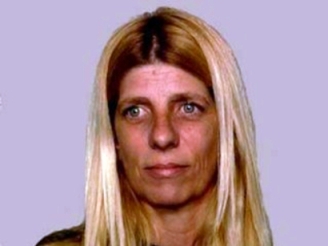
Less than 48 hours later, members of a Broward County Sheriff's Office SWAT team and its Selective Enforcement Team in Pompano Beach, Florida, shot and killed Brenda Van Zweiten, 52, during a drug raid on her home. Police had developed evidence that drugs were being sold from the residence, and obtained a search warrant. After allegedly identifying themselves as police, they broke through a sliding glass door to a bedroom and arrested Van Zweiten's boyfriend, Gary Nunnemacher, 47, on charges of possessing less than 20 grams of marijuana. Van Zweiten was in a different bedroom, and was shot and killed by deputies when she emerged holding a handgun. According to police, she refused to put down her weapon, so they shot her.
Police reported finding one gram of heroin, four grams of crack cocaine, marijuana, marijuana plants, 40 generic Xanax tablets, $550 cash, two shotguns, and a rifle. Family members said Van Zweiten had a prescription for Xanax, but was not a drug dealer. But police had earlier in the day arrested three people leaving the home who they say had bought drugs there -- although police did not say from whom.
After Van Zweiten's killing, police were unrepentant. "When you approach a police officer with a loaded weapon and don't put the weapon down, there's going to be consequences," sheriff's spokesman Mike Jachles said. "It's unfortunate, but I'd rather be talking about a dead suspect than a dead cop."
Van Zweiten's brother, Bill George, said his sister had recently received threats and was afraid of break-ins. "It was an unlawful shooting," he said. "She's 98 pounds. She was just trying to protect herself. I would come out of my room with a gun too."
As news of Van Zweiten's death spread, friends, neighbors, and family members expressed dismay and disbelief. They called the incident a "set up" and said the blonde grandmother was affectionately called "Mom" by many who knew her for using her home as a neighborhood hangout to keep kids off the streets. Dozens of people gathered in her yard near a flower-bedecked cross put up as a memorial.
"Look at these people," said George. "She helped so many of these young people."
"She was like a second mom to me," said Michael Miller, 18. "She would take in anybody."
"There was no reason for this," said son Rob Singleton, 32.
Van Zwieten had no criminal history involving drugs or violence, state records show.
George said that Van Zweiten had reason to fear intruders because she had been threatened recently by a man accused of stealing watches and rings that were part of a shrine to two of her four sons, who had died within the past three years, one in a traffic accident, one of a drug overdose. She had just installed an alarm system last week, George said. "She was scared."
Singleton showed reporters inside the house, including the small bedroom where she was shot. A large puddle of blood remained on the floor, and the walls and ceiling were splattered with blood -- from his mother's head, he said. "She was probably running into the closet and trying to hide," he said.
As is all too typical in such raid, police also totally trashed the house. As the Sun-Sentinel reported: "Much of the interior of the three-bedroom house looked as if it had been hit by a tornado... Drawers were pulled from dressers, clothes were scattered, a bed was overturned, food and crockery had been knocked from kitchen cabinets." The shrine to her dead sons was also destroyed, Singleton said.
Two Broward County Sheriff's Office detectives are on administrative leave pending an internal investigation. They have not been named.
 |
|
Man Gets Tased and Dies After Trying to Swallow Marijuana During Police Encounter
I just can't possibly tell you emphatically enough, if you're approached by police, DO NOT ATTEMPT TO EAT YOUR STASH:
It's just chilling to watch this young man struggle for his life. The tasing certainly didnât help either, but I'm not ready to join the ranks of commenters I've seen around the web who are calling this a murder. From what I can see, the officers did as they were trained and it's just a shame that police are now encouraged to zap anyone who struggles with them. It's unclear to me whether the tasing contributed to the choking and/or whether some of Grande's resistance was caused by his inability to breathe.
What is clear as day, however, is that Andrew Grande would still be alive today if it weren't a crime to possess marijuana. As long as police continue to arrest and criminally charge marijuana users, there will be no end to tragedies like this one. It may be easy for some to blame Grande's panic-induced actions for his death, but that's only half the story. If fear of our drug laws leads people to take such risks, then there is something wrong with our drug laws.
The leaders of the war on drugs are constantly claiming that they are only trying to help people like Andrew Grande. The drug czar upon taking office exclaimed, "we're not at war with people in this country," and he might even genuinely believe that to be true. But such assurances are worthless as long as people are so intimidated that they'd sooner risk choking to death than receive the sort of "help" our drug policy is known for.
No Drug Bust is Worth the Life of a Good Cop
Peter Moskos at the LEAP blog discusses the anniversary of the murder of police officer Marcellus Ward:
25 years later, the same counterproductive approaches that took Ward's life are still in effect, more so now than ever. Baltimore is widely recognized as ground zero for urban drug warfare in America and you could throw many more lives into the fire without even denting the drugs and violence for which Baltimore has tragically come to be known. Sadly, that is exactly what will happen.
Nevertheless, Ward will be remembered -- as he should be â for giving his life trying to make his city a better place. And, were it not for his sacrifice, powerful voices for drug policy reform, such as Kurt Schmoke, Neill Franklin and Peter Moskos might never have emerged from Baltimore.
Ward was killed 25 years ago. His assassination and last dying breaths were caught on tape and haunted the memory of many Baltimore police officers.
At a memorial, held where Ward was killed, Commissioner Bealefeld said that it is "not for us to judge the results of his sacrifice." And certainly a memorial to a slain officer is not the time and place for that.
But at some point we need to ask. Why are we risking our lives? What are we getting in return? If we don't ask these questions, more good men and women will die.
25 years later, the same counterproductive approaches that took Ward's life are still in effect, more so now than ever. Baltimore is widely recognized as ground zero for urban drug warfare in America and you could throw many more lives into the fire without even denting the drugs and violence for which Baltimore has tragically come to be known. Sadly, that is exactly what will happen.
Nevertheless, Ward will be remembered -- as he should be â for giving his life trying to make his city a better place. And, were it not for his sacrifice, powerful voices for drug policy reform, such as Kurt Schmoke, Neill Franklin and Peter Moskos might never have emerged from Baltimore.