
Police-Community Tensions

Cops Kill Father-to-Be in Botched Marijuana Raid

Drug Raids: Las Vegas Narc Serving Marijuana Search Warrant Kills Father-to-Be In His Own Bathroom A 21-year-old father-to-be was killed last Friday night by a Las Vegas Police Department narcotics officer serving a search warrant for marijuana. Trevon Cole was shot once in the bathroom of his apartment after he made what police described as "a furtive movement." Police have said Cole was not armed. Police said Monday they recovered an unspecified amount of marijuana and a set of digital scales. A person identifying herself as Cole's fiancée, Sequoia Pearce, in the comments section in the article linked to above said no drugs were found. Pearce, who is nine months pregnant, shared the apartment with Cole and was present during the raid. "I was coming out, and they told me to get on the floor. I heard a gunshot and was trying to see what was happening and where they had shot him," Pearce told KTNV-TV. According to police, they arrived at about 9 p.m. Friday evening at the Mirabella Apartments on East Bonanza Road, and detectives knocked and announced their presence. Receiving no response, detectives knocked the door down and entered the apartment. They found Pearce hiding in a bedroom closet and took her into custody. They then tried to enter a bathroom where Cole was hiding. He made "a furtive movement" toward a detective, who fired a single shot, killing Cole. "It was during the course of a warrant and as you all know, narcotics warrants are all high-risk warrants," Capt. Patrick Neville of Metro's Robbery-Homicide Bureau said Friday night. But a person identifying himself as Pearce's brother, who said he had spoken with his sister, had a different version of events: "The police bust in the door, with guns drawn to my little sister and her now deceased boyfriend," he wrote. "My sister is 8 ½ months pregnant, two weeks until the due date. But they bust in the door, irritated they didn't find any weapons or drugs, drag this young man into the restroom to interrogate him and two minutes later my sister hears a shot. They shot him with a shotgun, no weapon. For what? My sister is a baby, this young man is a baby, now my sister is at his house telling his mom her son is dead, and he is barely 21." Pearce herself told the Las Vegas Review-Journal Monday that police forced her to kneel at gunpoint in the bedroom and that she could see Cole in the bathroom from the reflection of a mirror. According to Cole, police ordered Cole to get on the ground, he raised his hands and said "Alright, alright," and a shot rang out. According to Pearce and family members, Cole had no criminal record, had achieved an Associate of Arts degree, and was working as an insurance adjustor while working on a political science degree at the University of Nevada-Las Vegas. He was not a drug dealer, Pearce said. "Trevon was a recreational smoker. He smoked weed, marijuana. That’s what he did," she told KTNV-TV. "They didn't have to kill him. We were supposed to get married next year, plan a black and white affair,” she said. "He was all I ever knew, we were gonna make it." LVPD Monday identified the police shooter as narcotics detective Bryan Yant, a 10-year veteran of the force. This is the third time Yant has controversially used his police firearm. In 2002, he shot and killed a robbery suspect, claiming the suspect, who was on the ground, aimed a weapon at him. But although the suspect's gun was found 35 feet away, a jury took only half an hour to find the shooting justified. The following year, he shot and wounded a man armed with a knife and a baseball ball who had been hired to kill a dog that had killed another neighborhood dog. Yants claimed the man attacked him and that he mistook the bat for a shotgun, but the man said he was running away from Yants when Yants fired repeatedly, striking him once in the hip. Because there was no death in that case, no inquest was held, but the department's use of force board exonerated Yants. Yants is on paid administrative leave while the department investigates. The family has hired an attorney to pursue a civil action. And another American has apparently been killed for no good reason in the name of the war on drugs. "Narcotics warrants are high risk warrants," said Capt. Neville. The question is for whom, and the answer is obvious: The people on the receiving end of them. The police? Not so much, as we have shown in our annual surveys of police casualties in the drug war.
Law Enforcement: Drug Cops Kill Two in Two Days in Drug Raids in Florida and Tennessee

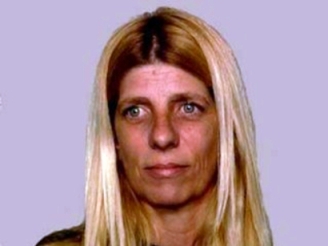
At least two US citizens were killed in their own homes by American police enforcing the war on drugs in a 48-hour period late last week. One was a 52-year-old white grandmother; the other was a 43-year-old black man. Both allegedly confronted home-invading officers with weapons; both were shot to death. No police officers were injured.
Brenda Van Zwieten
The combination of widespread gun ownership in the US with aggressive drug war policing is a recipe for tragedy, one that is repeated on a regular basis. Gun owners commonly cite protecting themselves from home-invading robbers as a reason for arming themselves, while police cite widespread gun ownership as a reason they need to use SWAT-style tactics, breaking down doors and using overwhelming force against potential shooters. That homeowners would pick up a weapon upon hearing their doors broken down is not surprising, nor is it surprising that police are quick to shoot to kill "suspects" who may pose a threat to them. The first killing came Thursday morning in North Memphis, when a Bartlett, Tennessee, police narcotics squad serving a search warrant for drug possession -- not sales, manufacture, or possession with intent to sell -- shot and killed Malcolm Shaw, 43, after breaking into his home. Police said they knocked on Shaw's door several times and identified themselves as police before entering the home. Police said Shaw emerged from a room and pointed a gun at plainclothes officer Patrick Cicci. Cicci fired once, killing Shaw. Cicci is on administrative leave pending an internal investigation. While the Bartlett Police investigation is ongoing, that didn't stop the Shelby County District Attorney's Office from announcing Monday that Cicci will not be prosecuted. Cicci's killing of the homeowner was "apparent justifiable use of deadly force in self defense," a spokesman said. Bartlett police said that while the Bartlett narcs conducting the raid were not in uniform, their gear clearly identified them as law enforcement. They wore "high-visibility vests" marked "POLICE" in several spots, police said. The killing of the well-known neighborhood handyman led to the formation of a crowd hostile to police outside his home. Bartlett police on the scene had to call Memphis police to do crowd control. Memphis police complained that the Bartlett narcs had not followed law enforcement protocols requiring them to notify the local agency when they were operating in its jurisdiction. They said they were notified only as the raid commenced, and that moments later, they got a request for an ambulance at the address, and moments after that, they got a request that they send a couple of police cruisers for crowd control. Timothy Miers, who said he was Shaw's brother accused police of being trigger-happy. "How you gonna go in serving a warrant and shoot somebody?" Miers asked. "They already had their finger on the trigger." The sense of disbelief over the killing was shared by members of the crowd gathered outside Shaw's home. Many complained about the officers' actions. "My heart fell to the ground," one neighbor said. "We can't believe it," said another. "Malcolm out of all people." Family members expressed confusion about the shooting, saying Shaw was not a person they would have expected to threaten officers. "They say he had a gun," said Miers. "My brother doesn't have no gun." Friends of Shaw said the same thing. "I ain't never seen him with no gun," said Arvette Thomas, a friend of Shaw. Shaw never bothered anyone, neighbors said. "I think it's wrong to just kill him like they did," said a neighbor, "because he wouldn't hurt a fly." Less than 48 hours later, members of a Broward County Sheriff's Office SWAT team and its Selective Enforcement Team in Pompano Beach, Florida, shot and killed Brenda Van Zweiten, 52, during a drug raid on her home. Police had developed evidence that drugs were being sold from the residence, and obtained a search warrant. After allegedly identifying themselves as police, they broke through a sliding glass door to a bedroom and arrested Van Zweiten's boyfriend, Gary Nunnemacher, 47, on charges of possessing less than 20 grams of marijuana. Van Zweiten was in a different bedroom, and was shot and killed by deputies when she emerged holding a handgun. According to police, she refused to put down her weapon, so they shot her. Police reported finding one gram of heroin, four grams of crack cocaine, marijuana, marijuana plants, 40 generic Xanax tablets, $550 cash, two shotguns, and a rifle. Family members said Van Zweiten had a prescription for Xanax, but was not a drug dealer. But police had earlier in the day arrested three people leaving the home who they say had bought drugs there -- although police did not say from whom. After Van Zweiten's killing, police were unrepentant. "When you approach a police officer with a loaded weapon and don't put the weapon down, there's going to be consequences," sheriff's spokesman Mike Jachles said. "It's unfortunate, but I'd rather be talking about a dead suspect than a dead cop." Van Zweiten's brother, Bill George, said his sister had recently received threats and was afraid of break-ins. "It was an unlawful shooting," he said. "She's 98 pounds. She was just trying to protect herself. I would come out of my room with a gun too." As news of Van Zweiten's death spread, friends, neighbors, and family members expressed dismay and disbelief. They called the incident a "set up" and said the blonde grandmother was affectionately called "Mom" by many who knew her for using her home as a neighborhood hangout to keep kids off the streets. Dozens of people gathered in her yard near a flower-bedecked cross put up as a memorial. "Look at these people," said George. "She helped so many of these young people." "She was like a second mom to me," said Michael Miller, 18. "She would take in anybody." "There was no reason for this," said son Rob Singleton, 32. Van Zwieten had no criminal history involving drugs or violence, state records show. George said that Van Zweiten had reason to fear intruders because she had been threatened recently by a man accused of stealing watches and rings that were part of a shrine to two of her four sons, who had died within the past three years, one in a traffic accident, one of a drug overdose. She had just installed an alarm system last week, George said. "She was scared." Singleton showed reporters inside the house, including the small bedroom where she was shot. A large puddle of blood remained on the floor, and the walls and ceiling were splattered with blood -- from his mother's head, he said. "She was probably running into the closet and trying to hide," he said. As is all too typical in such raid, police also totally trashed the house. As the Sun-Sentinel reported: "Much of the interior of the three-bedroom house looked as if it had been hit by a tornado... Drawers were pulled from dressers, clothes were scattered, a bed was overturned, food and crockery had been knocked from kitchen cabinets." The shrine to her dead sons was also destroyed, Singleton said. Two Broward County Sheriff's Office detectives are on administrative leave pending an internal investigation. They have not been named.

Honoring Good Cops Doesn’t Mean Ignoring Bad Ones

I recently mentioned the controversy surrounding some drug cops in Philadelphia who've been stealing cash and merchandise from convenience stores under the guise of enforcing paraphernalia laws.

Via Radley Balko, it looks like the story is getting more interesting. The Philadelphia Daily News obtained surveillance video from one of the stores, which shows officers sabotaging security cameras. While the video doesn’t catch officers actually stealing anything, it certainly doesn't look good that they're cutting wires on security cameras right before the alleged theft took place. The video also shows that the paraphernalia purchase cited on the search warrant never actually took place. Uh-oh.

The bottom line is that these cops are more than just a little bit dirty. They are insanely corrupt. And yet, the last time I wrote about this, someone actually complained about it in the comment section:

The majority of the criminals out there are bad mouthing the police organization because they are upset they got busted. Documented are thousands of cases where police acted as heroes and law enforcers; no one seems to want to report or testify on their behalf, so I am. I respect the law enforcement organizations for what their true goals are and strongly suggest that people such as your selves find a new line of work.

Yeah, I'll stop complaining about police misconduct when police stop committing outrageous crimes. I appreciate good police work as much as anyone, but I won't ignore or forgive horrible misconduct just because other cops are doing their job. Most bus drivers aren't alcoholics, but that doesn't mean every incident of drunk bus driving should become a celebration of all the heroic bus drivers who don't go to work wasted.

One crooked cop is one too many. And if the good cops can’t get rid of the bad ones, then they're not exactly perfect either.

On the Border in the Lower Rio Grande Valley

I'm now down in the Lower Rio Grande Valley on the border between the US and Mexico. I've been staying in a hotel on the US side in McAllen, Texas, because, somewhat surprisingly, a hotel with an internet connection in the room is cheaper on this side. But I've been crossing the river every day to scout out Reynosa, the city of about half a million, on the other side, and to talk to informed observers, as well as common folks, there, about the recent wave of drug prohibtion-related violence and what can or should be done to reduce the toll. One thing I'm finding is that people are very nervous, whether its the man in the street, human rights observers, businessmen, or even the US enforcers on the north side of the river. The human rights advocate I spoke with didn't want his picture taken ("there are several narco families on my block"), the Reynosa businessmen absolutely refuse to say anything on the record (although they complain bitterly of local corruption), people on the street look around nervously when I ask about the drug trade and the violence, and when I tried to take photos of the border crossing here, ICE agents ran up and demanded I stop. While the violence here has subsided from the violent spasms of a few weeks ago, it continues, with my human rights observer reporting that another narco killing had occurred in the city Sunday night. That makes 14 so far this year in Reynosa, out of 23 total homicides. I'll be getting into some more of the numbers in a feature article on the situation here that will appear on Friday. The poverty in Reynosa is striking. There are guys trying to sell calendars on the streets, there are guys quite eager to show me the way to "Boys Town," and there are other guys quite eager to peddle whatever drug I desire. I haven't taken them up on that, though. Meanwhile, my schedule in Mexico City next week appears to be filling nicely. I'm set to meet with Congresswoman Elsa Conde, the author of the marijuana decriminalization bill, early in the week, as well as with a bunch of Mexican reform activists. I'll also be talking to various Mexican academic experts and people working with drug users in the city. And I take advantage of being in Mexico. Yesterday, I stuck my head in the door of one of the numerous dental clinics just across from the bridge in Reynosa that cater mainly to American visitors. Before I knew it, I was in the chair and getting that crown I had long needed but could never afford. It cost $125, no appointment necessary, in and out quickly, and now I can drink cold drinks again. I'll be trying to talk to as many people as possible here between now and Friday, so stay tuned.

The Drug War Chronicle Andean Coca Tour 2007 is about to get underway

Friday night, I will be bedding down in Peru, after a day-long flight from Sioux Falls to Denver to Houston to Lima. That will be the first of 21 nights in Peru and Bolivia as the Drug War Chronicle explores the coca industry and its unsavory relative, the cocaine industry, in the Andes. While the process of making connections is ongoing and always a little shaky in developing countries, things are falling into place. While I will spend most of that first weekend resting and getting oriented, it looks like I'll have lunch Monday with Peruvian psychologist and coca expert Baldomero Caceres and Anthony Henman. Henman is a legendary name when it comes to coca. The British anthropologist (since gone native) is the man who, under a pseudonym, wrote "Mama Coca" back in the 1970s. That was the first serious ethnographic study of coca's history and use in the Andes for lay readers in English. I look forward to seeing what Henman has to say about the current state of affairs. Later that day, I will go to the upscale suburb of Miraflores for dinner with Ricardo Soberon, a leading Peruvian drugs and security expert. He was an advisor to coca grower leader turned congresswoman Nancy Obregon, but has since departed over unspecified political differences. I'll be sure to query him (and Nancy) about the nature of those differences. Speaking of Nancy, she is currently back home in northern Peru, so I won't be able to talk to her during that first week. But she will be back in Lima at the end of the month, and I will do an interview with her then. (I have to be out of Bolivia by February 28 because their visa requirements kick in on March 1.) I think I will fly from Lima to Ayacucho next Wednesday. That ancient city high in the Andes is the historic heartland of Sendero Luminoso, the Maoist guerrillas who led an uprising in the 1980s where tens of thousands were killed. The Senderistas are still around, though much weakened, and they try to gain the support of coca growers by killing policemen and anti-government drug workers. But Ayacucho is also the home of national coca growers' union leader Nelson Palomino, whom I will interview. Palomino and his crew have also promised to show me the coca fields and let me talk to farmers, so that should be enlightening. After that, I'll take a couple of days for the mandatory tourist visit to Machu Picchu outside Cusco, then I'll bus it from Cusco across the altiplano to Bolivia. At least that's the plan right now; there are reports of severe flooding right where I'll be crossing the border. I'm still trying to set things up with the American embassy in Lima and with the big Peruvian drug bureaucracies, ENACO (the coca monopoly) and DEVIDA (the drug enforcement bureaucracy). I've been talking with the US press officer in Lima about getting a meeting, but because I don't represent established media, I can't get official press status with the embassy, which means the press officer won't officially deal with me, but may manage to hook me up with some of the drug people in the embassy. Similar plans are in the works for Bolivia. Stay tuned.

Latest on Atlanta Police Killing of Elderly Woman in Drug Raid

The killing of an elderly Atlanta woman after she shot and wounded three undercover policemen during a nighttime drug raid just might end up shedding some much needed light on the sordid business that is drug law enforcement in these United States. What we're seeing so far is not exactly a shining endorsement of the Atlanta Police Department's REDDOG (Run Every Drug Dealer Out of Georgia) drug squad or what looks to be the mindless search warrant machinery of the Fulton County courts. Just today, the Atlanta Journal-Constitution, which deserves kudos for being all over this travesty, reported that the snitch on whose word the warrant was based now says he never bought drugs at Johnston's address, and the narcs involved in the raid asked him to lie about it after the fact.

Spying on Rock Festivals: High-Tech Hidden Surveillance at Wakarusa

UPDATE: Drug War Chronicle story about this incident online now. We wrote about police harassment of attendees at the Wakarusa Music and Camping Festival when the event occurred in June, but little did we know that was only the tip of the iceberg. Now, thanks to the bragadoccio of a high-tech surveillance equipment manufacturer and a resultant puff piece in an industry rag, we know that state, local, and federal law enforcement officials were all on hand at Wakarusa to check out a demo of some very sophisticated surveillance equipment. With hidden cameras, night vision equipment, and thermal imaging, cops were able to surveil up to 85% of the festival grounds, spot drugs and money changing hands, watch people roll joints, and subsequently make arrests.

A Look Inside Brazil's Drug "Commands"

Brazil, Latin America's largest and most populous nation gets surprisingly little press in the US. The mass media paid some attention back in May, when the country's "commands"--the criminal gangs formed in Brazil's prisons that control the drug trade and act as a de facto government in some of the favelas (ghettos) surrounding Sao Paulo and Rio de Janeiro--rose up in open rebellion against the Brazilian state. But since then, the silence in the US press has been deafening.