Politics Outside US

Politics Outside US Subtopics:
cannabis prescription legally produced in Netherlands (courtesy Marijuana Policy Project)

Reports of Germany Legalizing Medical Marijuana are Premature

The German health ministry announced last week that it was moving to legalize medical marijuana, and that no law changes are necessary, merely the changing of some regulations.
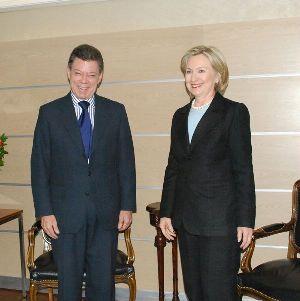
Colombian President Juan Manuel Santos Backs Mexico's Calderon on Drug Legalization

Colombian President Juan Manuel Santos declared his support for Mexican President Felipe Calderon's call for a discussion on drug legalization. "We are entering an era of the narco-trafficking business where one must have these type of reflections," he said. Santos announced that he will seek to form a united stance with Mexico and Peru on the legalization issue if California votes to legalize marijuana at the ballot in November.

Mexico Offers 'Drug Deal and People Trafficking Holidays'

While escalating violence in Mexico's war on drugs may be prompting some would-be tourists to think twice about visiting the country, others see it as a chance to try a different kind of travel experience. A new type of traveler is flocking to the country, keen to experience a dark underworld of drug traffickers, leftist rebels and illegal migration.
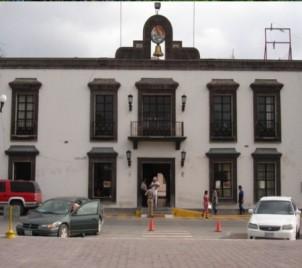
municipal building, San Fernando, Tamaulipas

Mexico Drug War Update

The discovery of the bodies of 72 people, probably Central American immigrants, on a farm not far from the US border, is the latest gruesome "top that" moment in Mexico's unending prohibition-related violence.

President Obama's New Drug War Strategy and the Low-Down on 'America's Trillion Dollar Dope Game'

Houston-area journalist Clarence Walker reflects on the occasion of a trillion dollars spent on the failed US drug war.

No other has spent more money on the dope trade than our own U.S. Federal Government. Even the richest of drug barons and associated players, dead and alive, cannot or could not have competed with the avalanche of paperwork doled out by the government in its fight against this monster. Even the once ruthless - and now dead - Pablo Escobar and his Medellin Cartel, the Cali Cartel or the Mexican Drug Cartels cannot match the money they have earned from the drug trade with the amount the Federal Government has allocated for years in its battle to stem the flow of illegal drugs into America.
 
And what is the cost for our government in its fight against this narcotics epidemic, a war raged now for some four decades? By all means have a guess, but here is the figure according to The White House: One trillion dollars.

The war on drugs is the longest war the American government has ever fought, longer than World War II, the Cold War, the Korean War and  the Vietnam War. And even after 40 years, the battle to enforce the laws of the land that prohibits "getting high on dope", this poisonous, addictive trade continues to thrive with the ferocity of an earthquake across the planet. Quite obviously, there is no clear-cut victory in sight.

From the outset, if  the intent driving the war on drugs, beginning in 1970 under President Nixon's Administration, was to create a drug-free America, we can see that after the spending of a trillion dollars, culminating in millions of arrests, the creation of a burgeoning health care system with which to effectively treat addicts, and the billions spent on law enforcement's task of arresting drug dealers and the  prison system in housing the millions of nonviolent drug offenders alongside thousands who have brought violence and death, the "war on drugs" nevertheless remains a dismal failure.

Costa Rica Is Wary of Plans to Allow U.S. Naval Ships to Dock on Its Shores for Anti-Drug Missions

A U.S. warship capable of deploying more than 1,000 military personnel and dozens of helicopters is headed right for Costa Rica’s peaceful Caribbean coast. In July, Costa Rica's legislative assembly approved a U.S. request for permission to dock 46 warships and 7,000 military personnel, mostly for narcotics missions in Costa Rican territory, sparking outrage among skeptics of the global war on drugs, including outspoken politicians, pacifists, student groups and everyday "Ticos", who are proud of their country’s six decades without a military. In short, it’s been an outright public relations disaster.

Legal Pot Gets Calderon Consideration as Deaths Mount

A record number of homicides in Mexico has forced President Felipe Calderon to open discussions on a new strategy in the war on drugs: legalization. The impact of violence is the biggest threat to the Mexican economy according to 57 percent of Mexican executives, a survey published last month by Deloitte Touche Tohmatsu showed. Mexico, which spends about $8.2 billion annually on law enforcement, would save between 5 percent and 15 percent of GDP if narcotics were legal in all countries, said Luis Rayo, a finance professor at the University of Utah.