Overdose Prevention

Opioid Safety Is Focus of $1 Million-A-Year Educational Initiative

A group that represents patients living with pain has launched an initiative aimed at educating physicians and patients on how to prescribe and use opioids and other pain treatments safely. The $1 million-a-year project is called Pain Safety & Access for Everyone, or PainSAFE. It comes in response to a rise in deaths and overdoses related to opioid abuse and controversy over how the drugs are marketed.
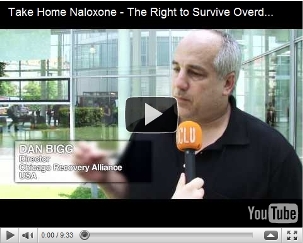
hclu-naloxone-video.jpg

The Right to Survive Overdoses

Our friends at the Hungarian Civil Liberties Union, in honor of Overdose Awareness Day (August 31), have produced a new video, "Take Home Naloxone -- The Right to Survive Overdoses." There are many legal, political and attitudinal barriers that currently stand in the way of getting this life-saving medication to the people who need it, when they need it, and numerous lives have been needlessly lost as a result.

Media Advisory: MD Legislature to Consider "Good Samaritan" Bill to Protect People Who Call 911 for Drug OD Victims

MEDIA ADVISORY: March 19, 2009 Contact: Naomi Long at (202) 669-6071 Maryland Legislature to Consider “Good Samaritan” Bill to Protect People Who Call 911 for Drug Overdose Victims 3/19/09: House Committee to Hold Hearing on Bill to Encourage Calls for Help What: Hearing for bill to encourage calls to the proper authorities during alcohol and drug-related overdoses by protecting caller from arrest for drug possession When: Thursday, March 19, 2009 at 1 p.m. Where: HB 1273 – House Judiciary Committee room 101 Maryland state legislators will be considering a bill that encourages more people to call for help during a life threatening drug overdose by shielding the person who calls 911 from arrest for simple drug possession. The bill does not preclude police officers from investigating other crimes, such as drug trafficking, or making arrests in the event the overdose victim dies. Less than 15% of intoxication deaths occur immediately. The majority of intoxication deaths occur in the presence of others, and most victims can be saved with prompt medical attention. Fear of police involvement is the most commonly cited reason for the failure to contact medical assistance, as well as for delay in calling for assistance. “It should never be a crime to call 911,” said Naomi Long, Director, of the Drug Policy Alliance, D.C. and Maryland Project. “This bill is about saving lives without compromising public safety. In these hard economic times, Maryland should focus resources on saving lives not arresting Good Samaritans.” The bill’s sponsor, Del. Kris Valderrama said she introduced the bill because, “It is about giving countless Marylanders a second chance at life. We should pass laws that send the message that saving lives is our first priority.” Proponents say the bill is similar to other state laws. Maryland’s “Safe Haven” law, for example, which provides immunity for a parent who abandons an unharmed newborn with a responsible adult, recognizes the importance of human health above punishment. The Maryland Association of County Health Officers supports the bill and Dr. Peter Beilenson, Health Officer for Howard County submitted supporting testimony, “This legislation is both humane and good policy. It will protect those who are trying to do the right thing at a time when minutes count.” The bill to encourage people to call 911 during an alcohol or drug-related overdose is sponsored by Del. Kris Valderrama (D) and co-sponsored by Delegates Anderson (D), Barnes (D), Carter (D), Conaway (D), Dumais (D), Gutierrez (D), Kramer (D), Lee (D), Ramirez (D), Rosenberg (D), Schuler (D), and Vallario (D). The Drug Policy Alliance supports the bill. Other supporting organizations include the University of Maryland chapter of Students for Sensible Drug Policy, the National African American Drug Policy Coalition, Maryland chapter of the National Council on Alcoholism and Drug Dependence and the Drug Policy Clinic of the University of Maryland Law School.

Press Release: US Conference of Mayors Passes Resolution Calling for City-Coordinated Drug Overdose Prevention Efforts

 Â Â [Courtesy of Drug Policy Alliance] 

FOR IMMEDIATE RELEASE: June 25, 2008

CONTACT: Daniel Robelo at (510) 229-5211 or Reena Szczepanski at (505) 983-3277

  United States Conference of Mayors Unanimously Passes Resolution Calling for City-Coordinated Drug Overdose Prevention Efforts

Nation’s Mayors Seek Policy Reforms that Will Save Both Lives and Dollars by Preventing Unnecessary Overdose Deaths 
Mayors Support Increased Access to Opioid Antagonist Medications and Adoption of Good Samaritan Immunity Policies that Shield Individuals Who Report Opioid-Related Health Emergencies from Prosecution

  WASHINGTON - June 25 - On Saturday, the United States Conference of Mayors (USCM) unanimously adopted a resolution supporting policies that could save thousands of lives by treating drug overdoses before they become fatal. “Last year, our nation’s mayors agreed that we must address the problems of substance use and abuse with a public health approach. This year we have continued that work by calling for policies that increase public safety by preventing unnecessary deaths. These policies have saved lives in Santa Fe and will work in other cities,” said Santa Fe Mayor David Coss, who sponsored the resolution at the 76th USCM Annual Meeting in Miami, Florida.

Adopted resolutions become the official policy of the USCM, which speaks as one voice to promote best practices and the most pressing priorities of our nation’s cities. The USCM last year declared the war on drugs a failure and called for a “New Bottom Line” in U.S. drug policy, which should be measured by the number of lives saved rather than the number of people imprisoned. This year’s resolution sets forth a comprehensive strategy for cities and states to reduce overdose morbidity and mortality by:

  • Supporting local programs that distribute naloxone – an opiate antagonist medication effective in reversing the respiratory failure that typically causes death from opioid overdose – directly to drug users, their friends, families and communities;
  • Urging state governments to adopt emergency “Good Samaritan” immunity policies that shield from prosecution people who are experiencing or have witnessed an accidental or intentional drug overdose and who have contacted 911 to request emergency medical treatment for the victim of drug toxicity or overdose;
  • Calling on the National Institute of Drug Abuse and the Centers for Disease Control and Prevention to urgently fund research to evaluate scientifically the effectiveness of overdose prevention interventions and develop model programs; and
  • Calling on the Food and Drug Administration to take all necessary and reasonable steps to facilitate the testing and approval of nasal and/or over-the-counter formulations of naloxone and to consider recommending prescription naloxone concurrent with prescribing strong opioid analgesics.

The mayors’ action responds to the facts that drug overdose is the second leading cause of injury death in the United States and that many overdose fatalities occur because peers delay or forego calling 911 for fear of arrest or police involvement – continually identified by researchers as the most significant barrier to the ideal first response of calling emergency services.

Nearly one hundred colleges and universities have adopted Good Samaritan immunity policies that have proven effective in encouraging students to seek help in the event of an alcohol or other drug overdose. New Mexico recently enacted the first such law in the country – the 911 Good Samaritan Act of 2007 – and similar life-saving legislation is pending in several states across the country, including California, Illinois, Maryland, New York, New Jersey, Rhode Island and Washington.

“Life-saving medications exist and must be made more widely available in the event of an overdose. At the same time, a victim or witness must not be afraid to ask emergency personnel for assistance. It should never be a crime to save someone’s life. The true crime is condoning policies that prevent victims from receiving that medication,” said Daniel Abrahamson, director of Legal Affairs for the Drug Policy Alliance.

Naloxone can be safely administered by non-medical professionals intravenously, intramuscularly and intranasally. Programs that provide overdose prevention education, rescue breathing training and take-home naloxone have been developed in New Mexico, Connecticut, Northern California, and the cities of Baltimore, New York City, Chicago, Philadelphia and Los Angeles.

In 2000, drug overdoses resulted in $2.24 billion worth of direct medical costs and an estimated $23.7 billion in lost productivity. Naloxone distribution pilot programs are inexpensive and have been added to existing services without the need for increased staff or space. These programs have been shown to save cities money by averting significant health care costs and have already saved several thousand lives.

The resolution is available here.
Press Release: Advocates Demand Effective Overdose Legislation to Deal with Epidemic

[Courtesy of Drug Policy Alliance] For Immediate Release: April 7, 2008 For More Info: Gabriel Sayegh, tel: 646-335-2264 or Tony Newman, tel: 646-335-5384 New York Overdose Epidemic: More People Die from Accidental Overdose than Homicides Public Heath Advocates, Community Groups Travel to Albany on Tuesday to Demand Effective Overdose Legislation Nearly 1,000 Flowers—One Flower for Every Accidental Overdose Death in NYC —to be Delivered to Gov. Paterson’s Office at 1 p.m., April 8 On Tuesday, April 8, the Drug Policy Alliance, Harm Reduction Coalition, New York City AIDS Housing Network, Voices of Community Advocates and Leaders, and advocates from around the state will travel to Albany to demand effective overdose legislation and public health policies for drug user health in New York. There is an overdose epidemic across the country and in New York State. In New York City alone, nearly 1,000 people died of accidental drug overdose in 2006, making it the fourth leading cause of death among adults after heart disease, cancer and AIDS. More people die of overdose than homicides in New York City. At 11 a.m., advocates will gather at Emmanuel Baptist Church for a strategy meeting and inspirational talk by Senator Tom Duane and Humberto Cruz, Exec. Director of NYS AIDS Institute. At 1 p.m., the coalition will make a special delivery to Gov. David Paterson’s office—one flower for every accidental overdose death in New York City. Nearly 1,000 flowers will be delivered. Many accidental drug overdoses in New York are preventable. Most people hesitate to call 911 because they fear getting arrested for illicit drugs. Assembly Bill 8740, the 911 Good Samaritan Bill, will save lives in New York by allowing people to call 911 to save a life without fear of being arrested. Additionally, the Expanded Syringe Access Program (ESAP), passed by the NYS Legislature in 2000, amended the Public Health Law to make possession of clean syringes legal. However, New York State Penal Law still states that possession of a clean syringe is a Class A misdemeanor, and many clients are arrested around syringe exchange programs—for possession of syringes. Advocates will call on legislators to remove syringes from the penal code to encourage injection drug users to access clean syringes to reduce HIV/AIDS without fear of arrest. What: Statewide Meeting and Lobby Day to Reduce Accidental Drug Overdoses When: Tuesday, April 8th 11:00 A.M. Where: Meeting at Emmanuel Baptist Church 275 State Street, Albany, NY Who: Advocates, with special comments by Senator Tom Duane and Humberto Cruz, NYS AIDS Institute Director Action: Flower Delivery to Gov. Paterson to symbolize overdose deaths in New York: 1:00 p.m. at the Executive Chamber

Press Release: OD Prevention Bill Receives Unanimous Senate Support

For Immediate Release: June 1, 2007 Media Contact: Hilary McQuie 510-333-8554 Overdose Bill Receives Unanimous California Senate Support SACRAMENTO - California Senate Bill (SB) 767, the Overdose Treatment Liability Act, cosponsored by the Harm Reduction Coalition (HRC), a national health and human rights advocacy group working to reduce drug-related harm, the County of Los Angeles, and the Los Angeles Overdose Taskforce, passed the bipartisan California Senate yesterday in a unanimous vote. Thanks to the leadership of Senator Mark Ridley-Thomas, the author of SB 767, California legislators are beginning to recognize the importance of access to naloxone, a very safe drug that lay people, with appropriate training, can safely and properly administer. SB 767 will make it easier for health care professionals to participate in comprehensive drug overdose prevention programs that prescribe the opioid antagonist naloxone, thereby removing a large obstacle to the creation and expansion of such programs in California. This proposed legislation will also make it easier to get naloxone into the hands of the people who are the most likely to be bystanders to opioid overdoses, increasing the likelihood that people overdosing on opioids will receive naloxone promptly. When the Senate Judiciary Committee heard the bill early last month, Sandi McClure, a member of the Los Angeles Overdose Taskforce, delivered powerful testimony about the loss of her daughter, Jennifer, 15 months ago to a heroin overdose. Ms. McClure noted that if her daughter or her friends had access to naloxone and knew how to respond to an overdose, Jennifer might still be alive today. Drug overdose, which is entirely preventable, is the second leading cause of accidental death in the United States. When a person overdoses on opioids (heroin, morphine, methadone, oxycontin, etc.), he/she is rendered unconscious and is in danger of dying because the opioids slow down, and eventually stop, the person's breathing. Naloxone counteracts life-threatening depression of the central nervous and respiratory systems caused by an opioid overdose, allowing an overdose victim to breathe normally. Currently, naloxone can be prescribed only by licensed health care professionals, and has the same level of regulation as prescription ibuprofen. SB 767 protects providers who prescribe take-home naloxone, facilitating greater access to lifesaving medicine for people experiencing opioid overdoses. The Assembly Judiciary Committee will hear the bill later this month. # # # # For more information about the Harm Reduction Coalition, visit http://www.harmreduction.org/.

CA: Overdose Bill Moves Forward: Unanimous Judiciary Committee Support

[Courtesy of the Harm Reduction Coalition] For Immediate Release: May 8, 2007 Contact: Emalie Huriaux, tel: 510-469-7941 Overdose Bill Moves Forward: Unanimous Judiciary Committee Support SACRAMENTO - California Senate Bill (SB) 767, the Overdose Treatment Liability Act, cosponsored by the Harm Reduction Coalition (HRC), a national health and human rights advocacy group working to reduce drug-related harm, and the County of Los Angeles passed the bipartisan California Senate Judiciary Committee today in a 5-to-0 vote. SB 767 will make it easier for health care professionals to participate in comprehensive drug overdose prevention programs that prescribe the opioid antagonist naloxone, thereby removing a large obstacle to the creation and expansion of such programs in California. This proposed legislation will also make it easier to get opioid antagonists into the hands of the people who are the most likely to be bystanders to opioid overdoses, increasing the likelihood that people overdosing on opioids will receive naloxone promptly. Emalie Huriaux, HRC's Overdose Project Manager stated after the unanimous vote, "We are pleasantly surprised. Liability legislation rarely gets support from the Senate Judiciary Committee. This vote shows that committee members understand the lifesaving effects SB 767 will have." Sandi McClure, a member of the Los Angeles Overdose Taskforce, delivered powerful testimony about the loss of her daughter, Jennifer, 15 months ago to a heroin overdose, and how access to naloxone may have saved her life. In addition, Dr. Jeffrey Gunzenhauser, Medical Director for the County of Los Angeles, spoke about the drug overdose epidemic in Los Angeles and throughout the country. Although naloxone is a very safe drug and recent studies have proven that lay people, with appropriate training, can safely and properly administer it, some clinicians are concerned about prescribing take-home naloxone for use by lay people. Clinicians voice concerns that patients may use naloxone on a third party experiencing an overdose and, in the event of an adverse reaction, the clinician could be held liable. In recent years, New York, New Mexico, and Connecticut have enacted legislation similar to SB 767 to protect licensed health care professionals from civil and criminal liability when prescribing take-home opioid antagonists. Since November 2003, HRC's Overdose Project has collaborated with the San Francisco Department of Public Health to provide overdose prevention, recognition, and response training, including naloxone prescriptions, to people at risk for experiencing an opioid overdose. To date, this collaboration has provided training and prescriptions to nearly 1,000 people and heard reports from 250 of them that they used naloxone in an overdose situation. Drug overdose, which is entirely preventable, is the second leading cause of accidental death in the United States. When a person overdoses on opioids (heroin, morphine, methadone, oxycontin, etc.), he/she is rendered unconscious and is in danger of dying because the opioids slow down, and eventually stop, the person's breathing. Naloxone counteracts life-threatening depression of the central nervous and respiratory systems caused by an opioid overdose, allowing an overdose victim to breathe normally. Currently, naloxone can be prescribed only by licensed health care professionals, and has the same level of regulation as prescription ibuprofen. SB 767 protects providers who prescribe take-home naloxone, facilitating greater access to lifesaving medicine for people experiencing opioid overdoses. The bill will be heard later this month by the Senate Appropriations Committee and, if passed, will move on for a vote by the entire Senate later this year. # # # # For more information about the Harm Reduction Coalition, visit http://www.harmreduction.org.