Organizations

Nice People Take Drugs

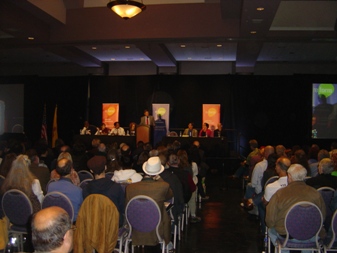
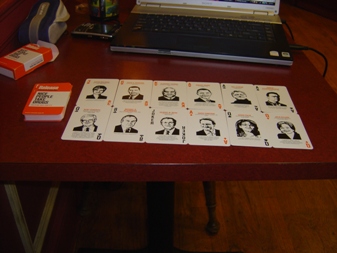
In June we highlighted a bus advertising campaign, "Nice People Take Drugs," conducted by the British drug reform advocacy group Release. Some of the nice people from Release attended the big drug policy conference in Albuquerque last week, and they were nice enough to give us one of their new "Nice People Take Drugs" decks of playing cards, featuring politicians from the US, UK and elsewhere and the quotes they've given about their past drug use. (Whether all of the featured politicians are nice people is a subjective question, of course.) The front of the cards feature the organization's web site and a toll-free helpline, hard to see in the picture (0845 4500 215 if you're in Britain and need the help). Albuquerque's "British Invasion" also featured the Transform Drug Policy Foundation's new publication, After the War on Drugs: Blueprint for Regulation. Check Drug War Chronicle later this week for a conference report highlighting this and more. Here's a sampling of the Release cards: Last but not least, for now, a picture I snapped during the conference's closing plenary, former New Mexico Governor Gary Johnson delivering the keynote:

Asia: Drug Users Form Regional Drug User Organization

In a meeting in Bangkok last weekend, more than two dozen drug users from nine different countries came together to put the finishing touches on the creation of a new drug user advocacy organization, the Asian Network of People who Use Drugs (ANPUD). The Bangkok meeting was the culmination of a two-year process began at a meeting of the International Congress on AIDS in Asia and the Pacific in Colombo, Sri Lanka, in 2007, and resulted in creating a constitution and selecting a steering committee for the new group. ANPUD adopts the principles of MIPUD (Meaningful Involvement of People who Use Drugs), and in doing so, aligns itself with other drug user advocacy groups, including the International Network of People who Use Drugs (INPUD), of which ANPUD is an independent affiliate, the Australian Injection and Illicit Drug Users League (AIVL),the Vancouver Area Network of Drug Users, and the Nothing About Us Without Us movement. ANPUD currently has more than 150 members and sees its mission to advocate for the rights of drug users and communities before national governments and the international community. There is plenty to do. Asia has the largest number of drug users in the world, but is, for the most part, woefully retrograde on drug policy issues. Not only do drug users face harsh criminal sanctions—up to and including the death penalty—but Asian has the lowest coverage of harm reduction services in the world. Access to harm reduction programs, such as needle exchanges and opioid maintenance therapy, is extremely limited. "People who use drugs are stigmatized, criminalized and abused in every country in Asia," said Jimmy Dorabjee, a key figure in the formation of ANPUD. "Our human rights are violated and we have little in the way of health services to stay alive. If governments do not see people who use drugs, hear us and talk to us, they will continue to ignore us." The Director of the UNAIDS Regional Support Team, Dr. Prasada Rao, spoke of the urgent need to engage with drug user networks and offered his support to ANPUD, saying that "For UNAIDS, HIV prevention among drug users is a key priority at the global level," said Dr. Prasada Rao, director of the UNAIDS Regional Support Team. "I am very pleased today to be here to see ANPUD being shaped into an organization that will play a key role in Asia's HIV response. It is critical that we are able to more effectively involve the voices of Asian people who use drugs in the scaling up of HIV prevention services across Asia." "When I go back home, I am now responsible for sharing the experiences with the 250 or so drug users who are actively advocating for better services at the national level," said Nepalese drug user and newly elected steering committee member Ekta Thapa Mahat. "It will be a great way for us to work together and help build the capacity of people who use drugs in Asia." "The results of the meeting exceeded my expectations," said Ele Morrison, program manager for AVIL's Regional Partnership Project. "The participants set ambitious goals for themselves and they have achieved a lot in just two days to set up this new organization. The building blocks for genuine ownership by people who use drugs is definitely there." While the meetings leading to the formation were organized and managed by drug users, the process received financial support from the World Health Organization, the UNAIDS Regional Task Force, and AIVL.

10 Rules for Dealing with Police

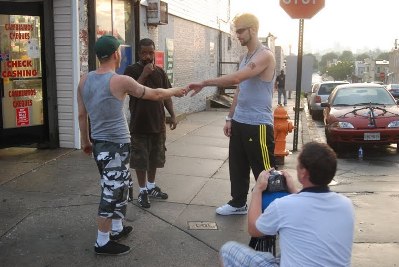
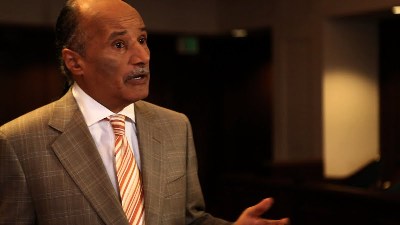
Many of our readers are familiar with the widely-viewed film Busted: The Citizen's Guide to Surviving Police Encounters, produced by the organization Flex Your Rights. The next Flex movie, 10 Rules for Dealing with Police, is set to come out before the end of the year. Filming took place in Baltimore a couple of weeks ago, and it is now in editing. Click here to check out photos; it really is looking pretty nice. narrated by the famous attorney William "Billy" H. Murphy, Jr.

Pain Activist Facing Fines in Free Speech Case

The government's war against pain doctors hit a new low last spring, when federal prosecutor Tanya Treadway, busy prosecuting Kansans Steve and Linda Schneider, subpoenaed pain control advocate Siobhan Reynolds for information on the Pain Relief Network's (PRN) public advocacy in support of the Schneiders. Despite ACLU efforts to quash the subpoena as an attempt to shut down free speech, judge US District Judge Julie Robinson allowed it. Friday, according an update from Jacob Sullum on Reason, Robinson imposed a $200/day civil contempt fine on both Reynolds and PRN, to begin in 10 days if she does not comply with the subpoena. An appeal is planned -- stay tuned. Earlier in the week, Boston-based civil liberties attorney Harvey Silverglate criticized Treadway in a column in Forbes magazine. We reprint a few paragraphs, also via Sullum:
When Reynolds wrote op-eds in local newspapers and granted interviews to other media outlets, Assistant U.S. Attorney Tanya Treadway attempted to impose a gag order on her public advocacy. The district judge correctly denied this extraordinary request. Undeterred, Treadway filed on March 27 a subpoena demanding a broad range of documents and records, obviously hoping to deter the peripatetic pain relief advocate, or even target her for a criminal trial of her own. Just what was Reynolds' suspected criminal activity? "Obstruction of justice" is the subpoena's listed offense being investigated, but some of the requested records could, in no possible way, prove such a crime. The prosecutor has demanded copies of an ominous-sounding "movie," which, in reality, is a PRN-produced documentary showing the plight of pain physicians. Also requested were records relating to a billboard Reynolds paid to have erected over a busy Wichita highway. It read: "Dr. Schneider never killed anyone." Suddenly, a rather ordinary exercise in free speech and political activism became evidence of an obstruction of justice.

Video: Crack Sentencing Reform Petition Delivered to Congress -- Former Prisoners, Family Members and Advocates Speak Out

Last month the "Crack the Disparity" Coalition delivered petitions signed by tens of thousands of people, calling for an end to the draconian US crack sentencing laws, to the offices of Rep. John Conyers (D-MI) and Pat Leahy (D-VT), respective chairs of the House and Senate Judiciary Committees. This short video on ColorOfChange.org shows one of the deliveries, and features comments from Karen Garrison, whose two sons were unjustly caught up in these laws; and from Nkechi Taifa, who heads up justice reform efforts at the Open Society Policy Center. The ColorOfChange.org page devoted to this petition also features audio from the press conference, including former Major League baseball star Willie Mays Aikens, who served 14 years in federal prison after an untreated cocaine addiction drew him into the federal system with crack charges.

Crack the Disparity Newsletter Vol. 1, No. 2

[Courtesy of the Crack the Disparity Coalition] Secure Fairness in Crack Cocaine Sentencing -- Join Lobby Day this Spring Plans are underway for the second national lobby day for crack cocaine sentencing reform in Washington, DC, hosted by the Crack the Disparity Coalition. An exact date has not yet been set but we invite advocates from around the country to attend the Capitol Hill event this spring. As a participant, you will speak with Members of Congress and their staff about the unjust sentencing disparity between crack and powder cocaine and the need to eliminate it. Training and materials will be provided to you. Look for more details in the December issue of the Crack the Disparity Newsletter. Home for the Holidays By Karen Garrison Karen Garrison is the mother of twin sons sentenced to nearly two decades for a first-time nonviolent crack cocaine offense. Her son Lawrence will soon be released due to the U.S. Sentencing Commission's recent changes to the sentencing guidelines for crack cocaine offenses. The dream will be a reality for one of my sons who will be home this December. It has been 10 years and Lawrence and Lamont's room has hardly been touched. I covered the beds with heavy plastic. Long ago I gave away their clothes and shoes to shelters and halfway houses, not only because of their weight loss, but clothing goes out of style in a period of ten years. I must now begin to prepare a place for one of my twins, never forgetting that one will remain behind unjust bars. I am buying sheets, towels, and gathering healthy recipes he will enjoy preparing. I will try to purchase new furniture and have already bought the paint for his room. Coming home to those same bunk beds would just make it harder on both of us. Those are the beds he shared with his twin brother Lamont. Commute Crack Cocaine Sentences in Time for the Holidays By Jasmine Tyler This month the Crack the Disparity Coalition launched the "Home for the Holidays" campaign to rally support for individuals serving excessive penalties for crack cocaine offenses who have filed commutation requests with President George W. Bush. The President expressed concern for the crack cocaine sentencing disparity in the early days of his administration. The sentencing disparity "ought to be addressed by making sure the powder-cocaine and the crack-cocaine penalties are the same," he said in 2001. "I don't believe we ought to be discriminatory." Advocates are hoping to capitalize on these sympathies to expedite applications for crack cocaine cases and increase recommendations for clemency. The campaign is promoting support for clemency applicants seeking relief from the uniquely severe penalties for low-level crack cocaine offenses that subject defendants possessing as little as 5 grams of crack cocaine to a mandatory minimum sentence of five years. A powder cocaine defendant must be convicted of selling 100 times that amount to trigger the same sentence. Since Congress has yet to act to alleviate this disparity, advocates' focus this fall is to ensure that those who are seeking clemency do not go unheard. Teen Profiles Crack Cocaine Reformer: Pamela Alexander - A Profile in Courage By Laura S., Cincinatti, OH This article was reprinted courtesy of TeenInk.com, a nonprofit, national teen magazine, book series, and website devoted entirely to teenage writing and art. On December 11, 2007, members of the United States Sentencing Commission voted unanimously to make a groundbreaking change in one of their policies. They decided that the disparity between sentences for crack cocaine crimes and those involving powder cocaine was exceedingly unjust and prejudiced. With crack users being predominantly black and powder cocaine users predominantly white, the Sentencing Commission judged the much harsher sentences for crack users to be racially biased at their core. The Commission therefore has allowed thousands currently imprisoned for crack cocaine violations to appeal their sentences before federal judges, in an effort to shorten these sentences where feasible. While this represents a major step toward racial equality and justice, one uncelebrated, independent woman put her career on the line for this same issue - seventeen years ago. Petition President Bush Join citizens concerned about the harsh mandatory minimum sentences for low-level crack cocaine offenses by telling President George Bush and Pardon Attorney Ronald Rodgers to expedite and give special consideration to commutation applicants serving excessive sentences for crack cocaine. Sign a petition by clicking here. Save the Date September 24-27, 2008: Congressional Black Caucus Foundation 38th Annual Legislative Conference, Washington, D.C. September 26-September 28, 2008: Critical Resistance 10th Anniversary Celebration and International Conference and Strategy Session, Oakland, CA October 19-22, 2008: International Community Corrections Association 16th Annual International Research Conference, "Risk, Resilience and Reentry," St. Louis, MO Spring 2009: Crack the Disparity Lobby Day, Washington, D.C. Media Attention Daily Press Editorial on Equalization of Crack and Powder Cocaine Sun-Sentinel Coverage on Prison Term Reductions for Cocaine Cases Kansas City Star Coverage on Former Kansas City Royal Baseball Player Willie Mays Aikens The Crack the Disparity Coalition includes the American Bar Association, American Civil Liberties Union, Break the Chains, Drug Policy Alliance, National Association for the Advancement of Colored People, National Association of Criminal Defense Lawyers, Open Society Policy Center, Restoring Dignity, Inc., Students for Sensible Drug Policy, The Sentencing Project, and United Methodist Church, General Board of Church and Society.
Video Highlights from Vienna Drug Policy NGO Forum

The week before last NGOs from around the world concerned with drug policy gathered at the United Nations Vienna location. I wasn't there, but friends of mine played an important role, and they did a great job. Check out these video interviews put together by the Hungarian Civil Liberties Union: Find the HCLU web site here.