Spending Priorities
U.S. Congress Joint Economic Committee Hearing -- U.S. Drug Policy: At What Cost?
Senator Jim Webb will be presiding over this hearing dedicated to an examination of the economics of U.S. drug policy.
Witnesses include:
It's Official! California Marijuana Legalization Initiative Qualifies for the November Ballot
Californians will be voting on whether to legalize marijuana in November. The California Secretary of State's office Wednesday certified the Regulate, Control and Tax Cannabis Act of 2010 initiative as having handed in enough valid voters' signatures to qualify for the November ballot.
The initiative is sponsored by Oaksterdam medical marijuana entrepreneur Richard Lee and would legalize the possession of up to an ounce of marijuana by adults and allow for personal grows of up to 25 square feet. It also provides for the taxed and regulated sale of marijuana by local option, meaning counties and municipalities could opt out of legalized marijuana sales.
Some 433,000 valid signatures were required to make the ballot; the initiative campaign had gathered some 690,000. On Tuesday, state officials had certified 415,000 signatures as valid, but that didn't include signatures from Los Angeles County. Initiative supporters there Wednesday handed in more than 140,000 signatures. With an overall signature validity rate of around 80%, that as much as ensured that the measure would make the ballot.
Late Wednesday afternoon, California Secretary of State's office made it official. Its web page listing Qualified Ballot Measures now includes the marijuana legalization under initiative approved for the November ballot. The 104,000 valid signatures from Los Angeles County put it well over the top.
"This is a watershed moment in the decades-long struggle to end marijuana prohibition in this country," said Stephen Gutwillig, California director of the Drug Policy Alliance. "Banning marijuana outright has been a disaster, fueling a massive, increasingly brutal underground economy, wasting billions in scarce law enforcement resources, and making criminals of countless law-abiding citizens. Elected officials havenât stopped these punitive, profligate policies. Now voters can bring the reality check of sensible marijuana regulation to California."
"If passed, this initiative would offer a welcome change to Californiaâs miserable status quo marijuana policy," said Aaron Smith, California policy director for the Marijuana Policy Project, which recently endorsed the initiative. "Our current marijuana laws are failing California. Year after year, prohibition forces police to spend time chasing down non-violent marijuana offenders while tens of thousands of violent crimes go unsolved â all while marijuana use and availability remain unchanged."
Proponents of the measure will emphasize the fiscal impact of taxing marijuanaâthe state Board of Equalization has estimated that it legalization could generate $1.3 billion in tax revenues a yearâas well as the impact of regulation could have on reducing teen access to the weed. They can also point out that by now, California has lived with a form of regulated marijuana distributionâthe medical marijuana dispensary systemâfor years and the sky hasn't fallen.
Opponents, which will largely consist of law enforcement lobbying groups, community anti-drug organizations, and elements of the African-American religious community, will argue that marijuana is a dangerous drug, and that crime and drugged driving will increase.
But if opponents want to play the cop card, initiative organizers have some cards of their own. In a press release Wednesday evening, they had several former law enforcement figures lined up in support of taxation and regulation. "As a retired Orange County Judge, I've been on the front lines of the drug war for three decades, and I know from experience that the current approach is simply not working," said Retired Superior Court Judge James Gray. "Controlling marijuana with regulations similar to those currently in place for alcohol will put street drug dealers and organized crime out of business."
"The Control and Tax Initiative is a welcome change for law enforcement in California," said Kyle Kazan, a retired Torrance Police officer. "It will allow police to get back to work fighting violent crime."
Jeffrey Studdard, a former Los Angeles Deputy Sheriff, emphasized the significant controls created by the Control and Tax Initiative to safely and responsibly regulate cannabis. "The initiative will toughen penalties for providing marijuana to minors, ban possession at schools, and prohibit public consumption," Studdard said.
The campaign should be a nail-biter. Legalization polled 56% in an April Field poll, and initiative organizers say their own private research is showing similar results. But the conventional wisdom among initiative watchers is that polling needs to be above 60% at the beginning of the campaign, before attacks on specific aspects of any given initiative begin to erode support. But despite the misgivings of some movement allies, who cringe at the thought of defeat in California, this year's legalization vote is now a reality.
"California led the way on medical marijuana with Prop 215 in 1996,â said Ethan Nadelmann, executive director of the Drug Policy Alliance. "Now itâs time again for California to lead the way in ending the follies of marijuana prohibition in favor of a responsible policy of tax and regulation."
In US First, California Assembly Committee Approves Marijuana Legalization Bill
A bill to legalize the adult use, sale, and production of marijuana was approved Tuesday by a 4-3 vote in the California Assembly Public Safety Committee. While the vote was historicâit marked the first time a state legislative committee anywhere had voted for a marijuana legalization billâa Friday legislative deadline means the bill is likely to die before it reaches the Assembly floor.
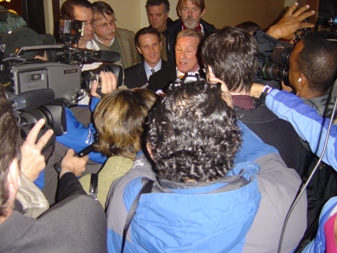
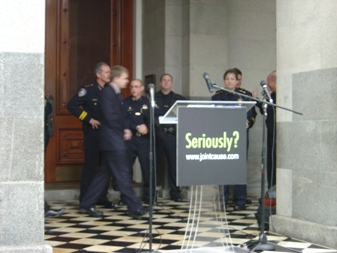
Still, supporters pronounced themselves well pleased. "The conversation is definitely gaining traction in Sacramento," bill sponsor Assemblyman Tom Ammiano (D-SF) told a press conference at the capitol after the vote. "This is a significant vote because it legitimizes the quest for debate. There was a time when the m-word would never have been brought up in Sacramento."
âThis historic vote marks the formal beginning of the end of marijuana prohibition in the United States,â said Stephen Gutwillig, California state director of the Drug Policy Alliance, who testified before the committee both Tuesday and in an earlier hearing. âMaking marijuana legal has now entered the public dialogue in a credible way. Decades of wasteful, punitive, racist marijuana policy have taken quite a toll in this country. The Public Safety Committee has demonstrated that serious people take ending marijuana prohibition seriously.â
"The mere fact that there was a vote in the Assembly to regulate and control the sale and distribution of marijuana would have been unthinkable even one year ago," said former Orange County Judge Jim Gray, a member of Law Enforcement Against Prohibition, who also testified before the committee last fall. "And if the bill isn't fully enacted into law this year, it will be soon. Or, the bill will be irrelevant because the voters will have passed the measure to regulate and tax marijuana that will be on the ballot this November," Gray pointedly added.
The bill, AB 390, the Marijuana Control, Regulation, and Education Act would impose a $50 an ounce tax on marijuana sales and would task the California Department of Alcoholic Beverage Control to regulate them. It was amended slightly from the original by Ammiano. In one example, the bill strikes "legalize" and replaces it with "regulate." It also strikes out language saying the bill would go into effect after federal law changes. And it adds language to clarify that medical marijuana does not come under its purview.
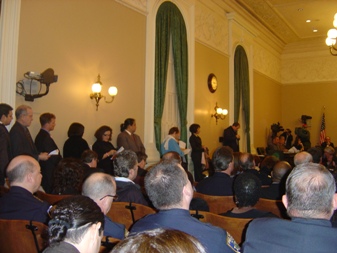
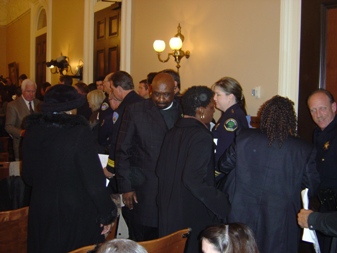
Tuesday's Public Safety Committee opened to a hearing room packed with legalization supporters, but also by more than a dozen uniformed police chiefs and high-ranking police officers from around the state. Law enforcement was out in force to make its displeasure known.
But first came Ammiano himself, recusing himself from his position as committee chair to testify in favor of his bill. "This is landmark legislation to legalize and regulate marijuana," Ammiano told his colleagues. "It would generate nearly a billion dollars annually in revenues, according to the Board of Equalization, and would leave law enforcement to focus on serious crimes, violent crimes, and hard drugs. The drug wars have failed," the San Francisco solon said emphatically. "Prohibition has fostered anarchy. Legalization allows regulations, and regulation allows order."
Since the primary hearing on the bill took place last fall, Tuesday's hearing was limited to 30 minutes (it was closer to 45), and witnesses either said their pieces succinctly or were gently chided by committee Vice-Chair Curt Hagman (R-Chino Hills). The Drug Policy Alliance's Gutwillig recapped testimony he gave last fall, as did the Marijuana Policy Project California state director Aaron Smith.
"AB 390 is a historic reversal of failed marijuana policies," said Gutwillig. "It would begin to control a substance that is already commonly available and consumed, but unregulated. Prohibition has created enormous social costs and jeopardized public safety instead of enhancing it."
"This legislation would finally put California on track for a sensible marijuana policy in line with the views of most California voters," said Smith.
Also endorsing the bill was Matt Gray of Taxpayers for Improving Public Safety, a California group lobbying for more progressive criminal justice policies. "We support the bill," said Gray. "Marijuana is the state's largest cash crop, and this bill will remove a revenue stream from organized crime and decrease availability for youth."
The opposition, led by law enforcement, church and community anti-drug groups, and a former deputy drug czar, threw everything short of the kitchen sink at the committee in a bid to sink the bill. Hoary old chestnuts reminiscent of "Reefer Madness" were revived, as well as new talking points designed to discourage members from voting for legalization.
"I traveled here with a heavy heart," said former deputy director for demand reduction for the Office of National Drug Control Policy Andrea Barthwell, the big hitter leading off for the opposition. "The eyes of America are upon you," she told the committee. "We don't want you to set a course that worsens the health of Americans for years to come. This is a scheme that will benefit drug cartel kingpins and corner drug dealers and create chaos in our public health system," she warned.
"People all over the country are afraid California will have this leverage in the same way the medical marijuana initiative was leveraged to create a sense that these are reasonable policies," Barthwell continued. "We've reduced drinking and smoking through public health, and prohibition is working for our young people to keep them drug free," she added.
"Legalization of marijuana will only increase the challenges facing us," said San Mateo Police Chief Susan Manheimer. "What good can come from making powerful addictive drugs more cheaply available? Don't we have enough trouble with the two legal drugs? Adding an additional intoxicant will lead to increase drugged driving and teen sex," she told the committee. "Marijuana of today is not the dope your parent's smoked," she added for good measure.
After mentioning that in the Netherlands cannabis cafes have "run rampant," asserting that "drug cartels will become legal cultivators," and that legalization would bring about "quantum increases" in the availability of marijuana, Manheimer swung for the fence. "To balance the budget on the back of the harm caused by illegal intoxicants is mind-bogglingâI would call it blood money," she said. Worse, "the addictive qualities of these drugs will cause more crimes as people struggle to find money to buy marijuana. We are very concerned about marijuana-related violence."
Then it was the turn of Claude Cook, regional director of the National Narcotics Officers Associations Coalition. "This is dangerous work we do," Cook said by way of introduction. "We are strongly opposed to AB 390, we see no benefit for our communities. Marijuana is also carcinogenic. If we want to raise revenue, maybe it would be safer to just bring back cigarette vending machines. This is human misery for tax dollars." And by the way, "Drug offenders who are in prison have earned their way there by past criminal conduct," he added.
Cook predicted downright disaster were the bill to pass. "Use by juveniles will increase. Organized crime will flourish. California will become a source nation for marijuana for the rest of the country. The cartels will thrive. Highway fatalities will rise," he said without explaining just how he arrived at those dire conclusions.
"I see the devastation of marijuana and drugs in my community," thundered Bishop Ron Allen, "CEO and president" of the International Faith-based Coalition, and a self-described former crack addict who started with marijuana. "If marijuana is legalized and we have to deal with it in our liquor stores and communities, you have never seen a devastation like you're going to see. It's going to lose us a generation. You don't want this blood on your hands."
"I'm going to discount the ad hominems and alarmist attacks," Ammiano replied after the testimony. "Some of the arguments today reminded me of Reefer Madness," he said
Before moving to a vote, committee members briefly discussed their positions. Assemblywoman Nancy Skinner (D-Berkeley) noted that because of the state's medical marijuana law, "We have created a class difference, where a certain class of our population can utilize dispensaries for their own reasons to use marijuana, and on the other hand, we have the street activity around marijuana that is not under semi-legal status."
Skinner voted for the bill, while saying she was not sure she would support it on the Assembly floor. "I'm not supporting marijuana, but the question is who we regulate it and is it time to have a serious debate."
In the end, four of five Democratic committee membersâall from the Bay areaâsupported the bill, while one Democrat joined the two Republicans on the committee in opposing it."
The bill would normally head next to the Assembly Health Committee, but given the time constraints on the legislature, no further action is likely to be taken this session. Still, Tuesday was a historic day in Sacramento and in the annals of the American marijuana reform movement.
 |
|
 |
|
 |
|
Stephen Gutwillig and Aaron Smith in background |
 |
|
Law Enforcement: Facing Budget Woes, Minneapolis Axes Dope Squad
Facing a $5 million budget deficit, the Minneapolis Police Department responded Monday by disbanding its narcotics squad. That makes Minneapolis the only major city in the US without one.
Last year, the 14-member narcotics squad investigated nearly 4,000 cases resulting in 519 federal and state charges. Officers seized about $300,000 in drug money, as well as 24 guns and 26 vehicles.
Police Chief Tim Dolan said the department still has sufficient resources to handle drug cases. He said community resource teams in the departmentâs five precincts will handle street-level and mid-level dealing, while the Violent Offender Task Force will work on high-level cases. The department also has officers seconded to an anti-drug task force with state, local, and DEA members, and it has just started a gang unit, he said.
"Are we going to be as good as we were before in dealing with drug cases? I don't know," he said. "Their stats speak for themselves."
The former head narc, Lt. Marie Przynski, was not happy. "This unit has been highly productive, if not the most productive unit in the Minneapolis Police Department," Przynski said. "I'm disappointed, and so are my officers, about this decision."
The 14 former narcs will be reassigned, with three of them joining the Financial Crimes unit, including an asset forfeiture specialist and a specialist in pharmaceutical investigations ranging from forged prescriptions to insurance fraud. Other members of the defunct dope squad will be assigned at least temporarily to street patrols.
The department still needs to cut 50 positions to get under budget. It may also reduce the number of deputy chiefs from three to two. Still, Dolan said neither street patrols nor key units, such as homicide, robbery, sex crimes, juvenile, and domestic abuse would be reduced.
One city council member, Ralph Remington, suggested that the department could have more money if its members quit misbehaving. Just three weeks ago, the city paid out $495,000 to a man slugged by a Minneapolis police officer during a drug raid last year. That was only the most recent high-profile settlement paid by the city for departmental misbehavior.
"The department could save a lot of money if they corrected the bad behavior of a few bad cops," said Remington.
Feature: Drug War a Devastating Failure, Scientists and Researchers Say in Vienna Declaration
With the 2010 World AIDS Conference in Vienna looming, researchers and scientists have authored an official conference declaration lambasting drug prohibition as a horrid failure and calling on governments, international organizations, and the UN to make fundamental, evidence-based changes in drug policy. They want you to sign it, too.
Sentencing: South Carolina Governor Signs Reform Bill, Will End Mandatory Minimums for Some Drug Offenses
You know times are tough when even GOP-dominated legislatures in the Deep South are passing sentencing reform bills. It's not so much bleeding hearts as bleeding wallets.
Feature: California Marijuana Initiative Has Slim Lead
Less than six months from election day, the California "tax and regulate" initiative to legalize marijuana has the support of half the voters, according to two polls this week. But just barely, and it has to get those numbers up to be sure of a November win.
Prohibition: Drug War is a Failure, Associated Press Reports
The Associated Press has just declared the war on drugs a failure. When will the politicians admit the same?
Feature: Obama's First National Drug Strategy -- The Good, the Bad, and the Ugly
Over the weekend, Newsweek published a leaked draft of the 2010 National Drug Control Strategy. No one is sure why it was leaked, or by whom. A pair of leading observers of federal drug policy dissect it for us.