FOR IMMEDIATE RELEASE: November 16, 2010
CONTACT: Tom Angell - (202) 557-4979 or [email protected]
Pro-Legalization Police Group Asks Senate to Vote Against Obama's DEA Nominee
Judiciary Committee to Hold Confirmation Hearing on Wednesday
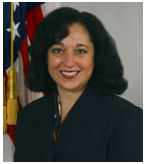
WASHINGTON, DC -- A group of police officers, judges and prosecutors who support legalizing and regulating marijuana and other drugs has sent a letter to the U.S. Senate Judiciary Committee opposing President Obama's nominee to head the Drug Enforcement Administration (DEA). The nominee, Michele Leonhart, has overseen numerous DEA raids of medical marijuana clinics operating in accordance with state laws during her tenure as acting DEA administrator. This is in direction violation of President Obama's campaign pledges and a Justice Department directive urging the DEA not to waste scarce law enforcement resources undermining the will of voters who have made medical marijuana legal in their states.
"As a police officer, I made arrests of drug users because I was held accountable for enforcing the law whether I agreed with it or not," wrote Neill Franklin, a former Baltimore narcotics cop, in his testimony on behalf of Law Enforcement Against Prohibition (LEAP), which he leads as executive director. "Ms. Leonhart should be held similarly accountable for her actions which were inconsistent with guidance from the Department of Justice, as well as President Obama’s clear intentions based on his popular campaign pledges."
The criminal justice professionals of LEAP are also concerned with Leonhart's apparent disregard for the value of human life, having once called the gruesome violence in Mexico's illegal drug market a sign of "success" for U.S. drug policy.
"The tens of thousands of civilian deaths, which have continued to skyrocket since Ms. Leonhart’s statement, should not be measured as a sign of success," Franklin wrote. "Former Mexican president Vicente Fox and at least three additional former Latin American presidents have pointed out the failure of the US-led war on drugs and called for drastic change. The situation is Mexico is grave and escalating rapidly, putting US citizens in danger. Before the spillover violence gets any worse, the DEA needs a director who can engage world leaders in this debate and come to a solution."
Leonhart has served as acting administrator of the DEA for two years. The hearing to confirm her as administrator takes place before the Senate Judiciary Committee on Wednesday at 2:30 PM in 226 Dirksen Senate Office Building.
# # #
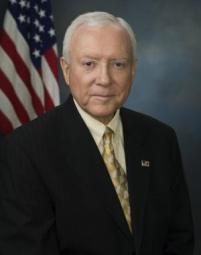
Senator Patrick Leahy, Chairman
Senate Committee on the Judiciary
Tuesday, November 16, 2010
Statement of Major Neill Franklin on behalf of LAW ENFORCEMENT AGAINST PROHIBITION (LEAP) in opposition to the nomination of Ms. Michele Leonhart
Mr. Chairman and distinguished Members of the Committee, thank you for the opportunity to present the views of Law Enforcement Against Prohibition (LEAP) in opposition to the nomination of Michele Leonhart for the position of Director of the U.S. Drug Enforcement Administration (DEA).
After a 33-year career as a police officer, I became the executive director of LEAP, an association of current and former law enforcement officers, prosecutors, judges, and criminal justice professionals at every level of government who are speaking out about the failure of our drug policy.
Our members are deeply concerned about drug abuse and illicit drug market violence, and we have spent our careers fighting the drug war. Several of our members, including Russ Jones of Texas, Matthew Fogg of Washington, D.C., and Richard Amos of Florida, served as DEA agents or on DEA task forces. And as a police officer with the Maryland State Police and the Baltimore Police Department, I too made my share of drug arrests in addition to commanding multi-jurisdictional drug task forces.
We oppose Ms. Leonhart’s nomination because her statements and actions demonstrate questionable judgment. Ms. Leonhart held a press conference regarding Mexican drug prohibition violence last year. Since 2006, more than 28,000 people have died in Mexico as a result of the illegal drug market violence. At the press conference, Ms. Leonhart indicated that such violence was a good sign. “Our view is that the violence we have been seeing is a signpost of the success our very courageous Mexican counterparts are having,” she said. “The cartels are acting out like caged animals, because they are caged animals.”
The tens of thousands of civilian deaths, which have continued to skyrocket since Ms. Leonhart’s statement, should not be measured as a sign of success. Former Mexican president Vicente Fox and at least three additional former Latin American presidents have pointed out the failure of the US-led war on drugs and called for drastic change. The situation is Mexico is grave and escalating rapidly, putting US citizens in danger. Before the spillover violence gets any worse, the DEA needs a director who can engage world leaders in this debate and come to a solution.
Ms. Leonhart’s judgment in allocating resources is questionable. Since her appointment by President Bush, she has overseen more than 200 federal raids in California and other medical marijuana states. When Ms. Leonhart became interim director, these raids continued even after the issuance of the October 19, 2009 Department of Justice memo which recommended federal officials shift resources away from targeting those individuals and organizations operating in compliance with state laws related to medical marijuana.
As a police officer, I made arrests of drug users because I was held accountable for enforcing the law whether I agreed with it or not. Ms. Leonhart should be held similarly accountable for her actions which were inconsistent with guidance from the Department of Justice, as well as President Obama’s clear intentions based on his popular campaign pledges. Under her supervision, a DEA agent raiding a marijuana grower who was operating with the support of the sheriff in Mendocino County, CA, said, “I don’t care what the sheriff says.” This attitude is counterproductive. Given the grave problems associated with illegal drug market violence, we feel that conducting raids on individuals and caretakers acting in compliance with state and local law may not be the best use of the DEA’s limited resources.
The DEA needs a director whose decisions are guided by the best interests of our citizens. Despite calls by the American Medical Association, Ms. Leonhart has failed to respond to a petition calling for hearings to review the scheduling of marijuana. Despite the DEA’s own administrative law judge’s ruling that the University of Massachusetts should be able to cultivate marijuana for FDA-approved research, Ms. Leonhart has blocked such research. We encourage the nomination of a director who supports engaging in dialogue and the use of research to shape the best possible policies.
Ultimately, we feel Ms. Leonhart is not ready for the job of DEA director and qualified candidates are available. In your confirmation hearings, the members of the Judiciary Committee should ask the difficult questions which will determine how she would intend to handle the changing nature of US drug laws. Voters across the country have created a gap between federal policy and state law that is steadily widening. In fifteen states, plus Washington D.C., the medical use of marijuana has been recognized. Several other states may choose to legalize marijuana in the next few years. The director of the DEA must be able to appropriately bridge this divide without wasting resources or causing unnecessary harm.
In the meantime, the criminal justice professionals of Law Enforcement Against Prohibition urge a no vote on Ms. Leonhart’s confirmation as DEA director.