For nearly 30 years, the Campaign Against Marijuana Planting has waged a quixotic battle to eradicate California's outdoor marijuana industry. It's at it again this year.
President Obama has signed into law a bill that reduces, but does not eliminate, disparities in federal sentencing for crack and powder cocaine offenses. It isn't retroactive, which means current prisoners still wait for relief.
Drug prohibition allows for massive disparity in sentencing, and this disparity is one of the many reasons millions of Americans see it as the new Jim Crow. President Barack Obama signed into law a bill to reduce the disparity between federal mandatory sentences for convictions for crack cocaine and the powder form of the illegal drug. The quarter-century-old law that Congress changed with the bill Obama signed subjected tens of thousands of black cocaine users to long prison terms while specifying far more lenient sentences to those, mainly whites, caught with powder cocaine.
Is the Obama Administration hinting at a change in federal marijuana policy? Speaking in Fresno, Drug Czar Kerlikowske pointed to how state and local jurisdictions have dealt with the state's legalization of medical marijuana, saying they are "doing a really good job of licensing, land use, those kind of regulations."
Veterans in states where medical marijuana is legal may use it without getting thrown out of Veterans Administration pain treatment programs, the VA has announced in a clarification of its policies. The move responds to years of patient VA patients' efforts. Those advocates point out that VA physicians still are bound by an agency gag rule preventing them from recommending the substance until federal law changes.
Hawaii-based Roger Christie and his THC Ministry have been proselytizing for pot for years. Now, the feds have indicted him, and they've managed to persuade a federal judge that he's "too dangerous" to be allowed out on bail. Welcome back to Bizarro World.
Drug reformers have been grumbling about the Obama administration's decision to nominate acting DEA head Michele Leonhart to be permanent DEA administrator since it was announced. Now, a drug reform coalition is calling on Obama to withdraw her nomination, citing recent DEA raids on medical marijuana providers. But there's more than that.
FOR IMMEDIATE RELEASE: October 20, 2009
CONTACT: Ken Wolski at (609) 394-2137
DOJ Memo: Hands off medical marijuana users
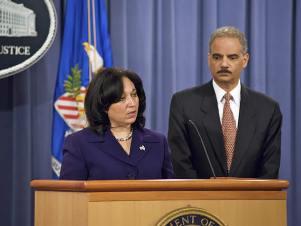
WHO: Attorney General Eric Holder
WHAT: Announced formal guidelines for federal prosecutors in states that have enacted laws authorizing the use of marijuana for medical purposes
WHEN: October 19, 2009
WHERE: Washington, D.C.
WHY: For clarification and guidance to federal prosecutors in medical marijuana states.
For the first time federal authorities have been instructed not to arrest or prosecute medical marijuana patients or caregivers in the 13 states with legalized access.
In a major reversal from Bush Administration policy, the Department of Justice issued a memo today to prosecutors that stated: âAs a general matter, pursuit of these priorities should not focus federal resources in your States on individuals whose actions are in clear and unambiguous compliance with existing state laws providing for the medical use of marijuana. For example, prosecution of individuals with cancer or other serious illnesses who use marijuana as part of a recommended treatment regimen consistent with applicable state law, or those caregivers in clear and unambiguous compliance with existing state law who provide such individuals with marijuana, is unlikely to be an efficient use of limited federal resources.â
Full text of the memo is available on the Department of Justice Blog:
http://blogs.usdoj.gov/blog/archives/192
CMMNJ welcomes this announcement from federal authorities recognizing the medical benefits of marijuana and upholding the rights of Americans to safely use marijuana under a doctorâs supervision. With New Jersey in the final legislative phase for The Compassionate Use Medical Marijuana Act A804/S119 this memo may serve to alleviate any outstanding concern of federal interference with our proposed state law.
While the DOJ memo puts in writing statements made by Attorney General Eric Holder in March, it does not change federal law in any way. The memo is targeted to federal prosecutors in the states that have passed ballot initiatives or legislation allowing safe medical marijuana access. It urges them to use their discretion and allocate their resources appropriately, taking into consideration an individualâs full compliance with their state law. The memo was copied to all United States Attorneys, as well as administrators in the DEA and the FBI.
Current legislation:
The New Jersey Compassionate Use Medical Marijuana Act A804/S119 has passed the Assembly and Senate Health committees and a Senate floor vote. The issue has received favorable editorials from most newspapers in the state. Now it must see an Assembly floor vote and may require an additional concurrence vote in the Senate. Recent polls show between 70% - 86% of New Jerseyans favor medical marijuana access. There is certainty bi-partisan political support for the bill, but passage this year remains far from assured. New Jersey would become the 14th state in the nation to legalize medical marijuana if it passes this legislation into law in the near future.
More information at www.cmmnj.org
CMMNJ, a 501(c)(3) public charity, is a non-profit organization whose mission is to educate the public about the benefits of safe and legal access to medical marijuana. For more info, contact:
Ken Wolski, RN, MPA,
Executive Director, Coalition for Medical Marijuana--New Jersey, Inc. www.cmmnj.org
844 Spruce St., Trenton, NJ 08648
609.394.2137 [email protected][email protected]
Dear friends:
Ready for some great news?
The Obama administration is directing federal prosecutors not to arrest medical marijuana patients and caregivers who are complying with state laws.
On Monday, federal prosecutors, as well as top officials at the FBI and DEA, will reportedly be told that it isnât a good use of their time to arrest people who use or provide medical marijuana, if they are complying with state law.
This is the most significant, positive policy development on the federal level for medical marijuana since 1978.
Under the Bush administration, the feds had continued to raid, arrest, and otherwise terrorize medical marijuana and their caregivers in the 13 states that have passed medical marijuana laws. This new policy is a major change.
MPP was instrumental in obtaining a promise from President Obama during the presidential campaign that, if elected, he would halt these arrests. MPP was the only reform organization to testify on Capitol Hill urging the issuance of the guidelines and, later, was the only group to work with leaders in Congress to get a House committee to urge the administration to adopt the written guidelines. Our lobbyists have also been in contact with top officials at the Justice Department about the guidelines.
We're thrilled to see this promise come to fruition, and I hope youâll join me in celebrating this news -- some of the best weâve had for medical marijuana patients in years.
Thank you for helping to make this momentous change happen. And if youâd like to help keep pushing, please:
1. Use MPP's easy online action center to tell your members of Congress that you support this new policy.
2. Donate to MPPâs federal lobbying work here.
Sincerely,
Rob Kampia
Executive Director
Marijuana Policy Project
Washington, D.C.
P.S. As I've mentioned in previous alerts, a major philanthropist has committed to match the first $2.35 million that MPP can raise from the rest of the planet in 2009. This means that your donation today will be doubled.