Ballot Measures

Ballot Measures Subtopics:

Oakland Activists File 2010 California Marijuana Legalization Initiative

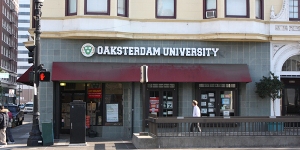
Oakland marijuana activists are moving forward on a possible 2010 marijuana legalization initiative. Led by Oaksterdam University's Richard Lee and former Oakland Cannabis Buyers' Co-op head Jeff Jones, proponents today filed a proposed ballot measure with the California attorney general's office that would allow people aged 21 and over to legally possess up to an ounce of pot and grow their own on garden plots no larger than 25 square feet.
marijuana
"California's laws criminalizing cannabis have failed and need to be reformed," said Lee. "Cannabis is safer than alcohol," says Lee. "Cannabis doesn't cause overdose deaths or make people violent like alcohol. It makes sense to regulate cannabis like alcohol, instead of prohibiting it completely." The initiative would also let cities and counties decide whether or not to tax and regulate cannabis sales and commercial cultivation. If a city or county decides not to, sales and cultivation within area limits would remain illegal, but possession and consumption of small amounts would be allowed. To make the November 2010 ballot, organizers must gather 434,000 valid voter signatures by December. That will be the first major test of the initiative's viability. Another indicator of the measure's support will be if major funders step up to back it. When the Chronicle wrote last month about initial planning for the initiative, drug reform organizations were apprehensive that the proposed initiative was too soon, that the polling numbers weren't high enough, and that a loss could take the steam out of the legalization push for years to come. This week, the Chronicle will be revisiting those groups to see where they now stand. The Drug Policy Alliance said Tuesday it would have preferred to wait until 2012, but hopes it wins. "The momentum to end decades of failed marijuana prohibition just keeps building," said Stephen Gutwillig. "While the Drug Policy Alliance would prefer such an initiative to appear on the ballot in 2012, when public support will likely be even greater than it is now, we'd of course like to see it win. There's simply no denying the intense groundswell for change."

Tax Us: Oakland Voters Approve Medical Marijuana Dispensary Tax -- Dispensaries Supported It

Drug War Chronicle Voters in Oakland, California, approved by a wide margin a measure to tax medical marijuana sold at the city's four dispensaries. The measure is the first in the country to impose a special tax on medical marijuana.
The special tax was supported by the city's medical marijuana community, led by Oaksterdam University head and Coffeeshop Blue Sky owner Richard Lee. Lee and other supporters, including city council members, said the dispensaries wanted to do their part to help the city during economic hard times. The all mail-in vote took place during the one-month period beginning June 22, and the votes were being counted Tuesday night. According to the Alameda County Registrar of Voters, as of 8:00pm Tuesday, the ballot measure, known as Measure F, was winning with 79.9% of the vote. The measure creates a special business tax rate on dispensaries of $18 for every $1,000 in gross sales and is expected to generate hundreds of thousands of dollars a year for the city. Currently, the dispensaries are paying the same business tax rate as any other retail business in the city, $1.20 per $1,000. The measure will take effect on January 1. The measure was part of a package of revenue measures before Oakland voters. All passed, but none by as large a margin as Measure F. That's just the latest sign of acceptance of marijuana in a very pot-friendly city. In 2004, voters there approved a measure requiring police to make arresting adults for small-time pot offenses their lowest priority.

Not Arresting Marijuana Users is Too Confusing For Police

Voters in Massachusetts have overwhelmingly voted to stop small-time marijuana arrests, but the law-enforcement community doesn’t understand what that means:

BOSTON - Amid confusion among police and prosecutors, a voter-approved law to decriminalize the possession of marijuana goes into effect on Jan. 2, according to a spokeswoman for the state attorney general.
…
Agawam Police Chief Robert D. Campbell said there is a tremendous amount of confusion about the law.
…
"Somebody has to come up with a mechanism," the chief said.

Geline W. Williams, executive director of the Massachusetts District Attorneys Association, said there are some "very, very significant" problems with putting the law into effect. [The Republican]

Fortunately, an apparent super-genius named Terence J. Franklin has come up with a theory:

Amherst Town Meeting member Terence J. Franklin, who supports Question 2, said the new law should be easy to put in place.

"Why not just leave people alone?" Franklin added. "What's the big deal? That will solve all the worries."

Now that’s what I’m talking about. Maybe we should let this guy write the ballot language from now on.

Seriously though, it’s understandable that police are entering into some new territory here. Still, there’s no question what the voters have in mind. Most people don’t think possessing marijuana should get you arrested and charged with a crime. There may be some details to iron out, but it’s really pretty silly to act like this is gonna turn the criminal justice system upside down. To even argue that is basically to admit that marijuana enforcement rules your world.

Opponents of Question 2 campaigned tirelessly to convince voters that marijuana enforcement was a low priority and that penalties were lenient. If there was even a shred of truth to any of that, then implementing decrim should be simple.

Angry Cop Insults Voters for Supporting Marijuana Reform

Jim Carnell of the Boston Police Patrolmen’s Association has come completely unhinged in the aftermath of the decisive victory for marijuana decrim in Massachusetts. Just listen to him trashing Massachusetts voters in The Boston Herald:

Many starry-eyed nitwits wearing rose-colored glasses, who obviously comprise the majority of our electorate, fell hook, line and sinker for this.

Sir, you work for these people. If you hate the community, then quit your job as a public servant. Seriously, it is not everyday that one sees police in the newspaper just talking shit about everybody. It’s ugly and inappropriate, but perfectly illustrative of the enemy mentality our marijuana laws have nurtured between police and almost everyone else.

Carnell goes on to claim that the new law effectively legalizes smoking pot in the streets, because the rules of search and seizure will be turned on their head (and everyone knows police would never circumvent those rules). And he concludes by urging the people of Massachusetts to choke on the miserable smoldering hell they’ve built for themselves.

The great irony of all this is that, while Jim Carnell insists that it’s now legal to smoke marijuana in the streets of Massachusetts, he sounds more than a little inclined to punch you in the face if he sees you doing it.

A Mandate For Marijuana Reform

Bruce Mirken at MPP points out that marijuana reform initiatives in Massachusetts and Michigan pulled higher percentages than Obama. The numbers really are incredible:

Consider this: As I write this, with 67% of precincts reporting, marijuana decriminalization is passing in Massachusetts with 65% of the vote. Obama, who is carrying the state handily, is getting 62%.

In Michigan it’s similar. With 40% of the vote in, medical marijuana is passing with 63% while Obama is carrying the state with 55%.

These victories were expected, but the margins are just staggering. This is testament to the apparent impotence of the typical scare tactics brought to bare by our opposition. On many levels, this election left "tough on crime" politics in the dust, as a host of new issues, ideas and concerns took their place. But the significance of that would be much harder to articulate without scoring towering victories for marijuana reform. The results in Massachusetts and Michigan are the exclamation point on an electoral season that ought to entirely reshape the way crime politics are perceived by public officials.

As I’ve argued at length, the future of reform relies heavily on our ability to depict a popular mandate for changes in our drug policy. Indeed, it seems we are increasingly able to meet that challenge. A new administration brings new obstacles and new opportunities, but enter into the next stage with considerable momentum.

The Drug Czar Can’t Stop Panicking About Medical Marijuana

Here we go again:


Pete Guither couldn’t make it all the way through. I’m not even going to try. We’ve heard all of this before. We heard the same thing in Alaska, California, Colorado, Hawaii, Maine, Maryland, Montana, Nevada, New Mexico, Oregon, Rhode Island, Vermont, and Washington. Yet no one is demanding the repeal of those laws. Medical marijuana works and so do the laws that protect patients from arrest.

If you’re in Michigan, vote Yes on Prop. 1. Pass it on.

The Perfect Argument for Medical Marijuana in Michigan

Wow. The drug czar likes to complain about the deep pockets of the "pot lobby," and he's lucky it's a lie. If we could afford to put this video on the airwaves across America, the federal war against medical marijuana would be over in the blink of an eye. This is the truth about why we do what we do. These are the people who pay the price for our brutal drug laws and their stories are in our hearts each day as we fight for change. If you live in Michigan, please vote YES on Prop. 1. Tell your friends. Tell your mom. With your support, we can win another important victory for seriously ill patients.

Why Do Prison and Alcohol Lobbies Oppose Drug Treatment?

I’ve been severely remiss in failing thus far to cover the very important Prop. 5 in California. The Nonviolent Offender Rehabilitation Act (NORA) would save billions in incarceration costs by referring many drug offenders into treatment instead of prison. It’s a significant reform and the vested drug war interests are in full-blown panic mode trying to defeat it.

The drug czar is in California right now campaigning against it, and a who’s who of drug war profiteers have assembled a well-funded No on 5 campaign, branding Prop. 5 as "the drug dealer’s bill of rights." So who exactly is funding opposition to this commonsense drug treatment initiative?

DPA director Ethan Nadelmann explains via email:

Last week the powerful prison guards union contributed $1 million to the opposition campaign.  That's on top of hundreds of thousands of dollars from Indian tribes/casinos with close links to law enforcement as well as $100,000 from the California Beer and Beverage Distributors.

Isn’t it obvious what’s going on here? The prison industry lobbies shamelessly to keep as many people in prison as possible. The alcohol industry defends the interests of the criminal justice infrastructure that protects their monopoly on legal intoxication. And yet the drug czar has the audacity to present George Soros’s support for reform as some kind of shady conspiracy. It’s just amazing, it really is.

It’s not even my style to go around accusing our opposition of unscrupulous drug war profiteering at every turn, but what else is there to say about this? It’s right in front of our face. It’s as transparent as it is hypocritical. And it can’t be allowed to succeed.

If you live in California, please vote YES on Prop. 5 and tell everyone you know to do the same.