Candidates/Races

Voters Care About Drug Policies, Not Past Drug Use

It's a sign of the times -- more politicians are coming clean about their past experimentation with other illegal drugs, including cocaine. This honesty is a welcome change from the ridiculous responses about drug use by previous candidates, including George W. Bush's refusal to answer questions about his "youthful indiscretions" and Bill Clinton's claim that he "didn't inhale." But while candidates are becoming more honest about their drug use, voters are increasingly impatient with our current drug policies.
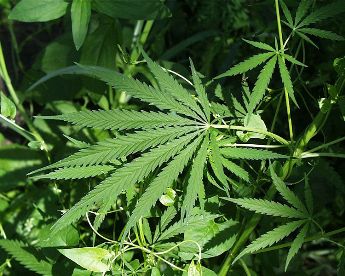
marijuana-plants_1.jpg

Will the Marijuana Vote Help the Democrats in November?

That's the question everyone's asking this week thanks to this piece from Joshua Green at The Atlantic. The idea is that putting marijuana reform initiatives on the ballot could bring greater numbers of young, left-leaning voters out to the polls in November. With marijuana initiatives up for a vote in six states this year, we'll have an interesting opportunity to evaluate how other campaigns are impacted by the pot vote.

[image:1 align:left]Whether the theory amounts to much is hard to predict and will be difficult to measure even after the polls close in November. But the fact that we're even talking about this is significant. Our political culture is fascinated with the idea that niche demographics can be mobilized in a cynical effort to shape the balance of power in Washington. Karl Rove's successful use of gay marriage bans to bring out conservative voters in 2004 is still widely regarded as an ingenious ploy that may have clinched the election for Bush.

The mere notion that state-level marijuana reform efforts can impact national politics is a healthy dose of leverage and legitimacy for our movement. When political pundits begin speculating about our ability to bring out voters, that sends a message to politicians in a language they understand. For decades, the Democratic Party has remained shamefully silent on marijuana policy -- despite overwhelming support for reform within its base – all because party leaders persist in clinging foolishly to the 1980's mentality that any departure from the "tough on drugs" doctrine is political suicide. What now?

Will the Democrats continue defending the arrest of their own supporters, even when doing so threatens to compromise their candidates in close races? Will the Republicans make a show of fighting back against legalization, even when doing so threatens to alienate the party's growing libertarian wing? What happens next is anyone's guess, but it's becoming clear that the surging marijuana legalization debate is pinching political nerves and creating opportunities for anyone clever enough to capitalize on it.

Voter Guide from Drug Policy Alliance


Election 2008

Dear friends,

In less than two weeks I will walk into a polling booth and vote my conscience. I’m one of the lucky ones.

On Election Day (November 4th), an estimated 5.3 million Americans will be barred from voting because of a felony conviction (in many cases for a simple drug law violation). I’ll be voting on their behalf.  And on behalf of the thousands of Americans, like my Uncle Tommy, who died last year because the government blocks access to sterile syringes. And for all the people who died from a drug overdose because their friends were too afraid of being arrested to call 911 for help. And for the 775,000 Americans who were arrested last year for nothing more than marijuana possession.

Where does your member of Congress stand on these issues? Check out our new voter guide to find out.

If there could be a ballot question that asked, “Should we end the war on drugs?” I would vote yes. I’m fed up with the mass incarceration of my fellow citizens, the reckless drug raids that leave innocent people dead, the rampant racial disparities, the wasted tax dollars, and the demonization of good people. There won’t be such a question on the November 4th ballot, although some ballots will have drug policy reform measures on them. And there will be the names of a lot of candidates seeking our vote. Some of the candidates support punitive drug policies; many others advocate common sense and reform.

I can’t tell you where every candidate in your area stands on drug policy reform, but I can tell you where your Representative in Congress stands on marijuana, syringe exchange, drug treatment, drug war funding and other issues.

It’s all in our 2008 Congressional Voter Guide. I hope you find it useful and interesting. You can find out your state’s election rules, registration information and voting process here.

If, like me, you’re one of the lucky ones and have a vote to cast, then stand up and vote on November 4th. If you’re barred from voting, make sure your friends and family vote. Let’s bring this drug war crashing down.

Sincerely,

Bill Piper
Director of National Affairs
Drug Policy Alliance Network

P.S. If you have friends or family members living in California, tell them to vote YES on Proposition 5, the biggest U.S. prison and sentencing reform since the repeal of alcohol Prohibition 75 years ago! Learn more at Prop5Yes.com.

LEAP: Please Contact Your Local and National Politicians...

Dear friends, Most LEAP members are asking for tasks they can accomplish to help achieve our goal. Here is one that will only take a few minutes and will have tremendous impact on our legislators and other politicians. Copied below is a message we hope you will send out to every local and national politician you care about to see how they respond to your concerns about the war on drugs. A LEAP member recently sent out a similar set of email messages and was amazed by the responses he received! Please copy and paste the following message, fill in the politician’s name and your own contact information at the bottom, and send it via E or snail-mail to every candidate you are considering supporting on Election Day. This is our chance to make LEAP known to many politicians at a time when they are likely to reply to you. Please include [email protected] as a bcc on any messages you send so we can learn how many politicians we are contacting. Thank you! Dear (Politician): Before I cast my vote in the upcoming contest for your election, I must first pose a question to you: Do you support and agree with the following statements and principles, based on the Law Enforcement Against Prohibition (LEAP) http://www.leap.cc: After nearly four decades of fueling the U.S. policy of a war on drugs with over a trillion tax dollars and 39 million arrests for nonviolent drug offenses, our confined population has quadrupled, making building prisons the fastest-growing industry in the United States. More than 2.3 million of our citizens are currently incarcerated, and every year we arrest an additional 1.9 million more, paralyzing our prison and court systems. Every year we choose to continue this war costs U.S. taxpayers another 70 billion dollars. Yet, despite all the lives destroyed and money wasted, illicit drugs are cheaper, more potent, and far easier for our children to access than they were 38 years ago at the beginning of the war on drugs. Meanwhile, people continue dying in our streets while drug barons and terrorists grow richer, bolder, and more heavily armed. This is the very definition of a failed public policy. This is not a war on drugs—it’s a war on people: our children, our parents, ourselves. The first thing we must do is admit that most of the deaths, diseases, crimes, and addictions attributed to drug use are actually caused by drug prohibition. Prohibition has paradoxically increased the number of people in the US above the age of twelve who use illegal drugs from 4 million (two percent of the 1970 population) to 112 million (46 percent of the 2005 population), according to DEA statistics. In June, 2007, the US Conference of Mayors unanimously called for an end to the war on drugs and for drug abuse to be dealt with as a health issue. Once we adopt that approach, we can stop the horrors associated with prohibition by removing the profit motive generated within the drug culture. How do we do that? We end drug prohibition. We legalize all drugs so we can regulate and control them and keep them out of the hands of our children, who now report that it is easier for them to buy illicit drugs than cigarettes or alcohol. As long as these dangerous drugs are illegal, we relinquish control to the street thugs and international cartels, which have enormous monetary incentives to hook our children. I look forward to your response on this important issue. If I do not hear back from you, I will assume that this issue is not important to you, or that you do not support the principles of LEAP, and I will act accordingly on Election Day. Thank You, Your name Your address Your phone numbers Your email address

MPP's Video Voter Guide

Dear friends:

I get a lot of questions about what the presidential candidates have said or done on marijuana policy.

There are a lot of rumors about what Sen. Barack Obama, Sen. John McCain, and the other candidates may or may not have said about marijuana — and MPP specializes in that.

In fact, during the presidential primary campaign, MPP helped persuade all of the Democratic candidates and three of the Republican candidates to pledge to end the arrest of patients in states with medical marijuana laws.

If you're interested in knowing what the candidates have said and done, please watch our new video:

voter guide video

MPP is the only organization that's systematically influencing the presidential candidates to take positive positions on medical marijuana — and punishing those who don't. Would you please consider making a donation to support our work today?

Sincerely,
Kampia signature (e-mail sized)

Rob Kampia
Executive Director
Marijuana Policy Project
Washington, D.C.

P.S. As I've mentioned in previous alerts, a major philanthropist has committed to match the first $3.0 million that MPP can raise from the rest of the planet in 2008. This means that your donation today will be doubled.

NEW POLL: Americans Oppose Mandatory Minimums, Will Vote for Candidates Who Feel the Same

Press Release

EMBARGOED UNTIL:                                                                 

Sept. 24, 2008, 11:00 AM                                                                   

Contact:  Monica Pratt Raffanel, (678) 261-8118 or (202) 822-6700                                                                               

Press teleconference today! Wednesday, September 24 at 11 a.m. ET

Dial In Number: (800) 593-9034

Passcode:  FAMM (3266)


NEW POLL: Americans Oppose Mandatory Minimums,

Will Vote for Candidates Who Feel the Same


WASHINGTON, D.C. – A new poll released today by Families Against Mandatory Minimums (FAMM) shows widespread support for ending mandatory minimum sentences for nonviolent offenses and that Americans will vote for candidates who feel the same way. 


·         Fully 78 percent of Americans (nearly eight in 10) agree that courts – not Congress – should determine an individual’s prison sentence. 

·         Six in 10 (59 percent) oppose mandatory minimum sentences for nonviolent offenders.

·         A majority of Americans (57 percent) polled said they would likely vote for a candidate for Congress who would eliminate all mandatory minimums for nonviolent crimes.


“Politicians have voted for mandatory minimum sentences so they could appear ‘tough on crime’ to their constituents. They insist that their voters support these laws, but it’s just not true,” says Julie Stewart, president and founder of FAMM.  “Republicans and Democrats support change and that should encourage members of Congress to reach across the aisle next year and work together to reform mandatory minimums.  Mandatory sentencing reform is not a partisan issue, but an issue about fairness and justice that transcends party lines.” 


During a time of financial crisis and uncertainty in the United States, reviewing current criminal justice policies and reforming mandatory minimums for nonviolent drug offenders is an option that Democratic and Republican lawmakers are considering.  Although neither is endorsing FAMM’s poll or report, Senator Jim Webb (D-Va.) and Rep. Bob Inglis (R-S.C.) are both concerned about America’s prison and sentencing system.


“America is locking up people at astonishing rates. In the name of ‘getting tough on crime,’ there are now 2.2 million Americans in federal, state, and local prisons and jails and over 7 million under some form of correction supervision, including probation and parole. We have the largest prison population in the world,” says Senator Jim Webb (D-Va.), who is chairing a symposium on criminal justice and prison issues in October.  “This growth is not a response to increasing crime rates, but a reliance on prisons and long mandatory sentences as the common response to crime. It is time for America’s leadership to realize what the public understands – our approach is costly, unfair and impractical.”


“Mandatory minimums wreak havoc on a logical system of sentencing guidelines,” says Rep. Bob Inglis (R-S.C.). “Mandatory minimums turn today’s hot political rhetoric into the nightmares of many tomorrows for judges and families.”


"This poll suggests that a majority of Americans are open to re-examining this issue and moving to a court-driven sentencing model,” said Sparky Zivin, Research Director at StrategyOne.


The poll bolsters the findings of FAMM’s comprehensive new report, Correcting Course: Lessons from the 1970 Repeal of Mandatory Minimums, which describes how Congress repealed mandatory minimum sentences for drug offenses in 1970 – and had no trouble getting reelected. 


“Our report and poll show that lawmakers can vote to reform mandatory minimums for nonviolent offenses and live to tell the story.  Republicans and Democrats alike don’t want these laws.  They don’t work, they cost taxpayers a fortune, and people believe Courts can sentence better than Congress can.  Another repeal of mandatory drug sentences isn’t just doable, it’s doable right now,” says Molly Gill, author of Correcting Course. 


The report details how Congress created mandatory minimum prison sentences for drug offenders in 1951 and repealed them in 1970 because the laws failed to stop drug abuse, addiction and trafficking. It also finds that after 20 years of experience, current mandatory minimums have failed as badly as those enacted in the 1950s.  Correcting Course concludes that mandatory minimum sentences:


• Have not discouraged drug use in the United States.

• Have not reduced drug trafficking.

• Have created soaring state and federal corrections costs.

• Impose substantial indirect costs on families by imprisoning spouses, parents, and breadwinners for lengthy periods.

• Are not applied evenly, disproportionately impacting minorities and resulting in vastly different sentences for equally blameworthy offenders.

• Undermine federalism by turning state-level offenses into federal crimes.

• Undermine separation of powers by usurping judicial discretion.


Eric Sterling, counsel to the House Judiciary Committee when mandatory sentences were enacted, says, “In 1986, we got stuck with some of the most punitive, least effective criminal sentencing laws ever created. Mandatory minimums haven’t stopped the drug trade.  They haven’t locked up the big dealers and importers.  They’re applied to small fries, not kingpins.  It’s a waste of taxpayer dollars to lock up a street-level dealer for 10 years when that money could be spent on treatment, drug courts, or going after the people bringing in boatloads of drugs every year.  Getting rid of mandatory minimums is about getting our priorities straight.”


Correcting Course includes comprehensive strategies for how Congress can repeal these ineffective laws today and better reflect the popular attitude among Americans, as brought out in the findings of the poll. 


“Mandatory minimums are among the worst criminal justice policies ever adopted in this country.  They treat all offenders the same, when the most sacred principle of American sentencing law is that punishment should fit the individual and the crime. Repealing these laws isn’t impossible – it’s been done before.  The next Congress should do it again,” says FAMM founder and president Julie Stewart.


FAMM’s poll was conducted by the independent public opinion research firm StrategyOne.  The survey was conducted by telephone between July 31 and August 3, 2008 with 1,000 adults randomly selected across the United States.  The margin of sampling error for the poll is plus or minus 3.1 percent for 95 out of 100 cases.


Families Against Mandatory Minimums is a national nonprofit, nonpartisan organization that supports fair and proportionate sentencing laws that allow judicial discretion while maintaining public safety. For more information on FAMM, visit www.famm.org or call Monica Pratt Raffanel at 678-261-8118.


###

Be part of MPP's experiment

Dear friends:

Want to take part in a groundbreaking experiment?  The background ...

Last year, the New Hampshire House of Representatives defeated — by an incredibly close 186-177 vote — a bill that would have legalized medical marijuana in the state. Just nine votes out of 400 members prevented this bill from passing.

Then, earlier this year, the New Hampshire House actually passed a bill — with a 191-143 vote — to decriminalize the personal possession of marijuana (and not just for medical use), before the state Senate snuffed the bill out.

New Hampshire is on the verge of passing medical marijuana legislation and marijuana decriminalization legislation.  With the November elections coming up in just six weeks, we need to ensure that good state legislators get reelected ... and some bad ones get unelected ... to increase our level of support in the New Hampshire Legislature.

THE EXPERIMENT

Is the marijuana policy reform community ready to become a serious player in state legislative races?

Because New Hampshire legislative districts are so small, it doesn't cost much to become a major player in these races and help good candidates win. This is a state where we could really make a difference by generating just a few dozen donations to each good candidate.

Intrigued? On this site, we've listed the supportive candidates who are in the tightest races — and whose campaigns are therefore the most crucial to passing our legislation early next year.  Our Web site also makes it easy for people to donate to their campaigns.

Other interest groups do this sort of thing all the time, in order to ensure that candidates who support their issues get elected. We're wondering if the marijuana policy reform community is interested in playing at this level, as well. (By the way, this is nonpartisan project that includes Democratic, Republican, and Libertarian candidates.)

Most candidates for the New Hampshire House raise and spend only a few thousand dollars on their entire campaign. So just a few dozen donations to each candidate from around the country will make a huge impression on the candidate — and a huge difference in the candidate's campaign.

If this experiment works and raises money to help these good candidates win their races, then MPP will likely roll this out in two or three states in the next election cycle. 

I want to thank you in advance if you choose to participate in this experiment!

Sincerely,
Kampia signature (e-mail sized)

Rob Kampia
Executive Director
Marijuana Policy Project
Washington, D.C.


P.S. As I've mentioned in previous alerts, a major philanthropist has committed to match the first $3.0 million that MPP can raise from the rest of the planet in 2008. This means that any donation you make to MPP today will be doubled.

MPP's Video Voter Guide

Dear friends:

I get a lot of questions about what the presidential candidates have said or done on marijuana policy.

There are a lot of rumors about what Sen. Barack Obama, Sen. John McCain, and the other candidates may or may not have said about marijuana — and MPP specializes in that.

In fact, during the presidential primary campaign, MPP helped persuade all of the Democratic candidates and three of the Republican candidates to pledge to end the arrest of patients in states with medical marijuana laws.

If you're interested in knowing what the candidates have said and done, please watch our new video:

voter guide video

MPP is the only organization that's systematically influencing the presidential candidates to take positive positions on medical marijuana — and punishing those who don't. Would you please consider making a donation to support our work today?

Sincerely,
Kampia signature (e-mail sized)

Rob Kampia
Executive Director
Marijuana Policy Project
Washington, D.C.

P.S. As I've mentioned in previous alerts, a major philanthropist has committed to match the first $3.0 million that MPP can raise from the rest of the planet in 2008. This means that your donation today will be doubled.

DrugSense FOCUS Alert: #384 Presidential Leadership Needed

PRESIDENTIAL LEADERSHIP NEEDED ********************PLEASE COPY AND DISTRIBUTE************************ DrugSense FOCUS Alert #384 - Sunday, 7 September 2008 "What if major party nominees Barack Obama and John McCain were pressed to state their positions on drugs and incarceration?" writes syndicated columnist Neal Peirce. Please raise the issue with those running for public office and by sending letters to the editor. Please ask your local newspapers to print the column below. As MAP's volunteer activists find this column printed in other newspapers they will be listed at the top of this webpage http://www.mapinc.org/author/Neal+Peirce ********************************************************************** Contact: [email protected] Pubdate: Sun, 7 Sep 2008 Source: Seattle Times (WA) Copyright: 2008 Washington Post Writers Group Author: Neal Peirce, Syndicated Columnist REAL COMMANDER NEEDED FOR THE WAR ON DRUGS Will America's ill-starred "war on drugs" and its expanding prison culture make it into the presidential campaign? Standard wisdom says "no way." We may have the world's highest rate of incarceration -- with only 5 percent of global population, 25 percent of prisoners worldwide. We may be throwing hundreds of thousands of nonviolent drug offenders, many barely of age, behind bars -- one reason a stunning one out of every 100 Americans is now imprisoned. We may have created a huge "prison-industrial complex" of prison builders, contractors and swollen criminal justice bureaucracies. Federal, state and local outlays for law enforcement and incarceration are costing, according to a Senate committee estimate, a stunning $200 billion annually, siphoning off funds from enterprises that actually build our future: universities, schools, health, infrastructure. We are reaping the whirlwind of "get tough" on crime statutes ranging from "three strikes you're in" to mandatory sentences to reincarcerating recent prisoners for minor parole violations. And every year we're seeing hundreds of thousands of convicts leave prison with scant chances of being employed, no right to vote, no access to public housing, high levels of addiction, illiteracy and mental illness. Overwhelmed by the odds against them, at least 50 percent are rearrested within two years. A serious set of problems, a shadow over our national future? No doubt. But do our politicians talk much about alternatives? No way -- they typically find it too risky to be attacked as "soft on crime." But let's imagine -- what if major party nominees Barack Obama and John McCain were pressed to state their positions on drugs and incarceration? I've combed through statements by both men. My early reading is that with McCain, there'd be a thin chance of reform, but under Obama, much brighter prospects. It is true that both men favored -- Obama actually co-sponsored -- the federal Second Chance Act, passed this year, which provides up to $360 million to support job training, mentors and counseling for inmates released from custody. But McCain has been routinely "hawkish" on drug policy, endorsing higher penalties for drug-selling, supporting the death penalty for drug kingpins, and opposing any softening of laws forbidding marijuana use, which he characterizes as a dangerous "gateway drug." Obama, by contrast, expresses serious concern that at 2 million-plus inmates, "we have by far the largest prison population, per capita, of any place on earth." He endorses full justice and imprisonment for dangerous criminals but a far more nuanced approach to drug cases in particular. "Anybody who sees the devastating impact of the drug trade in the inner cities, or the methamphetamine trade in rural communities, knows that this is a huge problem," he recently told a Rolling Stone interviewer. "I believe in shifting the paradigm, shifting the model, so that we can focus on a more public-health approach." During the primary season Obama spoke with special concern about nonviolent drug offenders, many as young as 18 to 20: "The worst thing we can do is to lock them up for a long period of time, without any education if they're functionally illiterate, without any skills or training. They're now convicted felons" -- perhaps 25 or 26 years old -- "out on the streets and can't be hired by anybody." His conclusion: The more focus put on diversion programs, drug courts, treatment of substance abusers, and "encourage training and skills and literacy ... the more effective we are in reducing recidivism rates." Obama is clearly not yet willing to discuss lifting prohibitions on marijuana or other drugs. But he would seem open to lead the country in a serious debate about our drug and incarceration policies -- a dramatic break from recent presidencies, both Republican and Democratic. Arguably, that's precisely the discussion the nation needs. America's prisoner total has tripled over the last two decades, with systems bursting at the seams -- California, for example, at 175 percent of capacity, Alabama at 200 percent. Yet North Carolina anticipates 1,000 more prisoners a year; Pennsylvania, 1,500; Arizona, 2,200; Florida 3,000. Small wonder major prisoner re-entry and diversion facilities for less serious offenders are being set up in Kansas, Michigan, Georgia and other states. California this November votes on a landmark "nonviolent offender rehabilitation" initiative designed to divert thousands from the state's bloated $10-billion-a-year prison system. It's high time, says Georgia Corrections Commissioner Jim Donald, "to differentiate between those offenders we are 'afraid of' and those we are just 'mad at.' " Talk about a serious national issue on which we could use some presidential leadership -- not dictating precise answers, but moving us to debate alternatives. It's been 20 years since drugs and prisons have even been mentioned in the televised presidential debates. Maybe not just Obama but McCain too could surprise us with some fresh ideas and promise of leadership as president. But we probably won't hear this unless reporters press the issue. ********************************************************************** Additional suggestions for writing LTEs are at our Media Activism Center: http://www.mapinc.org/resource/#guides ********************************************************************** PLEASE SEND US A COPY OF YOUR LETTER Please post a copy of your letter or report your action to the sent letter list ([email protected]) if you are subscribed, or by emailing a copy to [email protected] if you are not subscribed. Your letter will then be forwarded to the list so others may learn from your efforts. Subscribing to the Sent LTE list ( [email protected] ) will help you to review other sent LTEs and perhaps come up with new ideas or approaches as well as keeping others aware of your important writing efforts. To subscribe to the Sent LTE mailing list see: http://www.mapinc.org/lists/index.htm#form