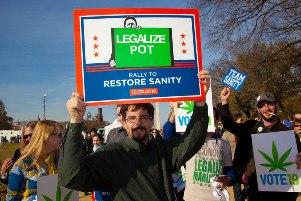
tpm-legalize-pot-signs.jpg
VOTE, and Other Fun and Important Info
Ballot measures, phonebanking, legalizers at the Sanity/Fear Rally. And why Prop 19 win or lose has been a winner for the cause.
Help us bring Latino voters to the polls in California for Prop 19 - chip in $5.

Or click here to volunteer to call voters for Prop 19.
Dear friends,
We've received urgent requests from Hispanic community leaders for a Spanish language version of our phone banking tool to help get out the vote for Prop 19, and we need your help.
Polling shows that when Latino voters learn that Prop 19 will save tens of millions of dollars in incarceration costs, those who oppose the measure overwhelmingly become supporters.
But if they don't hear the message, they'll never know.
Can you chip in $5 or more to help us get Latino voters to the polls tomorrow?
If you can't donate, we still need your help. Thousands of activists have called young California voters for the past month, and their votes are critical to whether Prop 19 will pass or fail.
Or, sign up to make calls yourself to young California voters for Prop 19.
We need your help to pull it off in these final hours. The entire country is watching what happens in California.
Let's show everyone that the people who want an end marijuana prohibition believe passionately in the cause, and we're willing to fight every step of the way to make it happen.
Thanks for all you do.
Michael Whitney
JustSayNow.com
Contribute to Just Say Now to support marijuana legalization. Click here:
|
|
The Yes on 19 campaign launched its closing argument with a brand new web video. It emphasizes that for far too long the war on marijuana has cost the state billions of dollars and incarcerated hundreds of thousands of non-violent Californians, and that by stopping the insanity of marijuana prohibition the state can be led in a new direction.
The ad, which has an edgier flavor than previous messaging, was designed to address the human toll inflicted by marijuana prohibition. Unofficially called "Stop the Insanity," the ad is being targeted to younger CA voters who are less political, but moved by the subject of marijuana legalization. The rollout will be seen by 2 million Californians.
You can watch the video here: http://www.youtube.com/watch?v=doRymwwLdE0

Dear friends,
Using the Just Say Now call tool is easy and can be done from anywhere.
Call California Voters– about Proposition 19 which would regulate marijuana similar to alcohol.
Call Arizona Voters– about Prop 203 which would protect medical marijuana patients from arrest and prosecution.
Call Oregon Voters– about Measure 74 which allow the state to provide patients with safe access to medical marijuana through dispensaries.
Call South Dakota Voters– about Measure 13 which would protect medical marijuana patients from arrest and prosecution.
Help us end the war on marijuana - start calling voters and remind them to get to the polls vote for sensible marijuana reform!
Click here to start calling: http://go.firedoglake.com/
Each call just takes a few minutes, and you can start calling voters with just your email address or Facebook account. Check out our video that explains how to call, step by step.
With only a 48 hours left until the election, voicing your support for marijuana law reform has never been easier or more urgently important, so start calling voters today.
Thank you from SSDP!
Connect with SSDP


MEDIA ADVISORY
NOVEMBER 1, 2010
Marijuana is the Biggest Issue on Tomorrow’s Ballot
Win or Lose, Progress in 2010, As Well As Recent National Polling, Indicates That Marijuana Prohibition’s Days Are Numbered
MPP Spokespeople Available in California and Washington, D.C. to Discuss Various Initiatives and Provide National Perspective on the Future of Marijuana Policy Reform
CONTACT: Mike Meno, MPP director of communications: 202-905-2030, 202-905-2031 or 443-927-6400
WASHINGTON, D.C. – As voters in four states prepare to weigh in on statewide marijuana reform ballot measures, a new Gallup poll released last week shows that national support for making marijuana legal has reached an all-time high of 46% while support for current policies continued a gradual erosion to its lowest level on record. According to the poll, “If the trend of the past decade continues at a similar pace, majority support could be a reality within the next few years.”
“No matter what happens tomorrow, it’s now undeniable that national public sentiment is increasingly turning against the idea that responsible adults should be criminalized for using a substance less harmful than alcohol,” said Rob Kampia, executive director of the Marijuana Policy Project. “Support for ending marijuana prohibition is not only growing among the populace, but we are also seeing prominent organizations coming out in support of reform. Thanks to initiatives like Proposition 19 in California, advocates for marijuana policy reform are gaining allies, from labor unions to the NAACP to Democratic Party committees, who will stand with us during future battles. So as we await tomorrow’s results, we are already looking forward to achieving major victories in 2012.”
On Election Day tomorrow, Californians will vote on Proposition 19, a potentially historic ballot measure that would make marijuana legal for all adults and allow localities to regulate its sale.
In Arizona and South Dakota, voters will consider medical marijuana ballot initiatives.
In Oregon, voters will decide whether to expand the state’s current medical marijuana law by authorizing state-licensed dispensaries.
MPP has spokespeople available in California and Washington, D.C. to discuss the various initiatives and provide a national perspective on the future of marijuana policy reform.
With more than 124,000 members and supporters nationwide, the Marijuana Policy Project is the largest marijuana policy reform organization in the United States. MPP believes that the best way to minimize the harm associated with marijuana is to regulate marijuana in a manner similar to alcohol. For more information, please visit www.mpp.org.
####


