Budgets/Taxes/Economics

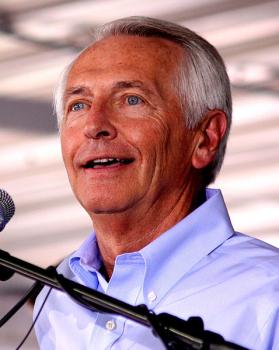
Kentucky Gov. Steve Beshear (Image courtesy Gage Bradshaw)

Kentucky Cuts Drug Sentences [FEATURE]

Faced with a staggering corrections budget, Kentucky has become the latest state to enact substantive sentencing reforms.

Los Angeles Voters Asked to Tax Medical Marijuana Dispensaries

The cash-strapped city of Los Angeles is trying to create a new source of revenue by asking voters to tax medical marijuana dispensaries. Measure M, if approved, would allow to the city to collect $50 out of each $1,000 in "gross reimbursements" that dispensaries receive from their patients. That could generate $10 million a year, which the city can use to pay for basic services such police, libraries and street repairs. "This is something we cannot say 'no' to," Councilwoman Janice Hahn said.

Florida Taxpayers Spent Hundreds of Millions Jailing Nonviolent Drug Abusers, Treatment a Less Expensive and More Effective Method

Officials across Florida are realizing that in situations where drug offenders are non-violent it would be a better use of limited resources to send them to treatment instead of prison. But, there aren't enough treatment programs and Florida currently houses 19,414 inmates for non-violent drug offenses costing taxpayers $377,971,166 a year. Mary Lynn Ulray, the executive director of a Drug Treatment Program DACCO, says she thinks the legislature is starting to understand there is a cost benefit from drug treatment. Ulray says the agency's 6 month residential program has close to a 70 percent success rate in six months at a cost of $10,000 compare that to the average 6.4 year sentence costing taxpayer $124,601 per offender.

Bill to Lessen Penalties for Some Drug Offenders Clears Kentucky Senate Panel

A Kentucky Senate committee has approved legislation aimed at reducing the state’s fast-rising prison population by bolstering drug treatment and alternative sentences for non-violent offenders. The bill cleared the Senate Judiciary Committee without opposition. Supporters say the bill would produce net savings of $147 million over 10 years.

Keep the Pressure On (Action Alert)

We Are the Drug Policy Alliance.

Tell your Senators to approve spending cuts to the drug war!

Take Action!

Email the Senate

Dear Friends,

Thanks to the overwhelming response Congress received from supporters like you, huge drug war spending cuts have been approved by the House! Hundreds of millions of dollars used by state and local law enforcement agencies for ineffective drug war policies will be cut, and the ridiculous and ineffective national anti-marijuana ad campaign has been cut completely. Now we need to do the same for the Senate!

Tell your Senators to approve the House's spending cuts to failed drug war programs!

The new budget is still not set. The Senate has generally been unsupportive of scaling back the drug war in years past, so they need to hear from you! Now is the time to let your Senators know we cannot afford to wait any longer to end the drug war!

Please take a minute to write your Senators and tell them to approve these necessary spending cuts immediately!

Sincerely,

Bill Piper
Director, Office of National Affairs
Drug Policy Alliance

Congressman: Eliminate the War on Drugs

Colorado congressman Jared Polis wants to drastically reduce the federal government's funding of the war on drugs. He has introduced amendments to the Full Year Continuing Appropriations Act of 2011 that, if passed, would virtually eliminate money spent to fight drug crimes. The first amendment, No. 501, proposes to eradicate funding of the drug czar. The second amendment, No. 427, would prohibit the investigation and criminal prosecution for the possession, manufacture or distribution of marijuana. Polis believes that the drug czar's office is not only unnecessary, but has proven to be more harmful than helpful in the case of marijuana.
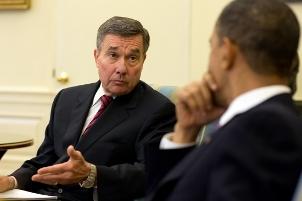
Drug War Autopilot and Co-Autopilot: ONDCP Director Gil Kerlikowske with President Obama

The 2012 Federal Drug Budget: More of the Same [FEATURE]

The Obama administration has submitted its 2012 federal drug control budget proposal. There's not much new there, and little evidence the administration is putting its money where its mouth is.

Hearing on Indiana Marijuana Study Bill Today (Press Release)

FOR IMMEDIATE RELEASE            February 15, 2011

Hearing on Indiana Marijuana Study Bill Today

CONTACT: Morgan Fox, communications manager………………………(202) 905-2031 or [email protected]

INDIANAPOLIS — The first hearing on S.B. 192 took place today to discuss the need to study the marijuana laws in Indiana and find alternatives to arrest and incarceration. S.B. 192 would create a mandate requiring lawmakers to investigate other options to the marijuana laws that put non-violent Hoosiers behind bars and tie up scarce resources that the public would rather see spent on infrastructure. The bill is sponsored by Sen. Karen Tallian (D-Dist. 4).

            “It has become painfully obvious that our current marijuana laws are not effective,” Sen. Tallian said. “We spend a sizable amount of money every year going after marijuana users and locking them up for a non-violent crime, while more important programs that desperately need funds go wanting. I think we need to take a very close look at the laws we have, determine what is working and what isn’t, and explore every possible alternative. This bill will make sure that we, as lawmakers, commit to this course.”

            Over a dozen people testified at the hearings, including policy experts, former law enforcement officers, and medical marijuana patients that suffer from the threat of arrest under the present system. One speaker, C.J. Parker, said, “I am a Gulf War Era Veteran and former police officer who suffers from over 20 diagnosed illnesses, including PTSD, and have been 100% unemployable since 2004 due to the combined effects of my illnesses. I have had no success with the over 30 pharmaceutical medications that have been prescribed to me over the last 9 years, but have found great relief from treating my illnesses with marijuana. It is time my elected leaders take a look at how to allow people like me to live without the fear of arrest.”

            A local leader in the marijuana reform community, Joh Padgett, said, “I have been a cannabis [marijuana] therapy patient for many years treating diabetic neuropathy, and pain associated with chronic venous stasis, edema, and a blood clotting disorder that has reduced circulation in my legs by 80%. I co-founded ReLegalize Indiana with our Chairman, Bill Levin, in January 2010 to give a voice to patients in Indiana like me who can benefit greatly from medical cannabis. Proper medical research is something we do well in Indiana and it is time we allowed our world-class researchers and our most vulnerable citizens to study and access a therapy allowed in 15 states and the District of Columbia.”           

            With more than 124,000 members and supporters nationwide, the Marijuana Policy Project is the largest marijuana policy reform organization in the United States. For more information, please visit www.mpp.org.

####