2011 is wrapping up as slightly less bloody than 2010 in Mexico's plague of prohibition-related violence, but the death toll this year is still well above 10,000.
Honduran army troops training with US Marines (wikimedia.org)
A panel at the International Drug Policy Reform Conference last week called on Americans to take action to help end the drug war in Mexico, even as Human Rights Watch releases as a damning report on government killings, tortures, and disappearances in the drug war.
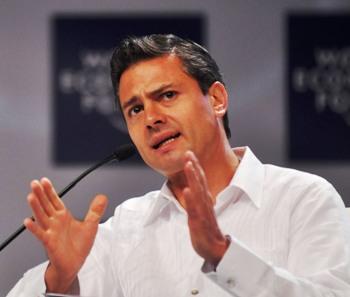
Guatemalan President Alvaro Colom would rather go to war with the narcos then legalize drugs. (Image: World Economic Forum)
Weak Central American states are hard-pressed to go up against the Mexican cartels, and now, Guatemala's president wants to build a NATO-style regional military force to go up against them. And for the US to pay for it.
The Obama administration has been sending drones deep into Mexican territory to gather intelligence. The American assistance has been kept secret because of legal restrictions in Mexico and the heated political sensitivities there about sovereignty.
Mexican President Felipe Calderón has been invited to give the commencement address at Stanford University in June, but an editorial in this weekâs El Mensajero calls it the "wrong choice" due to his prohibitionist drug war. El Mensajero editor MarÃa MejÃa writes that the point of a commencement address is to inspire students, adding that if she were a student, she wouldnât feel inspired by Calderón. "I donât admire his war against drug trafficking...I canât believe that more than 30,000 dead during his administration due to violence stemming from narcotrafficking is something that could inspire me," she wrote.
The once-fearsome Guatemalan army has returned to the jungles where it battled Marxist guerrillas a generation ago, this time to hunt shadowy Mexican drug traffickers fighting for control of strategic smuggling routes to the United States. The military operations are the clearest sign yet that as Mexico's wealthy drug trafficking organizations spread into Central America, wary but weak governments here are preparing to follow Mexican President Felipe Calderon's U.S.-backed decision to turn the armed forces against the traffickers. That prohibitionist strategy has failed to slow the violence in Mexico, which has left more than 34,000 dead in four years.
Undersecretary of the Army Joseph Westphal, the second-highest ranking civilian official in the U.S. Army, described the situation in Mexico created by drug prohibition as an insurgency and fretted over a scenario in which armed U.S. soldiers could be called to the border and/or into Mexico. Westphal is the most senior U.S. official to publicly compare Mexicoâs drug cartels to an insurgency since Secretary of State Hillary Clinton made a similar assessment last September. Westfall â who said he was expressing a personal opinion, but one he had shared with the White House â said he didnât want to ever see a situation in which "armed and fighting" American soldiers are sent to combat an insurgency "on our border, in violation of our Constitution, or to have to send them across the border."