
Crack/Powder Cocaine Disparity

Alabama Townhall meeting on Discriminatory Federal Drug Sentencing

The ACLU Washington Legislative Office and the ACLU of Alabama will host a townhall meeting in Birmingham, Alabama on the need to repair the current discriminatory federal drug sentencing policy. The event is open to the press, and ACLU speakers will be available afterwards for interviews.

THE 20-YEAR LEGACY of CRACK & POWDER COCAINE SENTENCING: Senate Staff Briefing

Senate Staff Briefing Sponsored by the Justice Roundtable Friday, October 27, 2006 12:00 – 1:00 226 Dirksen (Bring your brown bag lunch) On October 27, 1986 President Ronald Reagan signed the Anti-Drug Abuse Act of 1986. The law’s mandatory penalties for crack cocaine offenses are the toughest ever adopted for low-level drug offenses. A defendant convicted with five grams of crack cocaine (the weight of less than two sugar packets) is subject to a five-year mandatory minimum sentence. The same five-year penalty is triggered for powder cocaine only when the offense involves 500 grams, 100 times the minimum quantity for crack. Twenty years later it is time to re- evaluate the implications of this law and determine whether the law’s application reflects Congress’s intent in 1986 when the legislation was enacted. Panelists will discuss the effects of the legislation on drug abuse and public safety, as well as a range of proposals for reform.

Elena Kagan and the Crack/Powder Sentencing Disparity

Obama's Supreme Court nominee Elena Kagan once served as deputy director of President Clinton's Domestic Policy Council, where she served on a working group that argued for delaying critically important sentencing reforms:

The memos…show that Kagan served on a government working group that decided to dial back the Clinton administration’s efforts to decrease the disparity in sentencing between crimes involving crack and those involving powdered cocaine. A draft report from the group painted the decision as a grudging but realistic one based on a stalemate in Congress over the issue. "Our more nuanced message will not sell as well as the 'tough on crime' opposition message in an age of sound bites," the report read. [Politico]


What an ugly quote and a rare glimpse inside the twisted thought processes that have allowed our worst mistakes to endure for so many shameful years. It's just sickening to think that some of the drug war's most racist policies might have been fixed more than a decade ago if spineless advisors like Kagan hadn't put politics ahead of equal justice.

In purely political terms, they might have been right – sentencing reform took several more years to gain sufficient momentum – but do we want this sort of callous and calculating partisan operative deciding who is and is not protected under the U.S. Constitution?

Update: I edited the post to make it clear that Kagan was part of a group which made this recommendation, and wasn't solely responsible for it herself. A wise colleague pointed out to me that it's possible she didn't even agree with the position of the group. In the context of the Politico story, it's clear she made a lot of politically motivated decisions at that time, but I could be off-base in blaming her personally for recommending this position on the sentencing disparity.

Senate Passes Bill to Reduce, But Not Eliminate, Crack/Powder Sentencing Disparity

The US Senate approved on a voice vote Wednesday a bill that would reduce, but not eliminate, the disparity in sentences handed down to people convicted of crack versus powder cocaine charges. The bill championed by Sen. Dick Durbin (D-IL), SB 1789 would reduce the current, much maligned, 100:1 ratio to 18:1. Under current law, it takes only five grams of crack cocaine to earn a mandatory minimum five-year federal prison sentence, but 500 grams of powder cocaine to garner the same sentence. The law has been especially devastating in black communities, which make up about 30% of all crack consumers, but account for more than 80% of all federal crack prosecutions. Under the bill passes by the Senate, it would now take an ounce of crack for the mandatory minimums to kick in. Durbin's bill originally called for completely eliminating the sentencing disparity, but was stalled until a Senate gym meeting between Durbin and opposition Judiciary Committee heavy-hitters Sens. Orrin Hatch (R-UT) and Jeff Sessions (R-AL). After that informal confab, the bill was amended to 18:1 and passed unanimously last week by the committee. A bill in the House by Rep. Bobby Scott (D-VA) that would completely eliminate the disparity by the simple act of eliminating all references to crack in the federal statute, HR 3245, passed out of the House Judiciary Committee last July, but has not come to a floor vote. Now that the Senate has approved its bill, pressure will be on the House to just approve the Senate version. Sen. Durbin told the Associated Press that while he had originally sought to completely eliminate the disparity, the final bill was a good compromise. "If this bill is enacted into law, it will immediately ensure that every year, thousands of people are treated more fairly in our criminal justice system," he said. Durbin added that the harsher treatment of crack offenders combined with federal prosecutors' predilection for disproportionately going after black crack offenders had eroded respect for the law. "Law enforcement experts say that the crack-powder disparity undermines trust in the criminal justice system, especially in the African-American community." But drug reformers and civil rights groups that had pushed for complete elimination of the sentencing disparity had a definitely mixed reaction to the Senate vote. It was progress, but not enough, they said. "We strongly supported Sen. Durbin's bill, which would have completely eliminated the disparity," said Wade Henderson, head of the Leadership Council for Civil and Human Rights in a statement Wednesday. Adding that the group was "disappointed" that disparities remain, Henderson said that "this legislation represents progress, but not the end of the fight." "Today is a bittersweet day," said Jasmine Tyler of the Drug Policy Alliance in a Wednesday statement. "On one hand, we’ve moved the issue of disparate sentencing for two forms of the same drug forward, restoring some integrity to our criminal justice system. But, on the other hand, the Senate, by reducing the 100:1 disparity to 18:1, instead of eliminating it, has proven how difficult it is to ensure racial justice, even in 2010."
Washington Post Story on Crack Sentencing Bill

Carrie Johnson at the Washington Post has written a nice story on the Durbin bill to reduce federal crack cocaine penalties to the level of powder cocaine penalties. It quotes my colleagues Jasmine Tyler of Drug Policy Alliance (known inside the Beltway as "Jazz") and Julie Stewart of Families Against Mandatory Minimums (FAMM), the sentencing reform group that has led the fight to end mandatory minimums since the early '90s. I have a minor nitpick with the article, which is that it presents the issue as having civil rights and justice reform advocates and some politicos on one side, with law enforcement on the other, quoting a spokesperson for the Fraternal Order of Police saying that in the past their members have favored raising powder cocaine penalties instead. While the article doesn't say that all law enforcement is against reducing the penalties, it does fail to mention that there is also law enforcement support for lowering penalties. The press release from Sen. Durbin announcing the bill cites Los Angeles police chief William Bratton, Miami police chief John Timoney, and the National Black Police Association. I also have to comment on some of the comments I saw by Post readers. Most of the commenters were in support of reducing penalties as the bill does. But a few characterized it as "stupid," saying it would allow people to go on selling crack in inner city black communities, and thereby hurting those communities. As usual, it's the people throwing around words like "stupid" who've done the least thinking about the issue. If they had in fact stopped to think, they would realize that: 1) possession sentences are getting adjusted by this bill, helping people now going to prison for years for just for possessing tiny quantities of crack; and that: (2) incarcerating a drug dealer just creates a job opportunity for another dealer. Often the new would-be dealers fight it out over the old dealer's turf, hurting the community much much more.

Senators Sponsor Bill to Lower Crack Cocaine Penalties

Update: There's video footage from C-Span2 of a Tuesday Congressional briefing on this issue by the Crack the Disparity coalition, online here. First speaker, Chief of NAACP DC Bureau Hilary Shelton. In July we reported that a bill in the House of Representatives, the Fairness in Cocaine Sentencing Act Fair Sentencing Act of 2009, had passed the full Judiciary Committee. Today Sen. Dick Durbin (D-IL) introduced a Senate version of the bill. There's no bill number yet, but we'll post back with it when available. Click here to read the Durbin office's press release. The Fairness in Cocaine Sentencing Act Fair Sentencing Act would increase the quantities of crack cocaine that are needed to trigger certain mandatory minimum sentences. Currently one can receive a five-year mandatory minimum prison term for possession of just five grams of crack cocaine, vs. 500 grams of powder cocaine needed for the same sentence, for example. Passage of the Act will mean that it would take 500 grams of crack to trigger the mandatory. In addition to Durbin, seven other Judiciary Committee members are original cosponsors: Judiciary Committee Chairman Pat Leahy (D-VT), Judiciary Committee Members Arlen Specter (D-PA), Feingold (D-WI), Cardin (D-MD), Whitehouse (D-RI), Kaufman (D-DE) and Franken (D-MN). Two other senators, John Kerry (D-MA) and Chris Dodd (D-CT) are also original cosponsors. While these are all Democrats, some conservative Republican senators had indicated they were likely to or were considering also supporting it. We'll see what happens. We were one of many organizations signing a letter to the Hill supporting this reform. Groups cited in the press release as supporting the bill include the American Bar Association, the Leadership Conference on Civil Rights, the National Black Police Association, and the United Methodist Church. The release also cites as supporters LA and Miami police chiefs Bill Bratton and John Timoney, and US Attorney General Eric Holder. All of these sentences should be repealed, of course, but in the meanwhile the Fairness in Cocaine Sentencing Act Fair Sentencing Act will help a lot of people to avoid some terribly long prison terms. Crack sentencing has been an injustice since the laws were passed in the mid-'80s, and a political issue since at least the early '90s when I started tuning in, so it's taken awhile to get to this point. It is looking pretty good for this to finally happen, but we can't take anything for granted. Look for an action alert sometime next week after there's a bill number.

Crack Sentencing Reform Bill Passes Full Judiciary Committee

Last week we reported that the crime subcommittee of the House Judiciary Committee had unanimously passed H.R. 3245, a bill to reduce federal crack cocaine penalties to the same level as those for offenses involving powder cocaine. The full Judiciary Committee approved the bill today, we just heard, by a vote of 16-9. I'll post back with a link to the roll call when it becomes available on Thomas, or follow the link to the bill above to check in the meanwhile. Reports indicate it is expected to be taken up on the floor of the House of Representatives, and that a bipartisan Senate bill is expected out soon too. So this is big news. Not the only big news -- read more in our current top Chronicle feature, "Winds of Change Are Blowing in Washington -- Drug Reforms Finally Move in Congress."

Breaking: House Subcommittee Votes to Reduce Crack Cocaine Penalties to Powder Cocaine Level

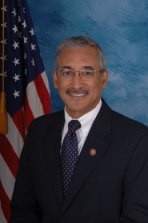
Rep. Bobby Scott (D-VA), H.R. 3245
lead sponsor and long-time champion
for criminal justice reform
The House Judiciary Subcommittee on Crime, Terrorism and Homeland Security this afternoon unanimously approved H.R. 3245, the "Fairness in Cocaine Sentencing Act of 2009." According to Families Against Mandatory Minimums:
The bill would remove references to "cocaine base" from the US Code, effectively treating all cocaine, including crack, the same for sentencing purposes. Original cosponsors of the bill include all Democratic members of the subcommittee and the sponsors of all other Democratic bills that address the cocaine sentencing disparity.
Click here for the full press release. Exciting times -- as I noted a few minutes ago when writing about another good vote that took place in Congress yesterday, eliminating the loss of financial aid penalty that exists for students convicted of drug possession. That one was part of a larger, high-priority bill that that committee is now sending to the full House of Representatives. Whether this standalone bill, coming out of a subcommittee, will get to that level is less certain. However, the chairman of the Judiciary Committee, John Conyers (D-MI), is an ardent supporter, and the bill passed the subcommittee unanimously, meaning the Republicans on the subcommittee must have voted for it too. (The roll call isn't online yet.) So it is very encouraging nonetheless.

Video: Crack Sentencing Reform Petition Delivered to Congress -- Former Prisoners, Family Members and Advocates Speak Out

Last month the "Crack the Disparity" Coalition delivered petitions signed by tens of thousands of people, calling for an end to the draconian US crack sentencing laws, to the offices of Rep. John Conyers (D-MI) and Pat Leahy (D-VT), respective chairs of the House and Senate Judiciary Committees. This short video on ColorOfChange.org shows one of the deliveries, and features comments from Karen Garrison, whose two sons were unjustly caught up in these laws; and from Nkechi Taifa, who heads up justice reform efforts at the Open Society Policy Center. The ColorOfChange.org page devoted to this petition also features audio from the press conference, including former Major League baseball star Willie Mays Aikens, who served 14 years in federal prison after an untreated cocaine addiction drew him into the federal system with crack charges.