Ricardo Soberón of the Centre for Research on Drugs and Human Rights (CIDDH), says "since 1987, the U.S. Department of State has been concerned about the risk of corruption among the Peruvian military in drug trafficking zones, but that concern has not been shared by the Pentagon (Department of Defence), which was more interested in expanding its missions in the Andes region, without regard to the costs." "The leaked cables reflect a deep political contradiction between Washingtonâs institutional diplomacy, and the military diplomacy characterised by the promotion of strategies like (the U.S.-financed counterinsurgency and anti-drug strategy) Plan Colombia, the Merida Initiative (a multi-billion dollar U.S. counter-drug assistance programme for Mexico and Central America), hot pursuit across borders, or the âhammer and anvilâ tactic in the Colombian armed conflict," he said.
Bloomfield Township Sued Over 'Unconstitutional' Medical Marijuana Ordinances
Two Oakland County attorneys filed a lawsuit against Bloomfield Township in an attempt to overturn local medical marijuana ordinances they say conflict with state law and make it too difficult for a registered patient to use the drug. It's the latest medical marijuana challenge in Oakland County, which has become home to a number of lawsuits and criminal cases that could shape interpretation and application of the Michigan Medical Marihuana Act of 2008 for years to come.
Tax Deductible Donations Support Reform in 2011
Help bring about the brighter future that awaits us beyond prohibition, by making a tax-deductible educational donation or a non-deductible lobbying donation before year's end.
Mexico Drug War Update
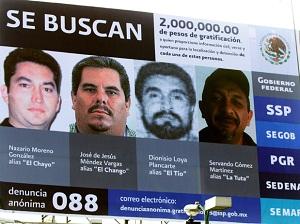
More major drug trafficking figures were captured or killed this week, yet Mexico's drug prohibition-related violence continued unabated. This year's death toll has passed 9,000, and Ciudad Juarez this week passed the 3,000 mark.
US Drug War Military Presence in Costa Rica Rejected
In the middle of this year, the Costa Rican Parliament authorized the arrival of 7,000 soldiers, 46 war ships, more than 200 helicopters, 10 Harrier planes and two submarines. The permission provoked the rejection of various parties and social sectors, regarding it as anti-constitutional and violating national sovereignty. "We are quite much worried with such an excessive military force to fight drug trafficking," said Victor Emilio Granados, from Partido Accesibilidad sin Exclusion (PASE) - Accessibility without Exclusion Party. Other parties such as Frente Amplio and Accion Cuidadana also rejected the US military presence.
Drug Czar Blames Rising Teen Pot Use on Medical Cannabis Laws Rather Than on the Administrationâs Own Failed Policies
Paul Armentano, the deputy director of the National Organization for the Reform of Marijuana Laws, discusses the Drug Czar's spin on rising teen marijuana use.
wheelchair.png
Medical Marijuana Has Nothing to do with Teenage Pot Smoking
[inline:wheelchair.png align=right]
The drug czar's shameful attempt to blame increased teenage pot use on the medical marijuana debate has already been ripped to confetti by almost
This work by StoptheDrugWar.org is licensed under Creative Commons Attribution-ShareAlike 4.0 International
Mexican Lawmaker Denied Immunity in Drug Trafficking Organization Case
Mexico's Congress has voted to strip a lawmaker of his immunity, allowing for the prosecution of a sitting congressman with alleged ties to the country's powerful drug trafficking organizations for the first time ever in the country. Lawmakers voted 382-2 to let federal prosecutors move forward with a criminal case against Julio Cesar Godoy, a representative from the state of Michoacan accused of laundering money for the notorious La Familia.
Importing the Portuguese Model of Drug Policy Reform
After overseeing a comprehensive review of drug policy in Portugal, where possession of everything from marijuana to heroin has been decriminalized since 2001, Alex Stevens, a professor of criminal justice at the University of Kent in Britain, has a blunt rebuttal to the classic "Think of the children" line of thinking. "Criminalization of drugs is not protecting our children," he says. "In fact, it's harming our children." By any conceivable empirical metric, Portugalâs vastly liberalized drug policy has succeeded. And as Stevens argues, the most potent lesson to be learned is that the "decriminalization of drugs does not necessarily lead to increases in drug use."