Latest
Latest News
Event
Liquor & Beer Social @ Public House to Benefit NY NORML
Join New York NORML for a get together. Donate $30 at the door and enjoy an open bar from 7-9.
Blog
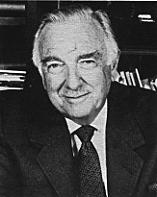
Walter Cronkite on the Drug War
Epilogue by Walter Cronkite at the close of ""The Drug Dilemma: War or Peace," The Cronkite Report, June 20, 1995:
 | |
Every American was shocked when Robert McNamara, one of the master architects of the Vietnam war, acknowledged that not only did he believe the war was, "wrong, terribly wrong," but that he thought so at the very time he was helping to wage it. That's a mistake we must not make in this 10th year of America's all-out War on Drugs. It's surely time for this nation to stop flying blind, stop accepting the assurances of politicians and other officials, that if we only keep doing what we are doing, add a little more cash, break down a few more doors, lock up a few more Jan Warrens and Nicole Richardsons, then we will see the light at the end of the tunnel. Victory will be ours. Tonight we have seen a war that in its broad outline is not working. And we've seen some less war-like ideas that appear to hold promise. We've raised more questions than we've answered, because that's where the Drug War stands today. We're a confused people, desperately in need of answers and leadership. Legalization seems to many like too dangerous an experiment; to others, the War on Drugs, as it is now conducted, seems inhumane and too costly. Is there a middle ground? Well, it seems to this reporter that the time has come for President Clinton to do what President Hoover did when prohibition was tearing the nation apart: appoint a bi-partisan commission of distinguished citizens, perhaps including some of the people we heard tonight, a blue-ribbon panel to re-appraise our drug policy right down to its very core, a commission with full investigative authority and the prestige and power to override bureaucratic concerns and political considerations. Such a commission could help us focus our thinking, escape the cliches of the Drug War in favor of scientific fact, and more rationally analyze the real scope of the problem, answer the questions that bedevil us, and present a comprehensive drug policy for the future. We cannot go into tomorrow with the same formulas that are failing today. We must not blindly add to the body count and the terrible cost of the War on Drugs, only to learn from another Robert McNamara 30 years from now that what we've been doing is, "wrong, terribly wrong." Goodnight.
Chronicle
Chronicle
Chronicle
Chronicle
In The Trenches
Press Release: U.S. Congress Ends Decade-Long Obstruction of D.C. Medical Marijuana Law

Â
FOR IMMEDIATE RELEASEÂ Â Â
JULY 16, 2009
U.S. Congress Ends Decade-Long Obstruction of D.C. Medical Marijuana Law
Medical Marijuana Law Passed in 1998 May Finally Be Implemented
CONTACT: Dan Bernath, MPP assistant director of communications, 202-462-5747 ext. 2030
WASHINGTON, D.C. â The U.S. House today passed legislation that removes a decade-old provision that has prevented Washington, D.C., from implementing the medical marijuana law passed by 69 percent of capital voters in 1998.
    Known as the Barr amendment, the provision has forbidden the city from extending legal protection to qualified medical marijuana patients and has been derided by advocates for years as an unconscionable intrusion by the federal government into the District's affairs.
    "Today represents a victory not just for medical marijuana patients, but for all city residents who have the right to determine their own policies in their own District without federal meddling," said Aaron Houston, director of government relations for the Marijuana Policy Project. "D.C. residents overwhelmingly made the sensible, compassionate decision to pass a medical marijuana law, and now, 10 years later, suffering Washingtonians may finally be allowed to focus on treating their pain without fearing arrest."
    Although Congress had passed the Barr amendment every year until now, the provision came under greater scrutiny after the high-profile case of Jonathan Magbie, a D.C. quadriplegic man who died in prison in 2004 from lack of medical care after being convicted for using marijuana to treat his pain.
    "Had the District been able to implement its medical marijuana law when it passed in 1998, Mr. Magbie may well be alive today â and free to treat his pain as he and his doctor saw fit," Houston said. "Perhaps now nobody in the District will ever have to suffer as he and his family did simply for using the medicine that works best for them."
    With more than 27,000 members and 100,000 e-mail subscribers nationwide, the Marijuana Policy Project is the largest marijuana policy reform organization in the United States. MPP believes that the best way to minimize the harm associated with marijuana is to regulate marijuana in a manner similar to alcohol. For more information, please visit http://MarijuanaPolicy.org.
####
In The Trenches
Wo/Menâs Alliance for Medical Marijuana Wins Annual Award by National Sociology Organization
For Immediate Release:
Wo/Menâs Alliance for Medical Marijuana wins annual award by national sociology organization
Contact: Michele Smith Koontz (SSSP Administrative Officer) at 865-689-1531 or [email protected]
WAMM Wins Award
The national organization of sociologists, "The Society for the Study of Social Problems," has named the California medical marijuana organization, the Wo/Menâs Alliance for Medical Marijuana, as the recipient of its 2009 Social Action Award.
WAMM, which is a small patient-caregiver cooperative in Santa Cruz, California, has collectively grown and given away millions of dollars worth of cannabis to seriously and terminally ill people since the early 1990s. The organization is strictly not-for-profit.
The $1,000 Social Action Award will be presented to WAMM at the SSSP annual dinner in San Francisco on Saturday August 8th at 8 p.m.
The organization is the subject of a recent ethnography by Wendy Chapkis and Richard J. Webb, Dying to Get High: marijuana as medicine (New York University Press 2008): http://www.dyingtogethigh.net
In The Trenches
Americans for Safe Access: July 2009 Activist Newsletter
City Loses Suit, Pays ASA $139,000 in Legal FeesGarden Grove Tried to Avoid Returning Cannabis to PatientA California city's refusal to return less than $200 worth of cannabis to a qualified patient has now cost them at least a thousand times that. And they had to return the cannabis anyway. |
ASA Suit Gets County to Issue Cannabis ID CardsOthers Face Legal Action if Calif. Program Not AdoptedMedical cannabis patients in Solano County will soon be able to obtain California state ID cards to protect them from wrongful arrest or seizure of their medicine, thanks to legal action by ASA. |
California Senate Resolution Asks for Change on Federal Medical Cannabis PolicyWhile the Obama Administration has promised a new policy on prosecuting medical cannabis cases, California state senators are telling Washington they want to see new law. |
Congress Considers Bill to Protect |
Rhode Island is Third with Patient Access ProgramThe Rhode Island legislature this month overrode Governor Donald Carcieri's veto to establish "Compassion Centers" for distributing cannabis to qualified patients. |
In The Trenches
Save the date for MPP's 15th anniversary gala
Dear friends:
When MPP was founded in January 1995, medical marijuana was illegal in all 50 states. Since then, 13 states have legalized medical marijuana, with Michigan becoming the 13th state in November 2008, when Michigan voters passed MPP's ballot initiative with 63% of the vote. By the time of MPP's 15th anniversary in January 2010, we expect medical marijuana to be legal in 15 states (with New Hampshire and New Jersey becoming the 14th and 15th states).
At the same time, marijuana possession is now decriminalized in 13 states, with Massachusetts becoming the 13th state in November 2008, when Massachusetts voters passed MPP's ballot initiative with 65% of the vote. By the end of next year, we hope that marijuana will be decriminalized in 15 states (with Rhode Island and Vermont becoming the 14th and 15th states).
We think all this is worth celebrating. Will you join us in toasting these successes?
MPP's 15th Anniversary Gala
Date: January 13, 2010
Reception from 6:30 - 7:30 p.m.
Dinner from 7:30 - 10:30 p.m.
Location: Hyatt Regency on Capitol Hill in Washington, D.C.
Tickets will go on sale in August, but please mark your calendar now.
By the way, we're currently putting together the event's host committee, so if you'd like to publicly declare your support of MPP as a host of the event, please contact MPP's Sara Cannon at (202) 462-5747, ext. *2020 or [email protected].
Sincerely,
Rob Kampia
Executive Director
Marijuana Policy Project
Washington, D.C.
P.S. As I've mentioned in previous alerts, a major philanthropist has committed to match the first $2.35 million that MPP can raise from the rest of the planet in 2009. This means that your donation today will be doubled.