Latest
Latest News
Latest News
Latest News
Blog
Law Enforcement: Drug Cops Kill Two in Two Days in Drug Raids in Florida and Tennessee
At least two US citizens were killed in their own homes by American police enforcing the war on drugs in a 48-hour period late last week. One was a 52-year-old white grandmother; the other was a 43-year-old black man. Both allegedly confronted home-invading officers with weapons; both were shot to death. No police officers were injured.
The combination of widespread gun ownership in the US with aggressive drug war policing is a recipe for tragedy, one that is repeated on a regular basis. Gun owners commonly cite protecting themselves from home-invading robbers as a reason for arming themselves, while police cite widespread gun ownership as a reason they need to use SWAT-style tactics, breaking down doors and using overwhelming force against potential shooters. That homeowners would pick up a weapon upon hearing their doors broken down is not surprising, nor is it surprising that police are quick to shoot to kill "suspects" who may pose a threat to them.
The first killing came Thursday morning in North Memphis, when a Bartlett, Tennessee, police narcotics squad serving a search warrant for drug possession -- not sales, manufacture, or possession with intent to sell -- shot and killed Malcolm Shaw, 43, after breaking into his home. Police said they knocked on Shaw's door several times and identified themselves as police before entering the home.
Police said Shaw emerged from a room and pointed a gun at plainclothes officer Patrick Cicci. Cicci fired once, killing Shaw. Cicci is on administrative leave pending an internal investigation.
While the Bartlett Police investigation is ongoing, that didn't stop the Shelby County District Attorney's Office from announcing Monday that Cicci will not be prosecuted. Cicci's killing of the homeowner was "apparent justifiable use of deadly force in self defense," a spokesman said.
Bartlett police said that while the Bartlett narcs conducting the raid were not in uniform, their gear clearly identified them as law enforcement. They wore "high-visibility vests" marked "POLICE" in several spots, police said.
The killing of the well-known neighborhood handyman led to the formation of a crowd hostile to police outside his home. Bartlett police on the scene had to call Memphis police to do crowd control.
Memphis police complained that the Bartlett narcs had not followed law enforcement protocols requiring them to notify the local agency when they were operating in its jurisdiction. They said they were notified only as the raid commenced, and that moments later, they got a request for an ambulance at the address, and moments after that, they got a request that they send a couple of police cruisers for crowd control.
Timothy Miers, who said he was Shaw's brother accused police of being trigger-happy. "How you gonna go in serving a warrant and shoot somebody?" Miers asked. "They already had their finger on the trigger."
The sense of disbelief over the killing was shared by members of the crowd gathered outside Shaw's home. Many complained about the officers' actions.
"My heart fell to the ground," one neighbor said.
"We can't believe it," said another. "Malcolm out of all people."
Family members expressed confusion about the shooting, saying Shaw was not a person they would have expected to threaten officers. "They say he had a gun," said Miers. "My brother doesn't have no gun."
Friends of Shaw said the same thing. "I ain't never seen him with no gun," said Arvette Thomas, a friend of Shaw.
Shaw never bothered anyone, neighbors said. "I think it's wrong to just kill him like they did," said a neighbor, "because he wouldn't hurt a fly."
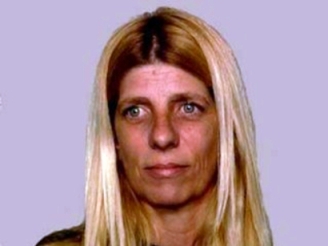
Less than 48 hours later, members of a Broward County Sheriff's Office SWAT team and its Selective Enforcement Team in Pompano Beach, Florida, shot and killed Brenda Van Zweiten, 52, during a drug raid on her home. Police had developed evidence that drugs were being sold from the residence, and obtained a search warrant. After allegedly identifying themselves as police, they broke through a sliding glass door to a bedroom and arrested Van Zweiten's boyfriend, Gary Nunnemacher, 47, on charges of possessing less than 20 grams of marijuana. Van Zweiten was in a different bedroom, and was shot and killed by deputies when she emerged holding a handgun. According to police, she refused to put down her weapon, so they shot her.
Police reported finding one gram of heroin, four grams of crack cocaine, marijuana, marijuana plants, 40 generic Xanax tablets, $550 cash, two shotguns, and a rifle. Family members said Van Zweiten had a prescription for Xanax, but was not a drug dealer. But police had earlier in the day arrested three people leaving the home who they say had bought drugs there -- although police did not say from whom.
After Van Zweiten's killing, police were unrepentant. "When you approach a police officer with a loaded weapon and don't put the weapon down, there's going to be consequences," sheriff's spokesman Mike Jachles said. "It's unfortunate, but I'd rather be talking about a dead suspect than a dead cop."
Van Zweiten's brother, Bill George, said his sister had recently received threats and was afraid of break-ins. "It was an unlawful shooting," he said. "She's 98 pounds. She was just trying to protect herself. I would come out of my room with a gun too."
As news of Van Zweiten's death spread, friends, neighbors, and family members expressed dismay and disbelief. They called the incident a "set up" and said the blonde grandmother was affectionately called "Mom" by many who knew her for using her home as a neighborhood hangout to keep kids off the streets. Dozens of people gathered in her yard near a flower-bedecked cross put up as a memorial.
"Look at these people," said George. "She helped so many of these young people."
"She was like a second mom to me," said Michael Miller, 18. "She would take in anybody."
"There was no reason for this," said son Rob Singleton, 32.
Van Zwieten had no criminal history involving drugs or violence, state records show.
George said that Van Zweiten had reason to fear intruders because she had been threatened recently by a man accused of stealing watches and rings that were part of a shrine to two of her four sons, who had died within the past three years, one in a traffic accident, one of a drug overdose. She had just installed an alarm system last week, George said. "She was scared."
Singleton showed reporters inside the house, including the small bedroom where she was shot. A large puddle of blood remained on the floor, and the walls and ceiling were splattered with blood -- from his mother's head, he said. "She was probably running into the closet and trying to hide," he said.
As is all too typical in such raid, police also totally trashed the house. As the Sun-Sentinel reported: "Much of the interior of the three-bedroom house looked as if it had been hit by a tornado... Drawers were pulled from dressers, clothes were scattered, a bed was overturned, food and crockery had been knocked from kitchen cabinets." The shrine to her dead sons was also destroyed, Singleton said.
Two Broward County Sheriff's Office detectives are on administrative leave pending an internal investigation. They have not been named.
 |
|
Blog
Another more inclusive approach
Dear Sirs/Madams:
In The Trenches
Drug Truth 03/15/10
Cultural Baggage * Century of Lies * 4:20 Drug War NEWS
Cultural Baggage for 03/14/10 29:00 Reports from Oaksterdam University, professors, students, staff and interns
LINK: http://www.drugtruth.net/cms/node/2814
TRANSCRIPT: TBD
Century of Lies for 03/14/10 29:00 Reports from Students for Sensible Drug Policy conference in San Francisco
LINK: http://www.drugtruth.net/cms/node/2815
TRANSCRIPT: TBD
4:20 Drug War NEWS, 03/15 to 03/21/10 Link at www.drugtruth.net on the right margin -
Sun- Pablo Vasquez from San Antonio at SSDP conference Sat - Dr. Rick Doblin of Multidisciplinary Association for Psychedelic Studies Fri - Steve Rolles of Transform drug policy in UK at SSDP conference Thu - Micah Daigle of Students for Sensible Drug Policy Wed - Jack Cole, director of Law Enforcement Against Prohibition at SSDP conference Tue - Stacia Costner of Students for Sensible Drug Policy Mon - Steve Deangelo, Exec Dir Harborside Health Center - Cannabis Dispensary .
Programs produced at Pacifica Radio Station KPFT in Houston, 90.1 FM. You can Listen Live Online at www.kpft.org
- Cultural Baggage Sun, 7:30 PM ET, 6:30 PM CT, 5:30 PM MT, 4:30 PM PT
- Century of Lies, SUN, 8 PM ET, 7 PM CT, 6 PM MT & 5 PM PT
Who's Next to "Face The Inquisition?": Houston Constable Victor Trevino
Hundreds of our programs are available online at www.drugtruth.net, www.audioport.org We have potcasts, searchability, CMS, XML, sorts by guest name and by organization. We provide the "unvarnished truth about the drug war" to scores of broadcast affiliates i You can tune into both our 1/2 hour programs, live, at 6:30 central time on Pacifica's KPFT at http://www.kpft.org and call in your questions and concerns toll free at 1-877-9-420 420.
The two, 29:00 shows appear along with the seven, daily, 3:00 "4:20 Drug War NEWS" reports each Monday morning at http://www.drugtruth.net . We currently have 72 affiliated, yet independent broadcast stations. With a simple email request to [email protected] , your station can join the Drug Truth Network, free of charge.
Check out our latest videos via www.youtube.com/fdbecker Please become part of the solution, visit our website: www.endprohibition.org for links to the best of reform. "Prohibition is evil." - Reverend Dean Becker, DTN Producer, 713-462-7981, www.drugtruth.net
Latest News
Latest News
Latest News
In The Trenches
I Am My Sister's Keeper
On March 16, 2010, I will be receiving the Reverand Dr. Constance M.
Blog
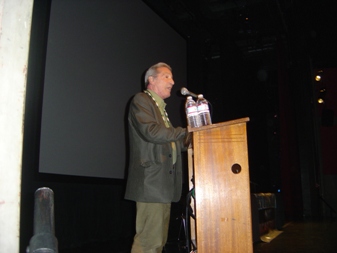
Assemblyman Ammiano at the Students for Sensible Drug Policy Conference
 |
|
 |
|
|
|
 in the exhibitor space
Latest News
Latest News
Blog
Boycott Idaho Over Thuggish Marijuana Law Enforcement? Well, We Have to Start Somewhere
Idaho has some great scenery and some great skiing, it has the Snake River Canyon, and it has a huge knot of mountains in the middle of the state that are very appealing to those who like rugged, isolated beauty. I had intended to explore them this summer, but I've changed my mind. And this story is the reason why:
Medical Marijuana Defense Falls Flat REXBURG â The Fremont County prosecutor says a drug bust in Island Park illustrates that claiming a medical use of marijuana with a certificate from another state won't help you in Idaho. Aurora M. Hathor-Rainmenti, 35 , of Garberville, Calif., was arrested Friday after she was stopped for speeding near Mack's Inn. Fremont County deputies found a baggy containing marijuana in her car with the help of a drug dog. Hathor-Rainmenti was charged with one count of possession of marijuana and two counts of possession of drug paraphernalia, all misdemeanors. Fremont County Prosecutor Joette Lookabaugh said Hathor-Rainmenti said she had a certificate from the state of California allowing for medical use of marijuana. "We want the public to know that medical marijuana certificates, even if they're from surrounding states, are not honored in Idaho," Lookabaugh said.Okay, I understand this. Idaho is under no obligation to honor a medical marijuana card from a different state. Medical marijuana users be forewarned: If you're headed for benighted redneck country, don't expect your card to protect you. There is, however, no suggestion that Hathor-Rainmenti is anything other than a legitimate medical marijuana patient. Still, the local prosecutor takes the opportunity to pile on the charges: Not only does she get a pot possession charge, she also gets two paraphernalia charges (did she have two rolling papers, or what?). Absolutely typical, of course, and absolutely disgusting. Just another way for prosecutors to stack the deck. And not limited to Idaho. Similarly, a judge in Idaho, if he had an ounce of compassion in his body, could take her medical marijuana patient status into account during sentencing. There is no sign he did that:
On Monday Hathor-Rainmenti pleaded guilty to the possession charge and one of the possession of paraphernalia charges. The other paraphernalia charge was dropped. She was sentenced to five days in jail, with 115 days at the discretion of the court along with an $800 fine.Nice. Throwing a patient in jail for a victimless crimeâand rip her off for $800. Remember, she was not charged with drugged drivingâand you better believe she would have been had there been the least suggestion she was impaired. Okay, the sentence was ugly and reprehensible, but still nothing unusual in the fascistoid heartland. But here's the kicker; here's what's got me thinking boycott:
In addition, there is a civil forfeiture under way on the borrowed car Hathor-Rainmenti was driving, as well as on the $514 in cash that was confiscated during the arrest.Say what?!?! Asset forfeiture laws are supposed to be directed at people getting rich from selling drugs. They're problematic enough in that regard, since they create an incentive for cops to trawl for cash, distorting law enforcement priorities in the constant search for the next big scoreâwith the loot typically used to pay for more cops and more drug dogs to find more cash to seize to pay for more cops and more drug dogs andâ¦In short, they are little more than a form of institutionalized, legalized corruption. But Hathor-Rainmenti only had a bag of weed. She was not charged with drug distribution. And the state of Idaho is going to steal her car and every penny she had on her? This is nothing but robbery under color of law. This is the criminal justice system as organized thuggery. The thieving state of Idaho can go to hell. I am sick to death of this sort of crap. It happens all the time, and not just in Idaho. But we have to start somewhere, and that's why I'm suggesting that perhaps a boycott is in order. Idaho is a relatively small state in terms of population, and it is highly dependent on tourism. In other words, it's vulnerable. I am aware that boycotts are a blunt instrument that may not directly harm the people they are aimed atâthe cops who make the busts, the prosecutors who try to hammer good people down, the judges who routinely impose such obscene sentences, the politicians who write the laws. But if the ski resorts in Sun Valley or the river guides and hotel owners along the Snake River Valley start seeing cancellations, perhaps they will be motivated to start putting some money into campaigns to end this evil. To be honest, I'm getting frustrated with playing games with state legislatures and I'm thinking it's time for some creative direct actions. We can spend years at the statehouse only to win a piddling decriminalization bill. Whoopee! Now you can only steal my stash and a few hundred of my hard-earned dollars instead of stealing my stash and my money and giving me a criminal record and some jail time. That is progress of a sort, but not nearly enough. Ditto with medical marijuana. Why is it that it seems like every new medical marijuana law is more restrictive than the last? Pretty soon we're going to end up with a medical marijuana law somewhere where you have to be dead already to qualify. Soâ¦what about an organized boycott of Idaho, for starters? Would medical marijuana defense groups like Americans for Safe Access get on board with that? Why or why not? What about NORML and the Marijuana Policy Project? Or the Drug Policy Alliance? Just the announcement of a boycott ought to start a real ruckus among the good burghers of Boise. There are 20 million or so pot smokers in the US, and they have friends and families. We are talking about tens of millions of people who could potentially participate. It could even have a real economic impact, and if that's what it takes to beat some sense into these yahoos, so be it. Individuals could do their part by writing letters to the state and local chambers of commerce, to the state tourism bureau, and to state newspapers explaining why they are going elsewhere this year. Reservations could be made and then canceled. Let 'em feel the pain. As I've said, I'm getting really tired of progress by the millimeter. I'm open to some creative tactics. A directed boycott is one of them. Here's another one: The drug defense bar grows rich defending pot people. How about after charging us $5,000 to show up in court and cop a guilty plea and $15,000 to pursue an appeal on constitutional grounds a few hundred times, you give back to the community you grow rich off of? How about a group of you picking a particular egregious locality and pro bono defending every drug case like you meant it? I mean filing motions, going to trial, no plea bargains, demanding jury trials, the works. You could probably freeze the system in a few weeks. Yeah, I know there are issues, but we could work them out. Sure, things like boycotts and forcing the criminal justice system are messy and difficult. But in the meantime, the wheels of injustice keep grinding away, chewing up our people in the process. Anybody got any better ideas? Do we begin with boycotting Idaho? Count me in.