
parthenon_9.gif
This Week in History
Events and quotes of note from this week's drug policy events of years past.
| |||||||||||||||||||||||||||||
ACTION ALERT: Make a Difference Today! Join ASA!Patients face a new political landscape. Medical cannabis advocates lost some important state elections, and the US House of Representatives is now in the control of politicians who oppose safe access. But you can make a difference by joining ASA today. Together we can protect the gains we've made and fight even harder for what we know is possible. | |||||||||||||||||||||||||||||
| |||||||||||||||||||||||||||||
| |||||||||||||||||||||||||||||
|
For Immediate Release:November 15, 2010
Contact: Alan Barber, (571) 306-2526
Washington, D.C.- Three decades of harsh criminal justice policies have created a large population of ex-offenders that struggle in the labor market long after they have paid their debts to society, according to a new report from the Center for Economic and Policy Research (CEPR). Because prison records and felony convictions greatly lower ex-offenders' chances of finding work, the United States loses between $57 billion and $65 billion a year in lost output.
“It isn't just that we have the highest incarceration rate in the world, we have created a situation over the last 30 years where about one in eight men is an ex-offender,” said John Schmitt, a Senior Economist at CEPR and a co-author of the report.
The new report, “Ex-offenders and the Labor Market,” found that in 2008 there were between 5.4 million and 6.1 million ex-prisoners and between 12.3 million and 13.9 million ex-felons in the United States. Over 90 percent were men.
In 2008, about one in 33 working-age adults was an ex-prisoner, and about one in 15 working-age adults was an ex-felon. Among working-age men in that same year, about one in 17 was an ex-prisoner and one in eight was an ex-felon.
Because ex-offenders face substantial barriers to employment, the authors estimate that the large ex-offender population in 2008 lowered employment that year by the equivalent of 1.5 million to 1.7 million workers.
"The rise in the ex-offender population overwhelmingly reflects changes in the U.S. criminal Justice system, not changes in underlying criminal activity," says Schmitt. "We incarcerate an astonishing share of non-violent offenders, particularly for drug-related offenses. We have far better ways to handle these kinds of offenses, but so far common sense has not prevailed."
The report warns that in the absence of reforms to the criminal justice system, the share of ex-offenders in the working-age population will rise substantially in coming years, increasing the magnitude of employment and output losses estimated for 2008.
###


Neill Franklin from LEAP has an awesome piece in The Huffington Post today on the importance of knowing your constitutional rights during police encounters. It includes a cool slideshow of all the rules from 10 Rules for Dealing with Police. Check it out.

It's amazing how many groundbreaking treatments can be derived from a Schedule I drug with no medical value.

FOR IMMEDIATE RELEASE | CONTACT: Americans for Safe Access |
WASHINGTON - November 15 - After more than two years as acting head of the Drug Enforcement Administration (DEA), Michele Leonhart, who served as Deputy DEA Administrator during George W. Bush's presidency, is scheduled to be confirmed by the Senate Judiciary Committee this Wednesday, November 17th at 2:30pm EST. No friend to medical marijuana patients, Leonhart along with her former boss, DEA Administrator Karen Tandy, were responsible for more than two hundred paramilitary-style raids on patients and their providers. As Acting DEA Administrator, Leonhart has continued to raid dispensaries, growers and medical marijuana testing labs despite a change in federal policy under President Obama.
Although Leonhart is expected to be easily confirmed, advocates want to hold her feet to the fire, and are encouraging Senate Judiciary Committee members to ask tough questions about adherence to President Obama's Justice Department policy and her plans for addressing the growing divide between federal and state medical marijuana laws. "Leonhart's track record of causing untold harm to patients and their providers over the years is cause for a serious lack of trust in the medical marijuana community," said Caren Woodson, Director of Government Affairs with Americans for Safe Access, the country's leading medical marijuana advocacy group, which has submitted questions to be asked of Leonhart during the confirmation hearing. "We need to know that Leonhart has a plan for medical marijuana and the protection of patients and that she will be held accountable for her actions."
What: Michele Leonhart's confirmation hearing to be the next DEA Administrator
When: Wednesday, November 17th at 2:30pm
Where: Senate Judiciary Committee, Dirksen Senate Office Building, Room 226, Washington, DC
In October 2009, the Obama Administration issued a memorandum to U.S. Attorneys discouraging the use of federal resources to prosecute individuals who are in "clear and unambiguous compliance" with their state medical marijuana law. Since then, ASA has tracked more than 30 federal enforcement raids in California, Colorado, Hawaii, and Nevada, all medical marijuana states. By contrast, local and state governments are recognizing the need for, and authorizing methods of, distribution of medical marijuana. In a grassroots push over the next two days, medical marijuana advocates across the country are calling on Senate Judiciary Committee members to ask hard questions of Leonhart. "Leonhart must look at this as a public health issue and do more to reconcile the conflict between local, state and federal laws," continued Woodson.
In addition to enforcement, as head of the DEA, Leonhart will have authority over an unanswered marijuana Rescheduling petition that has been pending since 2002. Filed by the Coalition for Rescheduling Cannabis (CRC), the petition originally argued before the Bush Administration that marijuana has medical value and should be rescheduled. Now before the Obama Administration, advocates and coalition members are expecting more rigorous scrutiny on an issue that has been progressively moving toward scientific and mainstream acceptance. This past week it was confirmed that Arizona, which narrowly voted for Proposition 203, would become the country's 15th state to pass a medical marijuana law.
Under the authority of the Controlled Substances Act, Leonhart has significant control over medical marijuana research in the U.S., and has used her position as Acting Administrator to obstruct the scientific advancement of this important therapeutic substance. In January 2009, days before President Bush was to vacate his office, Acting Administrator Leonhart thwarted an effort to end federal obstruction of medical marijuana research, ignoring an 87-page recommendation from her own DEA Administrative Law Judge Mary Ellen Bittner, who ruled that such research was "in the public interest." The DEA and the National Institute for Drug Abuse (NIDA) have colluded to obstruct medical efficacy studies by prioritizing research on the supposed harmful effects of marijuana.
Further information:
Leonhart confirmation hearing notice: http://judiciary.senate.gov/hearings/hearing.cfm?id=4850
ASA Questions for Leonhart: http://AmericansForSafeAccess.org/downloads/ASA_Leonhart_Questions.pdf
ASA Memo to Senate Judiciary Committee: http://AmericansForSafeAccess.org/downloads/ASA_Leonhart_Memo.pdf
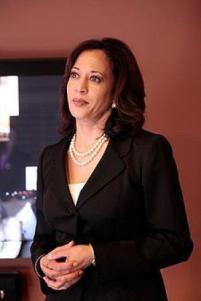


 One of the closest, and most closely watched, state races in the country is the contest for California Attorney General, where absentee and provisional ballots are still being counted. ASA analysis of the remaining ballots projects Democrat Kamala Harris to win.
 A dramatic election night saw Cooley take an early lead as conservative rural counties reported,. Cooley declared victory early, before the tide turned as results from the state's urban centers came in. Then it became apparent that his home county was going against him by a sizeable margin. Before the night was out, he had cancelled his press conference for the next morning, and Harris had taken a narrow lead of a few thousand votes out of more than 7 million tallied.
 Colorado faced a large number of local measures on regulating medical cannabis, with voters approving dispensaries or commercial cultivation facilities in at least six counties and two cities. They will join 19 other Colorado cities with regulated access to medical cannabis for qualified patients.
 The first protest and press conference on October 14 was held at the local courthouse to demand the dismissal of charges against those arrested in raids on October 1 and 7. The second was at the November 9 San Jose City Council meeting following yet another raid at just two days after city voters approved Measure U, a tax plan for the dispensaries targeted by the task force.
 We Are the Drug Policy Alliance
