Drug War Issues
Politics & Advocacy
Tennessee lawmakers have been trying to pass medical marijuana for more than a decade, and they're at it again this year; MPP calls on supporters to tell Congress to quash the hemp ban, and more.
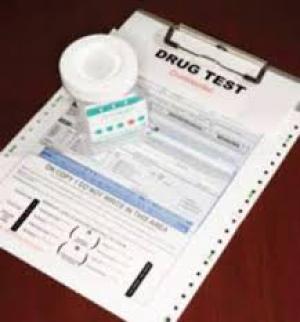
New Zealand's ruling National Party wants to drug test jobseekers. (Creative Commons)
Medical Marijuana
Tennessee Lawmakers Try Again on Medical Marijuana. Volunteer State lawmakers are once again pondering whether and how Tennessee should create a medical marijuana program, something the legislature has been tangling with for more than a decade now.
The state Senate Judiciary Committee held the first of what promises to be a series of legislative discussions on the topic on September 30. That hearing saw lawmakers spend nearly six hours discussing a 99-page proposal from the Tennessee Medical Cannabis Commission that aims to establish a highly regulated medical marijuana program in the state.
Under the proposal, the state Health Department would license growers, processors, dispensaries, and testing labs. Patients would have to obtain permission from a physician authorized to dispense controlled substances, and they would not be able to obtain marijuana in smokeable form. Instead, they could use capsules, tablets, tinctures, oils, creams, and other forms of cannabis products. Home cultivation would not be allowed.
Access to medical marijuana would be limited to people suffering from a list of qualifying conditions, including Alzheimer's disease, ALS, some cancers, Crohn's disease, epilepsy, MS, Parkinson's disease, HIV/AIDS, and sickle cell disease.
The current proposal, embodied in Senate Bill 459, is more narrowly drawn than previous efforts, all of which died in the legislature. They featured a longer list of qualifying illnesses, allowed a wider variety of THC products, and allowed patietns to possess up to 2.5 ounces.
Hemp
Marijuana Policy Project Calls on Congress to Keep Hemp THC Products Legal. In an action alert to members this week, the Marijuana Policy Project (MPP) urged them to reach out to Congress to reverse a scheduled ban on hemp THC products and institute a system of regulations as an alternative to criminalization.
"When it comes to public health and safety, regulation and education consistently yield better results than prohibition," MPP said in the alert to supporters
"The path forward to address real safety concerns is setting clear potency limits, testing and labeling standards, age restrictions, and keeping dangerous products out of the market—all while preserving consumer access to a market that has created over 225,000 jobs and generated at least $28 billion in tax revenue nationally to date," the group said.
Congress legalizes hemp and hemp derivatives with less than 0.3 percent delta-9 THC in 2018, but after an explosion in hemp-derived intoxicating cannabinoid products hit store shelves across the country, Congress reversed itself and redefined hemp to make it so only products with 0.4 milligrams of total THC per container would remain legal after November 12. That date has since been pushed back a month to give lawmakers more time to craft regulations for those products.
MPP included a sample letter for supporters to send to lawmakers. "Millions of Americans have benefited from access to these products" and that "creating a framework for regulations is the only viable path forward," the letter says.
"The current lack of regulatory guidance, including age-gating these products to adults 21 years old and over, on hemp-derived cannabinoids should be a legislative priority," it says. "Congress needs to act to put sensible regulations in place that protect consumers and hold businesses accountable. But implementing a policy that would make 95% of the current hemp products on the market illegal is not just irresponsible—it will have devastating consequences for millions of Americans. Handing over this multibillion industry to the illicit market would be a blunder of enormous magnitude."
International
New Zealand Move to Drug Test Jobseekers Gets Opposition. The National Party, the leading member in the ruling three-party coalition, has proposed random drug testing for jobseekers, calling for 10,000 drug tests in the next year at a cost of $1.5 million. The party said it is part of an effort to strengthen the government's work-readiness and employment-planning programs.
But critics say it is a boondoggle that would turn Ministry of Social Development (MSD) workers from assistants into compliance officers and would divert money from other MSD programs.
The nation's largest union, the Public Services Association, which represents MSD workers, says the proposal risks turning case managers from helpers to enforcers and that MSD is already suffering punishing workloads and high levels of aggression from unemployed clients. The union said the move would only increase tensions between frontline workers and people trying to receive government benefits.
This work by StoptheDrugWar.org is licensed under Creative Commons Attribution-ShareAlike 4.0 International


Add new comment