Consequences of Prohibition
Drug War Issues
Politics & Advocacy
MA marijuana regulators are working to overhaul the system, Latin American countries are joining the US in designating drug trafficking groups as foreign terrorist organizations, and more.
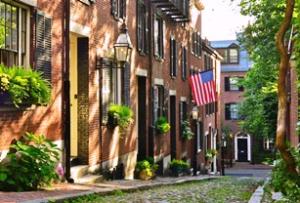
A Boston street. Marijuana is on the minds of voters and regulators alike in the Bay State. (Creative Commons)
Marijuana Policy
Massachusetts Begins a Broad Marijuana Regulatory Overhaul. Even as an election that could end adult-use marijuana sales in the state looms, regulators with the Massachusetts Cannabis Control Commission have begun a series of public meetings as they look to overhaul the state's eight-year-old legal marijuana regime.
Regulators will be eyeing statewide license caps, delivery opt-outs, testing, advertising and loyalty programs, seed sales, transporter licenses, employee identification, vendor training, and medical marijuana licensing.
The commissioners will approve three sets of draft regulations by December and then open the process to public comment early next year. The review follows the legislature's approval of a bill allowing medical marijuana operators to be vertically integrated and directing the commission to review potential additional market changes.
The process is designed to ensure that patients, consumers, enterprise operators, localities, and other stakeholders have an opportunity to weigh in.
Meanwhile, voters will have a chance to weigh in on Question 8 in November. It would eliminate licensed retail sales and commercial production of marijuana, while still allowing adults 21 and older to possess and transfer small amounts. The state’s medical marijuana program would remain in place. The latest polling suggests it will lose.
International
Latin American Allies of Trump Plan to Label Cartels as "Terrorists." The State Department is set to announce this week during the UN General Assembly in New York City that 14 Trump-allied Latin American and Caribbean nations will label criminal organizations tied to drug trafficking as "terrorists." The US has already named them foreign terrorist organizations.
Although the designation does not allow for the killing of group members absent an immediate threat—only financial, criminal, and immigration sanctions--the Trump administration has made a point of referring to the victims of its lethal boat strikes in the past years as "narco-terrorists."
Trump took up the theme in his remarks at the UN on Tuesday: "Upon taking office, I designated the drug cartels as foreign terrorist organizations and unleashed the United States armed forces to eliminate them," he said. "The cartels are the ISIS of the Western Hemisphere — not good people."
Having the Latin American leaders on board will pave the way for potential military strikes against the criminal groups designated as terrorists. It would mark the first time regional governments have joined together to sign a broad terrorism declaration along with Washington.
The countries that will sign the agreement, all members of the Trump administration's rightist Shield of the Americas, are Argentina, Bolivia, Colombia, Chile, Costa Rica, the Dominican Republic, Ecuador, El Salvador, Guyana, Honduras, Panama, Paraguay, Peru and Trinidad and Tobago.
Peru and Paraguay confirmed that they had signed the joint statement. The State Department and the governments of the other countries did not respond to requests for comment.
Former US officials and experts characterized the move as wrongheaded.
"They’re doing it at the UN General Assembly to try to give it legitimacy," said Todd Robinson, an assistant secretary of state for international narcotics and law enforcement at the State Department under President Joseph R. Biden Jr. "But I think the strategy is basically wrong. Criminal organizations are not terrorist organizations."
Resorting to the military has not succeeded in reducing drug flows to the US and could result in extrajudicial killings, Robinson said. "It already has," he added, citing the Trump administration's killing of more than 230 people in dozens of military attacks on suspected drug-carrying boats.
Civil Society Warns of High Risks from Colombia's Proposed Herbicide Spraying of Coca Crops, Seeks Help from UN. The Colombian civil society groups Dejusticia and Elementa and the International Drug Policy Consortium are warning of potential dangers in allowing the proposed spraying of coca crops with herbicides by the Colombian government, and they are seeking help from the UN office charged with overseeing such issues, the Special Rapporteur on toxics and human rights.
In a dialogue with Special Rapporteur Dr. Bethany Carney Almroth, the groups said: "We would like to draw attention to a situation of imminent risk in Colombia: the announcement by the new government to resume the agrotoxins program for eradicating unlawful crops. This program is subject to strict constitutional controls.
"For 15 years, the Colombian government sprayed around 2 million hectares with glyphosate, a substance that the WHO has declared to be possibly carcinogenic. No protection measures were taken for the peasant population that is dependent on this economy. The program had, as a consequence, seriously harmful effects on human rights, and it led to health problems and environmental problems. It ruined livelihoods and contaminated water, and it did not solve the problem of coca leaves and cocaine.
"Constitutional protections, which are based on the principle of precaution, are being threatened by the new government with an even more toxic substance, glufosinate ammonium. We would like to issue an urgent call for the Special Rapporteur to continue her monitoring and warning work through applicable mechanisms in order to prevent and mitigate any possible harm stemming from this harmful practice. We stand ready to help.
The newly elected government of Trump ally President Abelardo de la Espriella announced a pilot spraying program earlier this month, but it is now on hold after a judge's ruling soon after that announcement. The Putumayo court suspended the program pending further hearings.
This work by StoptheDrugWar.org is licensed under Creative Commons Attribution-ShareAlike 4.0 International


Add new comment