
Drug-Related AIDS/HIV or Hepatitis C

rehab-archipelago-small.jpg

Vietnam Using Drug Takers as Slave Labor [FEATURE]

A shocking new report from Human Rights Watch details how Vietnamese "drug treatment centers" don't provide treatment, but do provide abuse, torture and virtual slave labor for private companies to exploit.
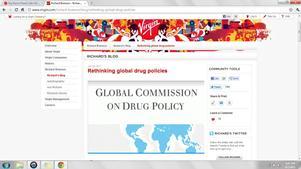
Richard Branson blogs about being invited onto the global commission, on virgin.com.

Big Name Panel Calls Global Drug War a "Failure" [FEATURE]

The Global Commission on Drug Policy, made up of former heads of state and other international dignitaries, is calling for fundamental reform of the international drug control system.
Bangkok looks so modern, but some Thai drug policies are downright medieval. (Image via Wikimedia)

Thai Government in Massive Campaign to Round Up Drug Users [FEATURE]

The Thai government has officially embraced harm reduction, but the Interior Ministry doesn't seem to have gotten the memo. Mass roundups of suspected drug users are once again underway.

White House Moves to Fund Needle Exchanges As Drug Treatment

The Obama administration has designated needle exchanges as a drug treatment program, allowing federal money set aside to treat addictions to be used to distribute syringes to intravenous drug users. Two years ago President Obama lifted the 21-year ban on federally funded needle exchange programs as a necessary evil to reduce the spread of HIV among illicit drug users. The new position, determined by the surgeon general, is that the states can receive federal funding for programs that hand out the syringes as a treatment. A 11-year-old study in the Journal of Substance Abuse Treatment that found that addicts who participated in needle exchanges were five times more likely to enter drug treatment.

SF Mayor's Hep C Task Force Recommends Supervised Injection Facilities (Press Release)

For Immediate Release: February 9, 2011                                   

Contact: Laura Thomas at (415) 283-6366 or Tommy McDonald (510) 229-5215

SF Mayor’s Hepatitis C Task Force Issues Recommendations for Fighting Epidemic, Including Supervised Injection Facilities (SIF)

SIF Allow People to Consume Their Drugs with Sterile Equipment in Presence of Medically-Trained Staff; Reduce HIV, Overdose Deaths and Public Drug Use, While Not Increasing Drug Use

SF Elected Officials Need to Embrace Science and Public Health Approach


The San Francisco Mayor’s Hepatitis C Task Force issued its report a few weeks ago, with strong recommendations for how San Francisco can better address the hepatitis C epidemic here. There are an estimated 12,000 people living with hepatitis C in San Francisco, most of whom do not know that they are infected. San Francisco has the opportunity to ensure that everyone knows their risk, knows their status, has access to hepatitis C treatment and support if they need it, and has the tools and information that they need to protect themselves from hepatitis C. One of those tools, as recommended by the Task Force, is a supervised injection site, where people could consume their drugs with sterile equipment in the presence of medicallytrained staff.

“Supervised injection facilities reduce HIV and overdose deaths without increasing drug use,” says Laura Thomas, deputy state director, San Francisco for the Drug Policy Alliance. “This has been done around the world and it has been proven to work effectively.”

Supervised injection facilities (SIFs) are operating in many countries around the world. They are not a new idea and the science has shown that they work. Insite, in Vancouver, British Columbia, has been extensively evaluated and has shown that a SIF can reduce public drug use, hepatitis C and HIV risk behaviors, overdoses, and other health problems, while not increasing crime or drug use.

In fact, Insite increased the number of people entering treatment for their problematic drug use. SIFs are a serious and well-researched approach to a significant problem. Politicians who are committed to reducing the harms that drugs create for our communities would be well served by paying attention to the evidence.

“San Francisco has led the way in dealing with HIV. The City needs to take these recommendations seriously and begin to address hepatitis C with the same courage and leadership it has shown for HIV,” Thomas added. “Politics can’t trump science in this case. There are too many lives on the line and here will be a serious price for slow learning curve.

“We need elected officials who are not afraid to do the right thing, and who are willing to put all of the options on the table as we fight the spread of hepatitis C and HIV.”

Canadian Doctors Decry Crackdown on Drugs

A large group of doctors, HIV researchers and other public health officials has just released a letter lambasting the Canadian government’s bill S-10, which would overhaul illicit drug laws. The principle target of the 564 signatories – which includes doctors, nurses, social workers and law professors – is a provision that would impose minimum prison sentences of at least six months for a variety of drug offenses, including operating small-scale marijuana grow operations.

In Russia, a Glut of Heroin and Denial

Twenty one percent of the 375 tons of heroin produced from Afghanistan's opium fields now finds its way through central Asia into Russia, according to the United Nations. Unlike most countries around the world, Russia refuses to finance harm reduction programs such as needle exchanges, or to legalize methadone. Over the past few months, Moscow has decided to discontinue the work of foreign donors and NGOs with heroin addicts. Critics go as far as to accuse Moscow of willfully neglecting its citizens and thereby fueling what the World Health Organization says is one of the fastest growing HIV/AIDS epidemics in the world.